We remain fully operational. Our teams are working around the clock to ensure your deliveries continue safely.

下载应用程序


Buy anything from 5,000+ international stores. One checkout price. No surprise fees. Join 2M+ shoppers on Desertcart.
Desertcart purchases this item on your behalf and handles shipping, customs, and support to Taiwan.
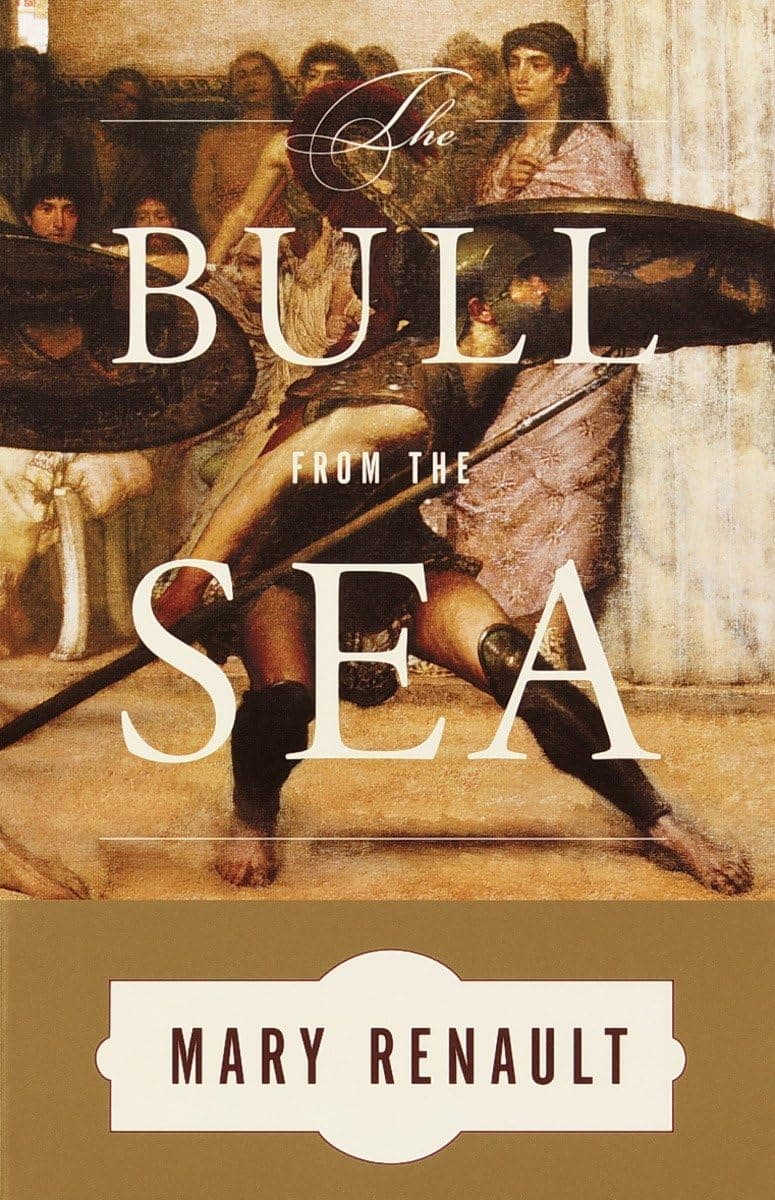
desertcart.com: The Bull from the Sea: 9780375726804: Renault, Mary: Books Review: Excellent continuation of Theseus’ story - This book, which is the sequel to Renault’s The King Must Die, is a fantastic retelling of the second part of the Theseus myth. The first book is now my favorite version of this myth, as it offers a more realistic story of what happened in Crete. I’m savoring this book, as I want it to last as long as possible. Renault wrote so beautifully, with lovely metaphors and imagery. I’ll probably buy more of her books. Review: Wonderful following up on 'The King must die'. Very accurate! - I really enjoyed and loved the first book about Theseus, but the second book was a bit more hard to get through, actually until I reached the telling about the desertcarts. I love how Mary Renault continuously rewriting the myths and gods to fit into an actual living and realistic stories, and how she uses many and correct scenes from the ancient Greek. I like that the gods are not envolved in that way as they manifests themselves as living objects, but instead are alive in the spirit of the people. She has a very fine and beautiful way to tell about the humans dedications to the gods, in which actually make them living in a way. However, as I said about her first book, her language is very.. hmm, not playful and a bit monotonous for my taste, but maybe this is something about the time the book was written in. Thats why the four stars only! I liked the story and the complexity of it, but the sadness is that the language style it sometimes makes the story a little boring. So be prepared! I wished the language was more poetic and beautiful in style, and that she had played more with adjectives. The story however, makes it worth reading, definetely! And it doesen't stop me for reading her other books. The next scheduled is her first book 'The Last of the Wine' from 1956, set in Athens during the Peloponnesian War; the narrator is a student of Socrates.
| Best Sellers Rank | #185,737 in Books ( See Top 100 in Books ) #316 in Classic Action & Adventure (Books) #652 in Folklore (Books) #1,413 in Contemporary Literature & Fiction |
| Book 2 of 2 | Theseus |
| Customer Reviews | 4.6 4.6 out of 5 stars (712) |
| Dimensions | 5.19 x 0.8 x 8 inches |
| Edition | 2nd |
| ISBN-10 | 0375726802 |
| ISBN-13 | 978-0375726804 |
| Item Weight | 10.4 ounces |
| Language | English |
| Print length | 352 pages |
| Publication date | July 10, 2001 |
| Publisher | Knopf Doubleday Publishing Group |
N**A
Excellent continuation of Theseus’ story
This book, which is the sequel to Renault’s The King Must Die, is a fantastic retelling of the second part of the Theseus myth. The first book is now my favorite version of this myth, as it offers a more realistic story of what happened in Crete. I’m savoring this book, as I want it to last as long as possible. Renault wrote so beautifully, with lovely metaphors and imagery. I’ll probably buy more of her books.
A**G
Wonderful following up on 'The King must die'. Very accurate!
I really enjoyed and loved the first book about Theseus, but the second book was a bit more hard to get through, actually until I reached the telling about the Amazons. I love how Mary Renault continuously rewriting the myths and gods to fit into an actual living and realistic stories, and how she uses many and correct scenes from the ancient Greek. I like that the gods are not envolved in that way as they manifests themselves as living objects, but instead are alive in the spirit of the people. She has a very fine and beautiful way to tell about the humans dedications to the gods, in which actually make them living in a way. However, as I said about her first book, her language is very.. hmm, not playful and a bit monotonous for my taste, but maybe this is something about the time the book was written in. Thats why the four stars only! I liked the story and the complexity of it, but the sadness is that the language style it sometimes makes the story a little boring. So be prepared! I wished the language was more poetic and beautiful in style, and that she had played more with adjectives. The story however, makes it worth reading, definetely! And it doesen't stop me for reading her other books. The next scheduled is her first book 'The Last of the Wine' from 1956, set in Athens during the Peloponnesian War; the narrator is a student of Socrates.
T**O
Wonderful story
Excellent book and writer. Renault knew so much and crammed so much of it into her series, for new readers or very scholarly mature readers there are loads of exciting and intertaing hours in side. The last of the wine, the Persian Boy and the mask of Apollo are excellent as well.
A**R
I loved this duology
the second of a pair of novels personalizing the life story of Theseus, the legendary founder of Athens, as told by the hero himself - read first The King Must Die, it strongly puts the reader into the world and mindset of pre-Classical Greece - the novel "unpacks" the myth of the Minotaur and the Labyrinth, and gives the tale of how it must have happened. The Bull From the Sea is the latter years of Theseus, how he founded the nation-state of Athens, made an Amazon his Queen, encountered the accursed Oedipus, lived as a pirate, and went to Hell and back - the ancient gods seem silly to us now, but once they were the guides and oracles of the progenitors of democracy, and they live again in the visions of these characters. I loved this duology, though Bull from the Sea is more elegiac - hey, a life has an arc, right? Worthy writing, good reading, evocative and spellbinding in a literate, immediate, and thoroughly compelling style.
E**N
a quality only really achieved in the great tragedies. I highly recommend this to any fan ...
This is the continuation of the story of Theseus beginning with his return to Athens and his assumption of the kingship following the death of his father. Of the two books, this is the more poignant, because Theseus is no longer the young, invincible hero. He is aging, and as with all aging heroes reality begins to take its toll. I found his relationship with this own son, Hippolytos, to be particularly powerful in its universality. Renault is a fabulous writer. She managed to flesh out a three thousand year old myth and to give it timeless applicabilty, a quality only really achieved in the great tragedies. I highly recommend this to any fan of ancient myths who hasn't already read it.
K**N
but not as good.
One should read The King Must Die first. This sequel is interesting, but not as good.
K**T
Well preserved first edition
Nice First Edition, very. well packaged and sent with lots of cool stamps. Thanks for taking care.
K**H
unhappy
No d.j.
S**G
The second part of a two part story of Theseus with good historical foundations. This second book is about Theseus going to Knossus as one the the twelve Greek kids who will be sacrificed to the Minotaur. The earthquake of San Torini, the return to Athens, the voyage to the Black sea and return with Hypolitta, Queen of the Amazon brings the story to the death of Theseus' son. Great book - good for teenagers up.
I**Y
Eileen Mary Challans aka Mary Renault was recognised by many as one of the greatest writers of the twentieth century. That this recognition has not been universal is due in part to her having been set up as an icon by the Gay Movement, the Women's Movement and possibly other populist movements as well. What is odd about this is that in the terms of what those movements stand for, most of her writing is unashamedly politically incorrect. For one thing, she has no time at all for the shallow stereotypes that undergird populism. Renault is in love with authenticity and excellence, and has a wonderful sense of the sacred, all of which she finds exemplified in Plato and the best of what made up the Golden Age of Greece. She is not only recognised by the Academy, as a reliable introduction to Classical Greek culture, but in addition, has an authentically religious understanding of life, recognisable immediately to anyone with true religious awareness. Whether she was a Christian or not, I have no idea... but her attitude to what religion ought to be about (according to me) is utterly authentic, and very rarely found nowadays. The Theseus books, which open her novelistic history of Greece are remarkably similar to the Alexander Trilogy that closes it. Theseus, after an astoundingly successful life, unravels after his beloved Hippolyta is killed in a battle for the survival of Athens - she throws herself in front of him to save his life. After that, having been the kind of king of whom, mutatis mutandis, even Plato would have been proud, he becomes a rover and a pirate. Besides the young Theseus himself, there are two supremely attractive figures in this book. Firstly Hippolyta, queen of the Amazons. She is vowed to virginity in service of Artemis, and, although out of everybody's reach, is like the Evening Star for beauty, courage, skill and everything admired by the Woman's Movement - EXCEPT that she is outwitted, overcome, abducted and seduced by Theseus. How politically incorrect could one get? And yet she is irresistible, on all counts. The second supremely attractive character is their son, Hippolytos. Strong, beautiful, courageous, gentle, loyal, lover of anything weak or in distress, he is his father's hope for the future... BUT he is deeply religious, devoted to Artemis (as a celibate!!) and sees his future not at all as a King but as a healer in the service of Asclepios. This creates a rift between him and his unravelling father. The villain is Phaedra, whom Theseus takes to wife after Hippolyta's death. Renault removes all the excuses Euripides makes for her in his play... and leaves her totally exposed to contempt. Having fallen for Hippolytos, she lures him to a tryst with her and when he refuses to satisfy her lust, screams RAPE... Theseus exiles him and puts him under the curse of Poseidon... one of three gift curses Poseidon had given to him to help him against his enemies. And so Hippolytos is destroyed - the denouement where Theseus learns the truth and is reconciled with his shattered son is possibly the most moving part of the book. This is a book I could (literally!!) not put down.
P**E
This second book in the Theseus series sees our hero become a great king, a pirate, a warrior and a father. The author makes the legendary hero all too human as we see with his many faults and errors. But this is what brings him alive for the modern reader. The Minotaur is just a man with a mask, Theseus is not really the son of Poseidon. The fantastical legends become human stories. You don't have to be familiar with Greek mythology to appreciate these books, in fact it might be better if you aren't. Either way, these are fascinating books and well-worth reading.
J**M
Lovely book, sympathetically written and gripping. An excellent interpretation of an old story. Much enjoyed and reread many times.
M**A
"The King Must Die" の続編。 英雄として帰国したテセウスは父アイゲウスの死によって王座を継ぎ、アッティカ地方を統一して、アテナイを一大都市に築き上げていきますが、相変わらず強い影響力を持つクレタとの関係に悩み、絶え間ない他諸国との紛争に苦しみます。 私生活では、ラピタイ人の王ピリトウスという親友を得て数々の冒険(これもまた他国への侵略なのですが)を共にし、アマゾン族の女王ヒッポリュタと真実の愛で結ばれる一方、異民族である彼女のジレンマ、政略結婚で迎えたクレタ王女パエドラや息子たちとの心のすれ違いがやがて破滅的な結末を迎えます。 悲劇の王オイディプスや少年時代のアキレウスなども登場し、前作と同じく巻を置くに能わざる展開ですが、前半のテセウスの絶頂期までの輝かしさと、後半で人生の辛酸に蝕まれていく経緯の無惨さの対比には胸が詰まります。 ところで、世に知られた伝説では、テセウスはスパルタ王女ヘレネ(後にトロイア戦争の原因となるヘレネ)誘拐という愚行で晩節を汚しているのですが、作品中、及び巻末で紹介されている「伝説」では一切触れられていません。 作者がすでに鬼籍に入られている現在、その理由は知る由もありませんが、この物語に魅了された一読者としては、この最大の愚行にこそ作者ならではの光を当ててほしかったと思うのです。