We remain fully operational. Our teams are working around the clock to ensure your deliveries continue safely.

下载应用程序


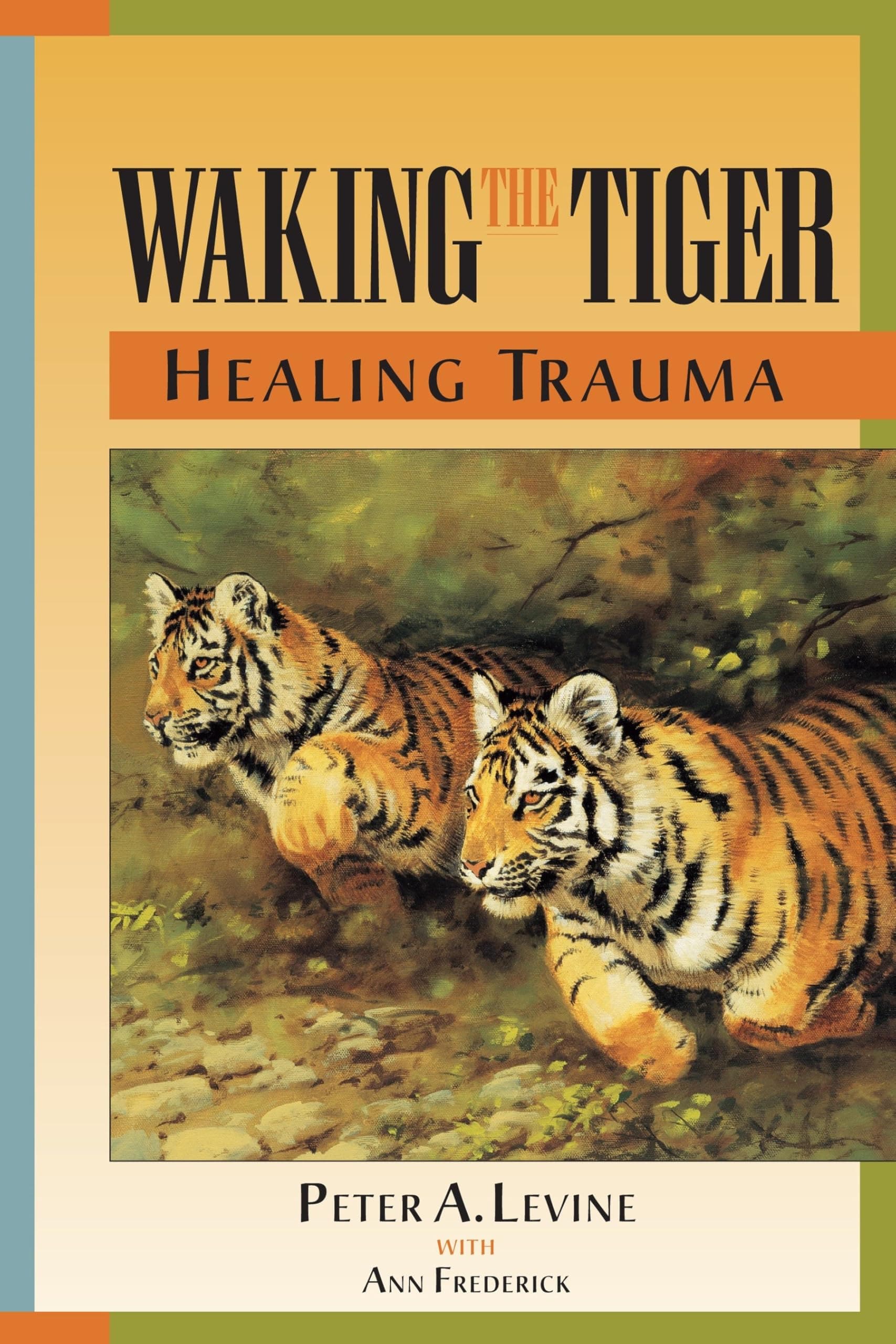

Waking the Tiger: Healing Trauma [Peter A. Levine, Ann Frederick] on desertcart.com. *FREE* shipping on qualifying offers. Waking the Tiger: Healing Trauma Review: Somatic Experiencing with a touch-certified therapist is the best therapy I have ever tried. - After reading this book, I sought out a somatic experiencing therapist who is touch-certified and it has changed my life. I had previously tried talk therapy, group therapy, CBT, and very briefly - EMDR. I was not a good candidate for EMDR, due to my problems with dissociation. Somatic Experiencing has helped me more than any other type of therapy I have done in recovering from a long history of childhood verbal, emotional, and physical abuse. Even after having read this book, I still don't understand how Somatic Experiencing has worked so incredibly effectively, but I highly recommend this therapy to anyone who has a history of childhood trauma, regardless of what that childhood trauma stems from (neglect, dysfunction, emotional, verbal, physical, or sexual abuse.) Somatic Experiencing has somehow taught my body to self-regulate emotions, without causing more dissociation after sessions. It has the added benefit of not being talk-centered, so I don't have to constantly delve into details of my past that I often would rather not repeat again and again. It has by-passed my problematic thought-processes that often hinder my recovery, by working directly on my body. Somehow, without cognitive effort, I end up feeling much better without even trying to think my way better. In fact, my thoughts and perspectives have somehow changed of their own accord, as my body begins to feel better on its own. It's like my body just started healing on its own, and then my brain catches up with it accordingly. I see the world differently now, I see myself differently now, and without even trying to implant new thoughts or perspectives into myself. When I was doing CBT (cognitive behavioral therapy) I felt like I was constantly exerting immense effort on myself, trying to make my brain interpret my environment differently. I was repeatedly attempting to force new thoughts into my head, and this made me feel resentful at the constant argumentation I would have going on inside my brain, and angry because I felt that I was lying to myself with these new thoughts I was forcing into my head. Somatic Experiencing with a touch-certified therapist has removed this battle from my mind; and healthier thoughts and perspectives have slipped into my brain unnoticed by me at first. Despite having read this book, I still don't fully understand how it is possible that somatic experiencing is so effective. This book explains somatic experiencing very well. Not only does Peter Levine go into the details of how trauma effects the brain and body, but he describes some somatic experiencing sessions with clients in enough detail that the reader can learn what he or she can expect in a somatic experiencing session. I highly recommend his other book "Trauma and Memory" for a detailed explanation of traumatic memory. This book "Waking the Tiger" explains how trauma effects the brain-body and how somatic experiencing functions; his book "Trauma and Memory" explains how traumatic memory works, and how it is different from non-traumatic memory, and the difference between explicit and implicit memory. For those of us who feel confused about our patchy, gap-ridden explicit memories, coupled with our highly valent emotional patterns of reaction, his "Trauma and Memory" book sheds much light on this confusion. CBT is woefully under-equipped to handle childhood attachment trauma; it only made me fight inside my head more, and feel resentful at the constant effort of forcing myself to think differently. EMDR did not work for me, as it attempted to cram more trauma into my brain while leaving my body behind in the process, which mainly led to further dissociation. Talk therapy has been helpful for my own understanding of what happened to me, but it, too, left my body out of the picture, and did not help me with the daily emotional dysregulation which caused me so much constant grief. Somatic Experiencing, on the other hand, has put the healing emphasis onto my body, and caused it to heal itself, resulting in my body feeling better and my brain responding to my improved feelings in my body. My brain just keeps catching up to my healing body without much exerted effort on my part. I highly recommend this book, and somatic experiencing with a touch-certified therapist, to anyone who has experienced childhood attachment trauma. Review: Unlocking the Body’s Wisdom for Trauma Healing - “Waking the Tiger; Healing Trauma” by Peter A. Levine is a powerful, accessible guide that redefines trauma recovery. As someone passionate about educating others on trauma, I found Levine’s Somatic Experiencing (SE) approach transformative. Drawing on animals’ ability to “shake off” trauma, Levine shows how humans can release trapped “survival energy” stored in the nervous system. This biological perspective aligns with my interest in science and offers practical tools for healing. Levine’s SE exercises, like tracking bodily sensations, help process trauma safely, making them ideal for supporting others. Case studies, such as a client overcoming panic attacks, illustrate the method’s impact. His compassionate tone normalizes trauma symptoms, fostering hope and empowerment key for my goal of helping survivors. While some exercises need professional guidance and the book relies on anecdotes over data, its global reach proves its value.
| Best Sellers Rank | #3,723 in Books ( See Top 100 in Books ) #6 in Post-Traumatic Stress #16 in Stress Management Self-Help #21 in Popular Psychology Pathologies |
| Customer Reviews | 4.7 4.7 out of 5 stars (3,945) |
| Dimensions | 6.1 x 0.75 x 8.94 inches |
| Edition | Illustrated |
| ISBN-10 | 155643233X |
| ISBN-13 | 978-1556432330 |
| Item Weight | 15.2 ounces |
| Language | English |
| Print length | 288 pages |
| Publication date | July 7, 1997 |
| Publisher | North Atlantic Books |
L**N
Somatic Experiencing with a touch-certified therapist is the best therapy I have ever tried.
After reading this book, I sought out a somatic experiencing therapist who is touch-certified and it has changed my life. I had previously tried talk therapy, group therapy, CBT, and very briefly - EMDR. I was not a good candidate for EMDR, due to my problems with dissociation. Somatic Experiencing has helped me more than any other type of therapy I have done in recovering from a long history of childhood verbal, emotional, and physical abuse. Even after having read this book, I still don't understand how Somatic Experiencing has worked so incredibly effectively, but I highly recommend this therapy to anyone who has a history of childhood trauma, regardless of what that childhood trauma stems from (neglect, dysfunction, emotional, verbal, physical, or sexual abuse.) Somatic Experiencing has somehow taught my body to self-regulate emotions, without causing more dissociation after sessions. It has the added benefit of not being talk-centered, so I don't have to constantly delve into details of my past that I often would rather not repeat again and again. It has by-passed my problematic thought-processes that often hinder my recovery, by working directly on my body. Somehow, without cognitive effort, I end up feeling much better without even trying to think my way better. In fact, my thoughts and perspectives have somehow changed of their own accord, as my body begins to feel better on its own. It's like my body just started healing on its own, and then my brain catches up with it accordingly. I see the world differently now, I see myself differently now, and without even trying to implant new thoughts or perspectives into myself. When I was doing CBT (cognitive behavioral therapy) I felt like I was constantly exerting immense effort on myself, trying to make my brain interpret my environment differently. I was repeatedly attempting to force new thoughts into my head, and this made me feel resentful at the constant argumentation I would have going on inside my brain, and angry because I felt that I was lying to myself with these new thoughts I was forcing into my head. Somatic Experiencing with a touch-certified therapist has removed this battle from my mind; and healthier thoughts and perspectives have slipped into my brain unnoticed by me at first. Despite having read this book, I still don't fully understand how it is possible that somatic experiencing is so effective. This book explains somatic experiencing very well. Not only does Peter Levine go into the details of how trauma effects the brain and body, but he describes some somatic experiencing sessions with clients in enough detail that the reader can learn what he or she can expect in a somatic experiencing session. I highly recommend his other book "Trauma and Memory" for a detailed explanation of traumatic memory. This book "Waking the Tiger" explains how trauma effects the brain-body and how somatic experiencing functions; his book "Trauma and Memory" explains how traumatic memory works, and how it is different from non-traumatic memory, and the difference between explicit and implicit memory. For those of us who feel confused about our patchy, gap-ridden explicit memories, coupled with our highly valent emotional patterns of reaction, his "Trauma and Memory" book sheds much light on this confusion. CBT is woefully under-equipped to handle childhood attachment trauma; it only made me fight inside my head more, and feel resentful at the constant effort of forcing myself to think differently. EMDR did not work for me, as it attempted to cram more trauma into my brain while leaving my body behind in the process, which mainly led to further dissociation. Talk therapy has been helpful for my own understanding of what happened to me, but it, too, left my body out of the picture, and did not help me with the daily emotional dysregulation which caused me so much constant grief. Somatic Experiencing, on the other hand, has put the healing emphasis onto my body, and caused it to heal itself, resulting in my body feeling better and my brain responding to my improved feelings in my body. My brain just keeps catching up to my healing body without much exerted effort on my part. I highly recommend this book, and somatic experiencing with a touch-certified therapist, to anyone who has experienced childhood attachment trauma.
D**K
Unlocking the Body’s Wisdom for Trauma Healing
“Waking the Tiger; Healing Trauma” by Peter A. Levine is a powerful, accessible guide that redefines trauma recovery. As someone passionate about educating others on trauma, I found Levine’s Somatic Experiencing (SE) approach transformative. Drawing on animals’ ability to “shake off” trauma, Levine shows how humans can release trapped “survival energy” stored in the nervous system. This biological perspective aligns with my interest in science and offers practical tools for healing. Levine’s SE exercises, like tracking bodily sensations, help process trauma safely, making them ideal for supporting others. Case studies, such as a client overcoming panic attacks, illustrate the method’s impact. His compassionate tone normalizes trauma symptoms, fostering hope and empowerment key for my goal of helping survivors. While some exercises need professional guidance and the book relies on anecdotes over data, its global reach proves its value.
M**T
Good book
A good book.
S**L
An excellent book about dealing with trauma
Peter Levine in "Waking the Tiger," postulates that trauma exists not in the event or in the story of the event, but is stored within the nervous system. Many common physical ailments are actually residues of thwarted trauma reactions incurred during such events as surgical procedures, falls, pre or perinatal stress and/or childhood accidents and traumas. The body has a natural, innate, and miraculous capacity to heal once these reactions are understood and guided. Levine reinforces the holistic nature of the human being. Our bodies and brains connect instinct, emotion and rationality to our experience. Trauma may create damaging and often enduring symptoms. Human beings have a harder time than do animals in releasing trauma and may carry it throughout our lives. We often become frozen in trauma, unlike animals that can cope with the unpredictability of nature. This may provide a major interference with our health, peace of mind and the ability to live joyfully and creatively. When human trauma remains unhealed, the energy of the trauma and accompanying emotions remain locked within the brain and held within the body's musculature, tissues and organs, awaiting discharge. The author writes about an oft-forgotten aspect of trauma, freezing or immobilization during a traumatic experience. Modern medicine/psychiatry emphasize the "flight or fight" response while often neglecting the freeze response. The concept of the freeze response in the face of overwhelming threat provides a missing link to symptoms such as dissociation that our old ideas of "fight or flight" fail to explain. Immobilization in the face of threat is an automatic biological response that is not voluntarily chosen by the victim. This provides redeeming message to trauma survivors. Levine points out that our memories are not literal recordings of events, but rather, a complex of images that are influenced by arousal, emotional context, and prior experience. Memories may even transform over time as new experiences add layers of meaning to the images. While remembering the past can be an important aspect of therapy, appreciating the subjective quality of memories is crucial to integrating them appropriately into the healing process. Those with deep psychological scars may have dissociated the memory from their minds and are living in a numbed, tensed body awaiting its release so the body can return to wholeness and optimum mental and physical health. The author asserts that psychological wounds are reversible and that healing comes when the physical and mental letting go occurs, similar to the way the tiger experiences the coming and going of threat, tensing in response to danger, and as the threat passes, the tiger's muscles shake, twitch and let go right then and there the fear related energy which now is forever out of mind and body. Trauma is stored energy that must be released.
C**O
Good FOUNDATION for Somatic Therapy
This book is from 1997 & is a foundation to Somatic Experiencing (SE) and/or Somatic Therapy. The same way someone MIGHT read Freud or Jung as a foundation- we must understand that psychology is constantly changing & improving. I am a psychology major so I enjoy reading older pieces of work & find it helpful. You could probably read more current content. Please keep that in mind when reading this book. By the way the large font is awesome!!!
A**R
My experience reading this book was truly mind blowing. This book is so easy to understand and really insightful it opened up a new way of thinking for me when it comes to trauma. I thoroughly enjoyed reading it and learned a whole lot. I’m very thankful for this book and will definitely recommend it to anyone who is looking to learn about trauma responses and effective ways to heal from trauma.
A**O
Um livro bastante acessível a qualquer leitor que queira saber mais sobre traumas e suas formas, e o mais importante como se restabelecer!
A**E
Extrememly thorough and detailed look at Trauma and how we store it in the body. Fascinating and life changing. Really brings home how we as humans don't let go of tramatic events. A great guide to release the trapped energy and set yourself free physically, emotionally and spiritually. Great Book!
A**ー
It’s very helpful book.
J**Y
This book was recommended to me by the best councilor I've ever had the pleasure of witnessing. If you suffer from trauma and it's related issues, this is certainly going to help change your life for the positive. Highly recommended!
TrustPilot
3 周前
1天前