We remain fully operational. Our teams are working around the clock to ensure your deliveries continue safely.

下载应用程序


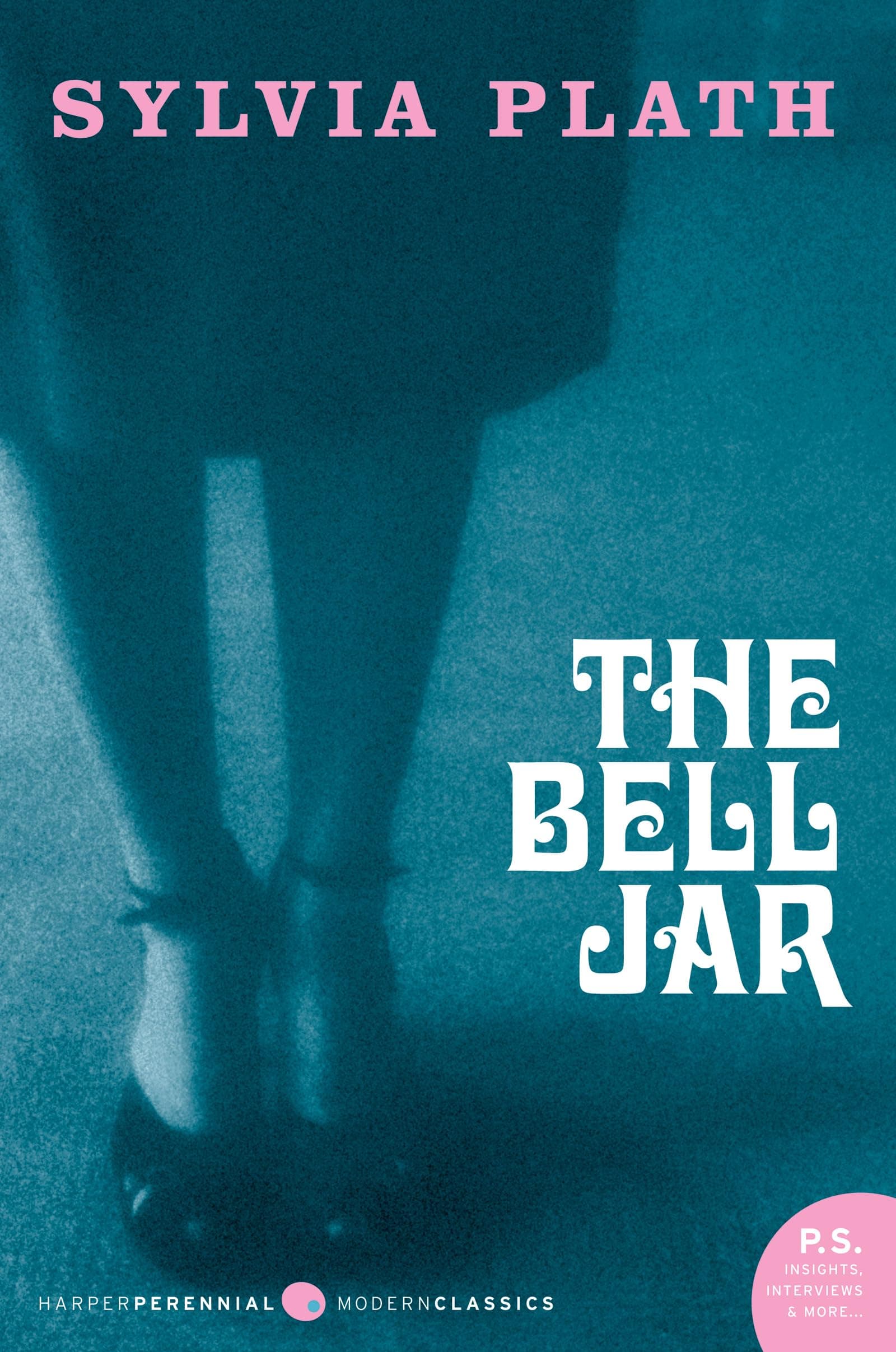

📖 Own the classic that defines a generation—don’t miss out on The Bell Jar!
The Bell Jar by Sylvia Plath is a perennial classic ranked #18 in Contemporary Literature & Fiction, celebrated for its raw emotional depth and realism. With over 36,000 reviews averaging 4.3 stars, this edition ships free on qualifying orders, making it a must-have for literary enthusiasts and collectors alike.


| Best Sellers Rank | #558 in Books ( See Top 100 in Books ) #11 in Contemporary Literature & Fiction #43 in Classic Literature & Fiction #59 in Literary Fiction (Books) |
| Customer Reviews | 4.3 4.3 out of 5 stars (37,415) |
| Dimensions | 8.02 x 5.3 x 0.7 inches |
| Edition | 1st |
| ISBN-10 | 0060837020 |
| ISBN-13 | 978-0060837020 |
| Item Weight | 2.31 pounds |
| Language | English |
| Print length | 244 pages |
| Publication date | August 2, 2005 |
| Publisher | Harper Perennial Modern Classics |
L**N
A legacy of haunting crucial truth about conformity and social expectations
This is an amazing book and easy to read. Sylvia Plath has entered my life at a very crucial time, and in fact, her voice is spoken with an essence of raw honesty. It makes sense that I would prefer to receive the best advice from the viewpoints of authors from what they experienced rather than only receiving an opinion, which is all of what other people have to provide in current time. Sylvia Plath has the intellectual skill of finding a way into the reader’s head, and speaking up about topics one would not want to share with another soul. In her confessional poetry, it’s for the reason of giving your deepest desires, a genuinely profound insight that makes The Bell Jar positively haunting. •••••••••••••••••••••••••••••••••••••••••••••• Esther Greenwood is a student from Boston and the first half of this slim modern classic is a rather pedestrian coming of age story centering around the search for purpose and direction in life. Knowing The Bell Jar is semi-autobiographical is part of the appeal and part of the problem. Sylvia Plath famously committed suicide just a month after The Bell Jar was published - under a pseudonym - by gassing herself in the kitchen with her children in the next room. The Bell Jar is a coming of age story that takes place in 1953 and centers around main character Esther Greenwood, a 21 year old college student. She is bright, but has a difficult time reconciling with the stifling world of the 1950’s. Esther works for a fashion magazine in NYC during the summer of 1953 and is fascinated with the news headlines of the day, including the execution of the Rosenbergs and a man’s suicide. It appears that Esther may be on the track to bigger and better things. But Esther is not as stable as she presents herself. This is a coming of age story, like The Catcher In the Rye, but it is through rebirth and pain. Esther begins a slow decline into mental illness, so slowly it’s almost impossible to remember what the “trigger” was for her. In her rejection of conventional models of women, like purity, relationships with men, and the fashion world of NYC, she finds herself on the outside looking in. I found myself, when reading of Esther’s first suicide attempt, wondering “Well, where did that come from?” Esther had no reason to try to kill herself, she even says that she wants to see if she can do it. Plath’s use of language, imagery, and tone in The Bell Jar allowed the reader into the mind and life of Esther Greenwood. Plath is simply a genius when it comes to weaving a story. A slim 264 pages, it was easy reading. Finding this book has inspired me to read even more of her poetry, a biography, or maybe some of her published journals. It historically common in my perspective that fame is often something short-lived. Sylvia Plath only made it to the young age of 30 but left behind her a timeless legacy.
B**.
Transcends its flaws...
I read this book almost a year ago now and I am just now getting around to writing my review. Luckily, I took some notes but it is still not super fresh in my memory, so I apologize for that, though, perhaps, I have a little more perspective on it now (that is what I am going to claim anyway). My overall impression of the book was of a somewhat flawed novel (more on the flaws later), but also a novel that transcends its flaws, to some degree at least, through raw emotional power. It may not be polished, or accomplished, or refined enough for the likes of a Harold Bloom (I hate Harold Bloom, by the way), but it is primal, and it is beautiful in the same way that a scream is sometimes more beautiful and powerful than the most refined poetry. The novel is dark, it deals with depression and suicide, but it also has humor, and it was in some of the humor that I felt like Plath’s voice really came through most convincingly. I will simply list what I think some of the virtues and some of the flaws of the novel are. One flaw, I think, is Plath’s over-reliance on metaphor. Plath often attempts to come up with a powerful metaphor to describe the state of mind of her protagonist. Her metaphors are sometimes powerful and beautiful but I think she uses them too much. I think there are generally more powerful ways to convey a character’s state of mind. For example, in The Catcher in the Rye - a novel I may be referencing a lot since there are a lot of similarities between the two novels and because I think Salinger’s novel is ultimately more successful - there is a scene where Holden is quite depressed and he is riding in a Taxi cab. He reaches back into his hair and feels that some of the dampness in his air has turned to ice. This physical description is actually a more powerful way to convey Holden’s depression than a metaphor (rather than saying “I felt a loneliness as deep as the ocean”, etc.). Tone of voice can also convey a great deal. If the novel is narrated in an hysterical tone of voice, or one of the characters takes on an hysterical tone of voice, it often draws the reader right into the state of mind of the character rather than using a metaphor to describe it from the outside. I will say that sometimes Plath's metaphors are right on the money. In one scene Esther is waiting in a waiting room to see Buddy Willard, who is a boy that she has been dating, and it is clear he is much more enthused about the relationship than she is. While she is waiting she sees a fountain and “The fountain spurted a few inches into the air from a rough length of pipe, threw up its hands, collapsed and drowned its ragged ribble in a stone basin of yellowing water.” I like this metaphor for two reasons. First, she is describing an actual physical object in the environment so its use as a metaphor here is disguised. Second, even though it is an actual object in the room it perfectly describes her feelings for Buddy Willard, it is an objective correlate in T.S. Eliot’s terms. She is trying to be excited about seeing Buddy but all she can muster is a spurt that winds up just dribbling down and drowning in its own depths. Plath is also sometimes able to convey mood powerfully without relying on metaphors: in her descriptions of her hot baths, for instance, I think we get a better feeling for her depression than in her metaphors. Another flaw is: I do not think that the character of Esther Greenwood is as well developed as Holden Caulfield. What was Esther like before her episode of depression? Throughout the novel she can sometimes be quite cruel. Is that a result of the distorting effects of the bell jar or was that always a part of her personality? We learn that she is ambitious, and a good student, and we pick up bits and pieces here and there, but the character is vague, and her voice as a narrator is too literary to reveal much about her character. Holden does not narrate in the voice of a writer but Esther does. It feels like it is written in third-person, by Sylvia Plath, even though it is written in first-person, and is supposed to be the first-person narration of Esther Greenwood the character. When Esther says, at the very beginning of the book, “By nine in the morning the fake, country-wet freshness that somehow seeped in overnight evaporated like the tail end of a sweet dream” (1) it does not feel like a character speaking to us, it feels like a writing exercise. It is a well written sentence but it is not in the voice of the character. It is generic literary language, as is the line “Slowly I swam up from the bottom of a black sleep” (50). Compare this to a writer like Celine whose narrators speak in colloquial language mos of the time but can also utter a passage of the most beautiful poetry without it seeming like a literary device; it feels like it comes from the character and is something they would actually say. The book is quite powerful in places. There is a scene where she is out with a man and he attempts to rape her. It was a frightening scene that I thought did a great job of conveying her helplessness and fear. I have often pondered the difference between seeing violence in a movie or reading about violence in a piece of literature and seeing violence in real life. A lot of the writers I like have a fairly violent aesthetic. Cormac McCarthy, for example. Violence in the works of Cormac McCarthy conveys some kind of aesthetic emotion that is difficult to describe but it is very different from the feeling one has when one sees violence in real life. I have been in a few situations in my life where violence suddenly erupted without warning and the adrenaline starts flowing immediately. It is not an aesthetic or contemplative emotion at all. I thought the scene where the man attempts to rape Esther succeeded in conveying the kind of emotion one feels when violence is actually witnessed. It made the reader feel, to some degree, what it would feel like to actually be in a situation, rather than contemplating it from an aesthetic distance. I thought Plath’s use of foreshadowing was also a mixed bag. Foreshadowing is a great way to draw the reader in and keep their attention and their interest. I will say, I never had trouble remaining interested in Plath’s novel, but there were some foreshadows that failed to pay off. Very early in the book Esther makes reference to a corpose that Buddy makes her see. I was sort of expecting a pay off, and while Esther does eventually narrate the scene, it does not have a huge impact. On the other hand, there is some brilliant foreshadowing in the opening when Esther is contemplating the execution of the Rosenbergs when Esther can’t help wondering what it would be like to be burned alive “along all your nerves”, which foreshadows her own electroshock therapy. All in all, I thought Plath’s novel was quite satisfying and powerful despite its flaws. I would liken it to blues music. I am not a music historian, and I actually know very little about the history of the blues, but the analogy to me is this: the blues musicians did not possess all the musical training or sophistication of the great composers. They were not composing music that was as complex or refined as Mozart or Beethoven. But, they managed to express themselves very powerfully with the means at their disposal. In some ways, more powerfully than the more refined composers. They were expressing real suffering, without filter, and people respond to it on a gut level. I think Plath’s novel is like blues music in that way. While there are some flaws in her technique no one can doubt that she is expressing something real and that connects with people. Which is why I think this novel is still so popular in spite of naysayers like Harold Bloom. Critics often attempt to tell artists how they should go about expressing themselves, as if they were trying to channel the waters of a flood, but water has a tendency to follow its own will and explode wherever it wants, and I think we should be grateful for that.
H**Y
First time reading :,)
This book was very captivating. I love exploring other people’s minds and this book really appealed to me. This book is about a young woman’s journey through life while dealing with mental health. I can relate to this. I found comfort in what I related to. Sylvia Plath, an interesting woman who could really write. I was heartbroken to find out her mental illness got to her, she had an extraordinary talent and a way with words. This book was a masterpiece truly. Rest in Peace Sylvia. May you never be forgotten.
C**A
Leí The Bell Jar con muchas ganas y no me decepcionó. Es un libro que remueve bastante, especialmente si alguna vez has pasado por momentos difíciles a nivel emocional. Sylvia Plath escribe con una claridad brutal, sin filtros, y eso hace que todo se sienta muy real. Hay partes incómodas, tristes, incluso agobiantes, pero también momentos de observación aguda y una forma muy especial de mirar el mundo. La protagonista no busca caer bien, simplemente es honesta, y eso me gustó. No es una lectura ligera ni bonita en el sentido clásico, pero sí importante. Me pareció muy valiente. En cuanto a la edición, esta de Faber es sencilla pero bonita. La portada es llamativa y el papel tiene buena calidad. El tamaño de letra es cómodo para leer. Lo recomiendo, sobre todo si te interesa la literatura escrita por mujeres o los libros que exploran la salud mental desde dentro.
P**S
I knew it would be good; this was far better than expected. A dark story that draws you in with its borderline characters and unexpected outcomes. Brilliantly written. I will have to read it again.
F**R
The Bell Jar (1963) by Sylvia Plath is a semi-autobiographical novel (roman à clef) that chronicles the mental breakdown, hospitalization, and tentative recovery of Esther Greenwood, a bright, ambitious young woman, recognized for its raw, unflinching, and often witty portrayal of a woman’s struggle for autonomy and mental health, remaining a significant text in both feminist and mental health literature.
S**M
Came in good condition but smells terrible.
M**M
Great
TrustPilot
1天前
1 个月前