We remain fully operational. Our teams are working around the clock to ensure your deliveries continue safely.

下载应用程序






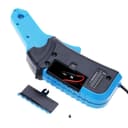

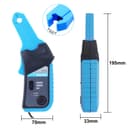

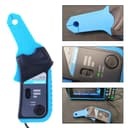

⚡ Power your projects with precision and style!
The Hantek CC-65 is a battery-powered AC/DC current clamp digital multimeter featuring a 65A max current range, 20kHz bandwidth, and a BNC connector for direct oscilloscope compatibility. Its compact, modern design and professional sensitivity make it an essential tool for electronics testing and diagnostics.


| ASIN | B06W2KFZLW |
| Batteries Required? | No |
| Batteries included? | No |
| Best Sellers Rank | 206,557 in Business, Industry & Science ( See Top 100 in Business, Industry & Science ) 4,033 in Electrical Testing |
| Colour | Black, Blue |
| Customer Reviews | 4.5 4.5 out of 5 stars (499) |
| Date First Available | 6 May 2013 |
| Item Package Quantity | 1 |
| Item Weight | 184 g |
| Item model number | CC-65 |
| Manufacturer | HATTRICK |
| Part Number | CC-65_N |
| Power Source | Battery Powered |
| Product Dimensions | 19.51 x 3.3 x 7.01 cm; 184 g |
| Shape | rectangle |
| Style | Modern |
M**L
Decent current probe, great price, terrible power switch
When I first got my new current probe out of the box, I thought it was dead. Plugged the 9v battery (Not Included) into the back, plugged it into my DSO, switched it on, and... nothing. No lights. No change in the level when I hit 'zero', no readings when I clamped it onto the Vin line on my project. Except sometimes when I wiggled the switch just the right way, pressed down on it, the green 'Power' light would flicker for a second. I gave it a little shake, and I could hear a little rattle. I took the hazardous step of opening the back to see what was going on, and the problem was immediately apparent. Instead of using a discrete 3-position dptt switch, there's a hacky little arrangement that's prone to failure if you look at it funny. The plastic switch wiper has a pair of ductile little pieces of bent copper which are retained solely by compression between the wiper and the PCB underneath, and as they slide back and forth they make or break connections between tinned pads on the PCB. I suspect that pressing down too hard on the switch can bend them out of shape and let them fall out of place. It was a fiddly little fix bending them back into shape and lining everything up so it didn't fall apart again when I closed it back up, but it seems to work well enough as a current probe now. Sensitivity is acceptable at 100mv/A. I haven't had time to formally assess the accuracy and frequency response, but it seems to work reasonably at the low frequencies and currents I was using today.
K**R
Very happy with this product and it works perfectly.
J**U
Super
R**Z
Exelente atención buen producto
C**D
worked great.
A**R
Used for electronic testing