We remain fully operational. Our teams are working around the clock to ensure your deliveries continue safely.

下载应用程序




⚡ Dominate every move with speed and style — the ultimate pro gaming keypad!
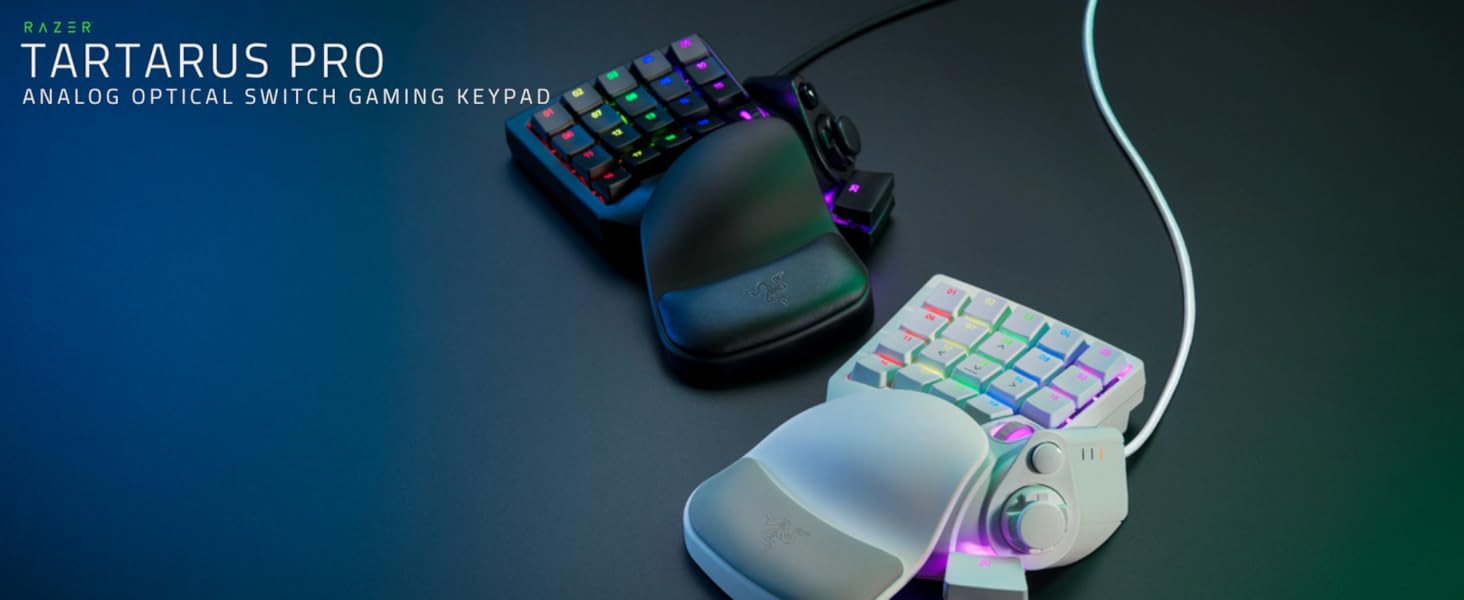
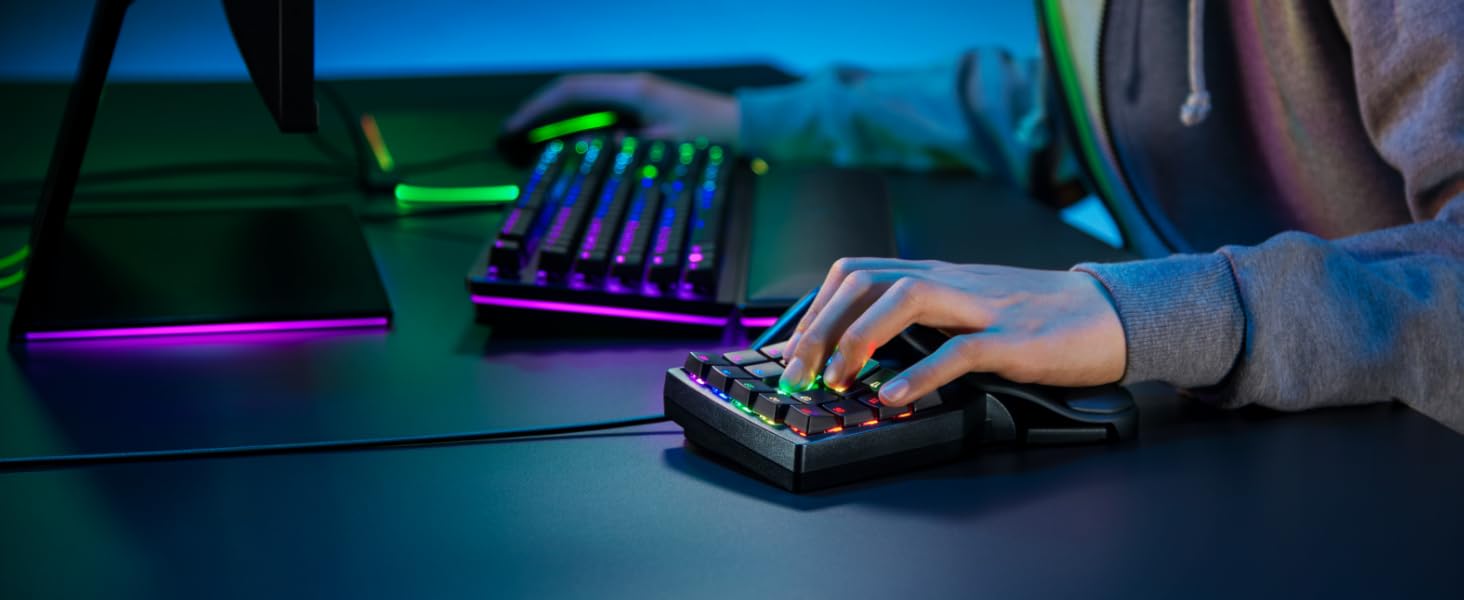
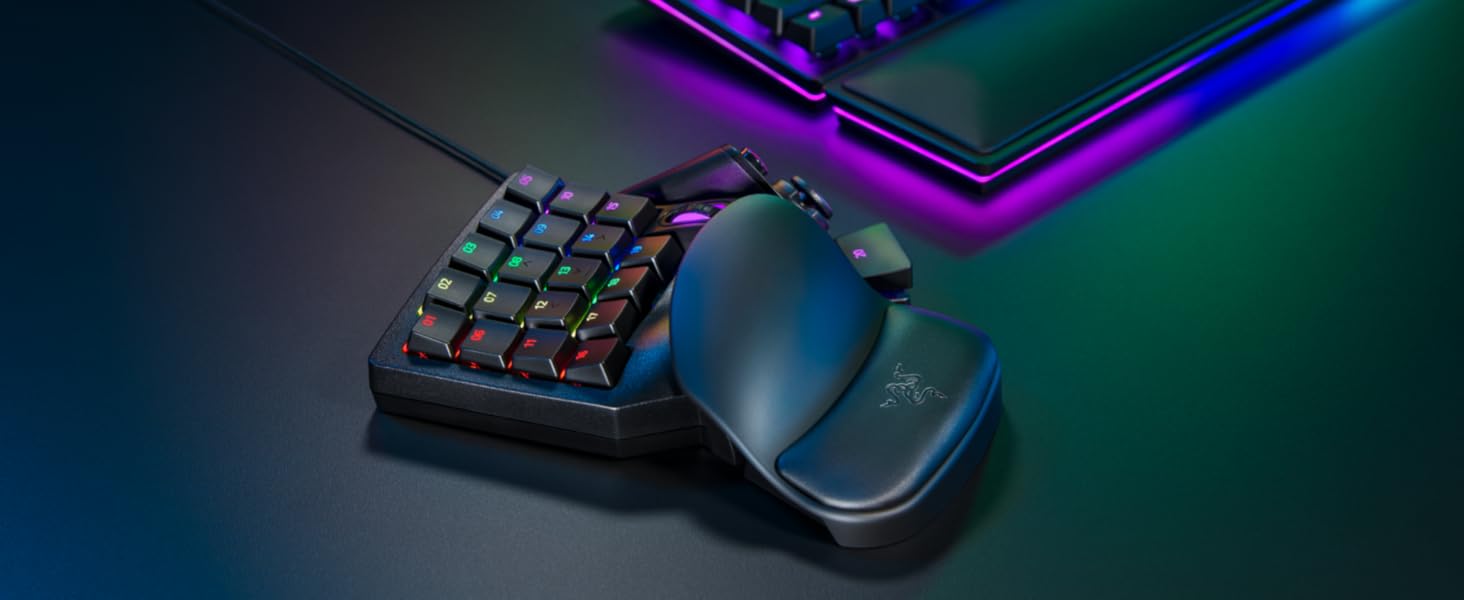
The Razer Tartarus Pro is a cutting-edge gaming keypad featuring ultra-fast analog-optical switches with adjustable actuation and rapid trigger reset at 0.1mm. It offers 32 programmable keys and an 8-way thumbpad for versatile control, enhanced by fully customizable Chroma RGB lighting that syncs across multiple devices. Ergonomically designed with a wrist rest and ambidextrous layout, it’s built to elevate both competitive gaming and creative workflows.


| Brand | Razer |
| Series | Tartarus Pro |
| Item model number | RZ07-03110100-R3U1 |
| Hardware Platform | PC |
| Operating System | Windows 10 |
| Item Weight | 12.8 ounces |
| Product Dimensions | 5.95 x 7.96 x 2.5 inches |
| Item Dimensions LxWxH | 5.95 x 7.96 x 2.5 inches |
| Color | Classic Black |
| Power Source | Corded Electric |
| Manufacturer | Razer |
| ASIN | B07YQKS4B5 |
| Is Discontinued By Manufacturer | No |
| Date First Available | October 24, 2019 |
C**R
Works GREAT with small hands! Records double modifiers! +6m, +1year, +2.5 year updates
I have small hands, 6.5 inches from palm to middle finger tip and ring sizes 4.5-6. I'm able to use this but I did need to shift my hand position to the right so I could use the thumb buttons. I swaped the directional keys to correspond and added some textured gaming keycap stickers to help me learn the new keybinds. I am able to use all of the buttons easily except the top row which requires a little stretch to reach but that's fine with me, I just make those the seldom used keybinds. I needed more pinky modifier buttons as well as thumb accessible modifier buttons (the D-pad is perfect for that). I use this for gaming along with a G600 mouse, it works wonderfully and solved the problem I was having with needing more modifiers and being able to hit binds faster/more reliably. You can record double modifiers with this such as Alt+Shift, I needed that feature specifically. It looks amazing matching my mercury huntsman mini and I love having a separate keypad for gaming rather than using my keyboard. It allows me to have crazy re-mapped keybinds without losing the ability to type normally. I use W A,S D,Q, and E; all the rest of the keys are re-mapped to numpad or modifiers. The space bar key (20) is a bit low and the distance makes it unreliable for me to use quickly so its in the seldom used keybind category. I re-mapped the circular button above the D-pad to map, the D-pad is space bar and 3 modifiers. The little D-pad thumbstick attachment is really great, too! <> - 6 month update- I absolutely love this thing. I've adjusted to using it all the time for gaming and it is so incredibly comfortable. The wrist rest is my favorite part in regards to comfort and the hand positioning in general is relaxing, the shorter keycaps help with this. I found some better gripy texture tape for my most used keys. The joy stick for the D-pad has become pivitol for my gameplay. I love this thing so much that I got a second one for couch gaming. Synapse 3 doesn't support 2 of the same device running at once so I had to get a USB splitter. I purchased both devices "Used like new" and they have been wonderful. Both arrived in perfect condition with no blemishes or malfunction. - 6 mo th update on the second I purchased in "Like New" Condition. One of the keys broke out of nowhere while I was using it. The device had not been damaged while in my care. Razer does not sell replacement keys for this item and refuses to provide them. Keys are not covered in the warranty, so if they break you are out of luck. However, I was able to find these keys on Amazon that replace the low profile Tartarus keys perfectly -amd they are very affordable: X-keys Keycap Cherry MX Compatible -2.5 year update: STILL AWESOME lol. No issues whatsoever. I have 3 now, send help. I made the #20 thumb usable by making a booster seat for it. Took off they key and traced it on firm 1/4 inch thick foam, cut out the exact shape (took a little notch out to keave room for the D-pad thumb stick to clear it), then doubleside taping it to the key- works like a charm now. I use the Tartarus for every game ( FPS, MMO, Competitive) and will never go back to using a keyboard for gaming.
S**N
The Good The Bad & Fixes
Ok so starting off, i switched from using logitechs gamepad for 15 years. Their decision to remove support and start charhing subscriptions for software just rubbed me wrong so now its time to change after my joystick started to die. So i'll go over good first then the bad as well as solutions for some of the bad. Good: Functions great. The sensitivity settings for button presses is amazing! Rly ups my in game reflexes being able to barely touch buttons to use them. I also love the idea of the scroll wheel on the gamepad, great for if a mouse scroll wheel is acting up. Additionally the silent button presses is great for me.. clicky clack drives me nuts when gaming as i feel like im disturbing others. I also love the size of the joystick as i have big thumbs and the cushion is great for my wrists. Bad: So some of this is just user error and preference but i did find solutions for most of it which i will go into detail on. Almost all of my issues involve the joystick. So i use mine for movement not hotkeys as it frees up three fingers that way. When using it for movement dont change it to 8 directional as theres a bug where it cant do 360 movement as it wont read the diagonals. If you are like me and curiously thought to check it out but went back to 4 directional you will need to restart your computer after switching back to 4 direectional as without the computer restart the bug on the diagonals will still be there. So tldr: 4 directional allows 360 movement but 8 does not and if you switch to 8 and then back to 4 it needs a pc restart to read properly again. point 2 is the joysyick is slippery as hell, so my solution was getting a ps5 grip cap warming it up a bit and stretching it to fit. 3rd point is the clicking. everything else on the gamepad is silent i wish the joystick was too, even an option to adjust the clicking would be nice, much like what some of their mice can do. when i first got it buttons were a little stiff so took some muscle memory adjustment and a bit of use to loosen em up. not an issue long term just a point to keep in mind when u first get it. with the sensitivity setting anyways it only affected me ehen holding buttons down til they loosened up. Having used logitech's for years i do miss the screen with the performance monitor on it as well, but i have other eays of doing that so not a huge loss. ok final point is the scroll wheel. its location is terrible, it sits right under the joint between the thumb and pointer which is not easy to reach. Putting it to the left of the 09 or 10 button would be a better spot making it easier to use as frankly my pointer finger and thumb dont bend that way for the current placement. all in all amazing gamepad just needs some minor tweaks to make it perfect.
J**T
Great design, learning curve but no onboard memory
Off the jump be warned, this has no onboard memory… not a lot of people mention that so you need to run razer software for any custom key configuration to work. This interferes with signalRGB and other software and is the heart of my 4 star review, otherwise…. It’s near perfect for its usecase. Want a half keyboard with great design, programmable keys and macros with a serviceable joystick option? This is your choice. I bought the membrane key V2 first and quickly returned it. While I have a mechanical keyboard and love it, these buttons were way too loud. I spent more for the pro model and am pleased with the feel… and sound of the keys. Not to mention I can configure the deep press for a SHIFT-WASD run now too. Perfect. Aforementioned the biggest issue was having to troubleshoot tuning razer software with my LED software, it was a pain but plenty of people complaining about it to do a search and get your resolution as there’s a few of them depending on your setup, you’ll have to do some leg work. The joystick option is cool, I gamed on pc back in the 90’s and went console in college around 2000 never really looking back until the pandemic. Getting back to a KB/M was a difficult transition and having an optional thumb stick (be it not perfect) has helped me on some fps games. I wouldn’t say I’m great, and I’m still better a game controller but I’m pushing through the learning curve which is a little steep. The good news is I find myself subconsciously using 12,13,14,08 buttons (WASD) making it appear to be muscle memory taking over and those who use keyboard will probably adapt to this in no time. The colors on the keys are bright and match my Logitech g915 kb, goes great with my custom built pc using ASUS tuf aio, fans and case. One more positive is the overall design, the buttons and curves are different than a typical layout but I found it much easier to use and shift my hand around for other keys. The wrist rest is adjustable in two different settings, and despite having a normal sized I found both settings a little wonky to get used to. I’m not sure how that will work out in the long run becoming more or less comfortable. All and all it’s a premium price for a specific adapter and if you’re looking at this then you have the need for it (or at least considering it). There are certainly cheaper options from other brands if you’re looking just for a half KB, I wanted the thumb stick and even if it’s not perfect I’ve been forcing myself to get used to it. In that sense the uniqueness is what I paid for, and I have a few more weeks to decide it it’s worth double in price.
A**E
Master Your Game with the Razer Tartarus Pro Gaming Keypad
Calling all gamers! Get ready to level up your gameplay with the incredible Razer Tartarus Pro Gaming Keypad. Designed to enhance your gaming prowess, this beast of a keypad boasts analog-optical key switches, customizable RGB lighting, and a plethora of programmable keys. In this review, we'll explore the gaming-centric features of the Tartarus Pro, helping you dominate the virtual battlefield like a true gaming pro. Unleash Unprecedented Precision: The Razer Tartarus Pro introduces a game-changing innovation: analog-optical key switches. Imagine having the finesse of an analog joystick right at your fingertips. These switches register varying levels of pressure, offering unrivaled control and precision. With this cutting-edge technology, your movements will be more fluid, your aim dead-on, and your gameplay next-level. Prepare to leave your opponents in the dust! 32 Keys of Pure Customization: Say goodbye to limitations and hello to limitless possibilities. The Tartarus Pro comes equipped with a whopping 32 fully programmable keys, begging to be customized to suit your gaming needs. Assign macros, execute complex commands, and create shortcuts to optimize your gameplay. With this level of customization, you'll have the upper hand in any gaming situation, whether you're exploring vast fantasy realms or battling it out in intense multiplayer arenas. Ergonomic Excellence: The Tartarus Pro not only delivers in performance but also in comfort. Its ergonomic design ensures that even the longest gaming sessions won't take a toll on your wrists. Every key is within easy reach, allowing for lightning-fast reactions. And let's not forget the 8-way directional thumbpad, designed for console-style movement control. It's time to bid farewell to discomfort and embrace the ergonomic bliss of the Tartarus Pro. Create Your Gaming Aesthetic: Who says gaming can't be stylish? With the customizable Chroma RGB lighting, the Tartarus Pro lets you create a visual spectacle that matches your gaming personality. With support for 16.8 million colors and individually backlit keys, your setup will be a mesmerizing display of light and color. Immerse yourself in a vibrant gaming environment that syncs with your favorite games, Razer peripherals, and even Philips Hue lighting. Prepare to game in style! Unleash the Full Potential with Razer Hypershift: Take your gaming to the next level with Razer Hypershift. This game-changing feature allows you to remap all keys and keypress combinations, opening up a world of advanced functionality. Execute lightning-fast combos, create intricate commands, and adapt to any gaming scenario with ease. The Tartarus Pro empowers you to be the master of your game, giving you the ultimate control and flexibility. Conclusion: The Razer Tartarus Pro Gaming Keypad is a true game-changer, designed to enhance your gaming experience and elevate your skills. With its analog-optical key switches, customizable RGB lighting, ergonomic design, and fully programmable keys, this gaming keypad is the ultimate weapon in your gaming arsenal. Dominate the virtual battlefield, unleash your gaming potential, and immerse yourself in a world of precision and customization. Gear up with the Razer Tartarus Pro and leave your mark as a true gaming legend. Get ready to level up!
T**G
Great for World of Warcraft
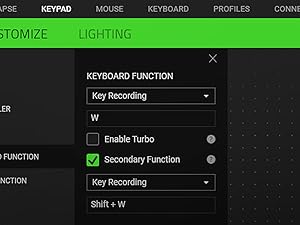
Bought the optical version for use in World of Warcraft and overall I am very pleased. Here are some general notes: - It takes a little while to get used to the positioning, but the ergonomics are actually quite good. I wear medium gloves and I can very comfortably access most of the keys. The ones on the far upper corners are a bit of a stretch, but I bind lesser used abilities to those. - One exception to the comfort is the 20 key by the thumb. It is overly awkward for me to spread my wrist to be able to use it consistently for jumping (the default) and I never use it. However, a useful workaround is to rebind the profile switch key above the D-pad which works extremely well for jumps. Makes for a much more comfortable ergonomic experience. - The wrist pad is comfortable and is surprisingly durable. Used it for about a year and there is no visible wear, and I have been able to keep it clean with the occasional alcohol wipe down. - The software makes the device highly configurable and works easily enough. - I bought the linear switch version although I think I would have been just as happy with the mechanical one. You could bind different actions to light and full presses of each key and the action is robust, reliable, and configurable. However I have not found a great use case for it yet so I just run single binds to each key. The upside with single action is that you can set the depth when they key is activated to prevent accidental presses when you are either resting your fingers on the button or brushing them while building new muscle memory. The unit seems like it has excellent durability so having the extra features and configurability is an investment in the long run. If anyone is curious, here is how I use the controller in World of Warcraft: - I use the 8, 12-14 keys are my WASD home for movement with the profile switcher key for jump (also reflected in their Razer software binding) - The 16 key is bound to Shift with the rest of the keys bound to the numpad keys in the Razer software - Using the Bartender mod in WoW, I created two 5x4 grids that map 1:1 to the buttons on the controller (see photo) - In WoW, I bound the left bank to unmodified keypresses corresponding to the button location and the right bank to Shift+ key presses corresponding to the button location. - The bottom left and bottom right buttons that do not have any activating key presses assigned (16 is bound to Shift and there is no physical button to the right of 19) are assigned to mouse keys. - I bound Shift+W key to autorun which seemed natural Using this configuration, it allows me to: - Have a visual connection to the physical location on the keypad that aids in training and recall - Double the amount of action keys by using the Shift modifier on the 16 key - I use the "dead space" of where the middle 8, 12-14 keys are that are reserved for movement to be used for things that do not need to be bound, like buffs, food, or miscellaneous pots. - The spots for Shift+movement keys (8, 12-14) are useful for things associated with movement like mounts or emergency actions like floats if you get knocked off something I feel like I have plenty of keys for actions, especially if you use macros to combine common actions and trinkets together.
G**F
The Least Comfortable Keypad You Will Ever Use
My hands aren't small - I can comfortably hammer away at any 10th on a piano. But trying to use this keypad for a few days, I've come to believe it's designed for aliens with 5 incredibly long sausage fingers plus a thumb. THE GOOD: - It's almost fully customizable. The scroll wheel can't have any macros assigned for some reason, but everything else can go anywhere else. - You can disable the RGB lighting. - It doesn't have any garish color schemes or branding and it comes in black, like everything else. - Keyswitches are high-quality and should last a long time. - Braided cable. Always nice to have that. THE NEUTRAL: - The keyswitches are linear with no feedback. No tactile bumps, no satisfying clicks. If you're familiar with typing on an office keyboard or pressing buttons on a controller, this will feel wrong to you. THE BAD: - Everything but the keyswitches and keycaps feel weak, flimsy and wobbly. - The wrist rest forces your hand to sit at an angle that is not perpendicular to the keypad. This is due to the "hump" that accommodates the scroll wheel. Removing the wrist rest is possible, but doesn't alleviate the issue and makes the device somehow even more uncomfortable to use. You're guaranteed sores, cramps and RSI if you use this for more than a week while resting your hand on it. - The scroll wheel, which has too-subtle detents and a slimy rubbery texture, cannot be reached in any comfortable position unless you move your entire hand or have an extra index finger. The smarter place to put the scroll wheel would be near the thumb cluster. Someone wasn't thinking when they designed this. - The keys are oversized, apparently designed for incredibly thick sausage fingers. If this describes you, you still might want to look elsewhere. - The only key with a legend on it is #13, which is where "S'" would be in WASD. This is a problem because the keys caps are huge, all feel the same and you generally if the device was properly designed in the first place - shouldn't move from that position anyway. The smarter location for legends would be the keys farther out away from the WASD cluster, so you can feel them out as needed. - The directional pad is unpredictably responsive, mushy and works like a joystick hat out of the box, but feels flimsy enough that it would break if you looked at it wrong. - The device HAS NO INTERNAL CONFIGURATION MEMORY. YOU MUST KEEP THE RIDICULOUSLY BLOATED SOFTWARE RUNNING IN THE BACKGROUND AT ALL TIMES FOR YOUR CONFIGURATION TO WORK. Logitech could figure that one out, why can't "For Gamers, By Gamers" Razer manage it? Spend more on your product development and less on your box designs, guys. - The macro module's functionality in the software is too simplistic for what it pretends to offer. You can program sequences of key presses with delays between them, but that's it. No toggles, no loops, no conditionals or modifiers, nothing. Just a sequence of specific key presses, and only one macro per key, but only as long as that key isn't arbitrarily "special" like the scroll wheel. Not expecting AutoHotKey depth of customization, but at the bare minimum, a toggle option is expected. I'm returning the one I bought and staying away until I see some marketing with special care taken to acknowledge how awfully their previous products were designed.
K**C
A graphic designer / digital illustrator's perspective
While I do a fair bit of gaming (mostly action & FPS games likes Rainbow Six: Siege, Hunt: Showdown, Outriders, etc.), when I discovered this product it was the last thing on my mind. That said, if you're reading this review to get my feedback on its usefulness and responsiveness in games - this review will have zero pertinent information for you. If, like me, you were looking at this as a potential editing console/controller - this review is for you. I am a professional graphic designer and digital illustrator who regularly uses Adobe's Creative Cloud suite. In particular, I use Illustrator, Photoshop, InDesign and Xd daily. For some of these programs I tend to use a Wacom Intuos Pro medium in place of a mouse and, of course, a keyboard. This is the main reason I purchased this device. While I'm perfectly at home with a mouse and keyboard, I can attest to and must admit that having the Razer Tartarus Pro has sped up my workflow EXPONENTIALLY. As some of you reading this may know, using a graphic tablet is great for countless applications but personally when I'm using a tablet for something other than digital painting, using the express keys makes it awkward to operate one-handed and flipping back and forth between having both hands on the tablet (1 on the express keys, 1 on the pen) or having one hand on the keyboard and the other on the pen. As you might imagine this can actually slow your process down somewhat significantly. Especially when you consider that the keyboard shortcuts that you use frequently can be between 3-4 simultaneous keystrokes which adds to the uncomfortable nature of switching. For this reason, some people start to look at editing consoles/controllers to help with this. The main two I personally had been considering were the Tour Box ($169 MSRP at time of review) and one of the Loupedeck devices ($250-500). While both were fine products, I heard this mentioned in passing and decided to investigate. I was a bit surprised because I've pretty much always used Logitech products, I knew nothing about Razer's catalog except that they were popular with people who take gaming much more seriously than I do and that's about it. At a MSRP of $129 I had to at least try it. When it suddenly went on sale from $129 to $79, I pulled the trigger. This has been my experience so far: The short: I wholeheartedly recommend this device if you are looking to use it the way I am. I cannot speak to this device's use in games because I haven't used it for that, I wasn't planning on it and frankly, the other thousands of reviews have that aspect covered pretty thoroughly. The long: I chose the Pro over the V2 for a few reasons I think you'll find important. The main advantages the Pro has over the V2 are that it has optical switches, the keys are dual-action and the keys actuation is adjustable. If you're used to mechanical keyboards, the key "feel" may mess with you at first but unless you're a particularly heavy-handed typer I don't foresee any adjustment issues. The keys on the Pro are a little on the heavy side but because of the nature of the dual-action keys, they kind of have to be. While you can set the actuation (ostensibly how hard you press before the unit recognizes that it's been pressed far enough to trigger the secondary action) to your preference, it will take some light adjusting. The primary function triggered by the initial keypress can be extremely light and the secondary action is generally triggered around half way to "bottoming out" (key being pressed in all the way). It's also important to know that regardless of what you have assigned to the primary and secondary actions to any given key, the primary action will always be triggered first and there is no way to bypass the primary function. While that may sound limiting, it just means you have to be thoughtful about what you assign. I'll talk about this more later. The beauty of the dual-action keys for design software is that you can just set all of your most-used functions to single key presses as there is no string limit per key. That said, as I mentioned, the way you stack keys matters. For instance, if you wanted to set up a key to "Save" on primary and "Save-As" on secondary - it's still gonna overwrite your file because it has to "Save" before it can get to "Save As". A better way of grouping similar commands would be to set "Copy" as primary and "Cut" as secondary so that it doesn't matter that you only need to cut as copying won't prevent you from cutting immediately after. And it's not just the keys - you can even program the scroll wheel and D-pad. Might sound useless to a mouse user, but being able to immediately switch between scrolling and zooming on that wheel without having to move your hand - it's just one of those little things that, in tandem with the rest of your efficiency binding, make this thing fast and fun to use. You also have them ability to designate a key as a "Hypershift" key in Razer's Synapse software (more in that in a sec) wherein instead of tweaking the actuation to your liking to make use of the dual-action keys, you can sacrifice a key to be the modifier instead of using the "pressure" settings. Feels a bit silly to sacrifice a key for that reason to me but it's a reasonable alternative for the more heavy-handed among us. Razer's Synapse 3 software (needed to program your keys and lighting) is not the most immediately intuitive, but once you get the hang of it - it becomes fairly easy to use. From Synapse, you can create profiles for your respective games/applications with their own independent layout and lighting options. You can adjust the key actuation, macros, brightness and for all your RGB lighting needs, Razer's Chroma suite has you covered. You can even sync your other Razer devices or have the lighting effect(s) (Yes, you can even layer lighting schemes and effects) or incorporate multiple Razer devices into a single continuous effect. This is one of the other reasons I opted for the Pro over the V2. I tend to work in little to no light, so the per-key RGB lighting (Yes, even the scroll wheel) is much better than the V2 in that there is no light bleed on the Pro. Depending on the environment, the light bleed on the V2 is pretty egregious by comparison. On the Tartarus Pro, I've never been confused as to which key I'm about to hit and while that may sound like a minor issue for a difference of $50, like any other piece of equipment, there's gonna be a learning curve. That learning curve can be shortened drastically if you start out by color-coding keys which is a huge help until muscle memory develops. Some have complained that the unit has no onboard memory and while this is true, Synapse has cloud storage for settings, so unless you intend to take this device with you everywhere and need to use it in 100 different machines...I'd argue that's a bit of a moot point. I know everyone's needs are different, but realistically I see most people using it on their main workstation and maybe a laptop...even if I still worked at an agency on-site, I'd be hesitant to request IT clear Synapse for my work machine but maybe we're different. The last thing to touch on are the ergonomics. I have large, but not huge hands and I find (for my purposes) that reaching all the keys is comfortable and intuitive (even when you start building speed - and you will). If you have larger hands, the palm/wrist rest is adjustable but if you have smaller hands, I could see this being less wieldy although not uncomfortable. If you have average to large hands I think you'll be at home. The palm base/ wrist rest is lightly padded but not so much so that you notice it which is great because I've dealt with a myriad of "comfort" features that only served to irk during extended periods of use. Thankfully, in the case of the Razer Tartarus Pro, I can use it for HOURS without any discomfort whatsoever. There's something extremely cathartic about being able to work without moving your hands unnecessarily. It's a huge help if you deal with strain from carpal tunnel or tendonitis especially. Whether you're a mouse, tablet (or both) user, I think everyone considering this to speed up their design workflow should at least try it. Do some experimentation with your binds both in physical placement and how you "stack" commands and group your keys colors by tool/function and I'm willing to bet it won't take long before you start wondering how you were getting by without it.
J**H
Hinders Gameplay
I was really hoping I could enjoy using this, but I just can't. I have a different game pad like this, but figured if I enjoyed the Razer one, I'd keep it at home and bring my other one to my work office once we're back to working in person. Maybe my keyboard use is weird for gaming or I'm simply used to/looking for something else than this offers, but I felt like using the Tartarus actually hindered my gameplay more than it did help. I really like having my hand well off to the left of my setup to keep my body from being super cramped up, so I've been playing around with game pads so I can keep my typing keyboard front-and-center, but use the game pad for actual gameplay. Let's break down the pros and cons, because it does have some positive features, but for me, the cons significantly outweigh the pros, especially for the price. (assuming Apex gameplay, here's the button bindings I remember since I only used it for a few days before I unplugged it and stopped using it (doing this by Column, not Row, so buttons 01, 06, 11, 16 will be first, etc) 01: Tab (hypershift: Esc) 06: disabled 11: L-Shift 16: L-Ctrl 02: 1 (I think) 07: I swapped between "Q" and "Disabled" 12: A 17: Z 03: Disabled 08: W 13: S 18: X 04: 3 09: E (Hypershift: T) 14: D 19: Either ("C" or "V") or "Disabled", but I think I made this "V" 05: 5 10: R (Hypsershift T) 15: disabled (I think) (Hypershift F, I think) Scroll wheel: normal scroll wheel actions Profile Switch Button: Hypershift D-pad Up: M D-pad Left: Q D-pad Down: B or Disabled, but I think Disabled D-pad Right: Disabled (I think) 20: Space And bindings on my mouse that I needed so I could not use my full keyboard: V (melee) B (change weapon fire mode) G Pros: - Firstly, I, personally, really loved the way it felt under my hand. I've got larger hands, so the shape and overall positioning of the d-pad and wrist rest were absolutely lovely - Secondly, it connects with Razer synapse 3. Considering my main keyboard is the Blackwidow Chroma v2, I thought having a game pad that would match my color setup and be able to interact between each other would be great (since only other Razer products can do things like change the profile or preset) - Thirdly, it genuinely felt like it had fairly solid construction relatively on-par with the Blackwidow Chroma v2 and the Sabertooth 360 controller I have. - Fourthly, for specifically the d-pad, the placement was SO comfy for me. I know my first point mentioned it, but specifically the d-pad was just perfectly placed, and felt quite easy to manipulate and click without necessarily accidentally clicking an incorrect direction and unfortunately, that's about where the pros end for me. Cons: - Firstly, the overall design. outside of my body enjoying the wrist rest placement and the d-pad placement, everything else feels horribly misplaced to me. The "space bar" is super difficult to click, so difficult in fact, that it was often painful to use. (since the "natural" placement of my hand was around the d-pad or on the button above the d-pad, I would often bump the d-pad trying to hit space to jump in Apex, and considering where my hand rested, the travel distance just to *touch* the space bar let alone click it was way too far to be comfortable). - Secondly, the actual keyboard keys. they're all the same size. I knew this when purchasing and didn't feel like it would be that big of a deal, considering it was hopeful the ergonomics would be comfy enough to get over it. but unfortunately, for me it was not. all the keys feel exactly the same. This wouldn't be as bad if the raised portion of the key (like on "F" and "J" of a normal keyboard) was in a different position, but my "neutral/resting" position for gaming on a keyboard is with my fingers on L-Shift, A, W, D, and Space, so moving my middle finger down to make sure I was 'centered' just wasn't going to cut it. this meant I was often not properly re-centering myself if I did a reach to hit a specific button, or had to pull my hand off the game pad for a moment. normally this would be a minor inconvenience, but mid fire fight for a PvP game cranks this up to a major issue - Thirdly, and going along with point 2, is trying to hit other keys in between movement. Running to cover and trying to equip a grenade? not bad if you bind grenades to the d-pad or a mouse. but the location of the buttons means that you have 1 column of keys on each side of your 3 movement key columns. so sure, you can bind "F" to "G" (positionally speaking on Tartarus), but then you have to put "F" somewhere else, too. not to mention that quick movements mid fight, especially when trying to do things like jump, would often cause me to tap the button next to "D", which meant I was accidentally pinging "enemy here" constantly. I ended up needing to turn off 1/4 to 1/5 of the keys for Apex just so I wouldn't accidentally bump half of them. (or bind the same key multiple times in Hypershift so I could have full functionality but not bump things on accident) - Fourthly, and this is one of the most disappointing points, the D-Pad does NOT work well as a joystick at ALL. in Synapse 3, it clearly supports both 4 and 8 direction inputs (separately, which was actually really cool), and considering normal PC M&K gameplay is, for all intents and purposes, 4-8 direction movement anyway, I didn't think this would be a big deal. I was very wrong. 4th Con sub-cons (yes, they're that major): - 4a: at first test, the d-pad genuinely does "work" to move your character in the 8 main directions. but other than that, it's basically unusable (for me, at least). both fast and slow movements in the Apex Firing Range had my game pad slipping and sliding a small but noticeable amount on my desk, so at least for me, without "bolting" down the Tartarus, I knew that wouldn't be a solid option for me - 4b: the drivers.... OH MY GOD the drivers. I've been using various console controllers for YEARS on PC. MS official 360 controller (wired) and PS4 official DualShock 4 on Mac, MS official 360 controller (Wired), PS4 official DualShock 4, Razer Sabertooth 360 controller, Xbox One Elite (v1) controller (wired, Windows 10 only), and the Steam Controller on Windows 7 and 10 with no issues. Windows 7 needed some 3rd party apps to get the PS4 controller to work like a 360 controller, but Windows 10 didn't seem to need it, and I liked the controllers I had enough that I didn't care anyway. But as soon as I started using the Tartarus, then tried playing games with a controller again (specifically, Godfall in the Epic store) I had issue after issue. I tend to default to my Sabertooth since I don't play my actual 360 really at all anymore, but still like the controller, but my PC refused to recognize it as Player 1. Same issue with the XB1 Elite. I think I spent a solid 2+ hours playing around with updates, drivers, and google searches to get things to work. only to realize that the Tartarus is recognized as a keyboard, an Xbox controller, AND a generic controller.... 3 separate instances in Windows 10. and every time I tried to disable it or unlink it, it would just come right back. Finally I just unplugged it, told Win10 to "forget" the device, restarted, and suddenly my controllers worked again... considering I've been playing mostly games like Godfall, where I feel more comfy with a controller than the mouse and keyboard, I haven't plugged the Tartarus back in since. and the few times I have played Apex or Realm Royale, I just plugged in my other game pad, cause I knew at least that one would work. TL;DR:/Summary: I find the only real Pros to this game pad are the build quality, which despite the plastic feels fairly solid and secure, and the color customization via Synapse 3. In actual in-game use, however, I felt that I was often held back by the design and overall limitations of the game pad rather than helped by the ergonomics I felt were (mostly) comfy. I feel this game pad would be great for everyday/office use to have a large set of macros and shortcuts at your disposal at any time, but I would definitely not suggest this to someone who wants it for gaming. I would, however, suggest, the Redragon K585 DITI for gaming. It has more buttons than the Tartarus, the shape is also fairly ergonomic (and allows for more personalized ergonomics with extra rests, etc IMO), the buttons have dedicated letters on them (even tho they're remappable) which helps for quick glances, I can "center" my WASD hand with the L-Shift key, since it's a full-sized key (and can often tell fairly quickly which key I'm about to press since things like Tab and Ctrl are all full sized, and T is pleasantly sized larger than the other keys). My biggest gripe with the Redragon, which I was hoping the Tartarus would help with (aside from being otherwise just as nice to use), is the lighting. there's really no customization outside of things like "wave" or "shift" (it would be nice to at least have it just stay at a specific color, which you unfortunately can't do). Final advice: I'll be returning my Tartarus this week; save your money or get a different brand game pad.