
下载应用程序


客户支持

Desert Online General Trading LLC
Warehouse # 7, 4th Street, Umm Ramool, Dubai, 30183, Dubai
下载应用程序
客户支持
Desert Online General Trading LLC
Warehouse # 7, 4th Street, Umm Ramool, Dubai, 30183, Dubai


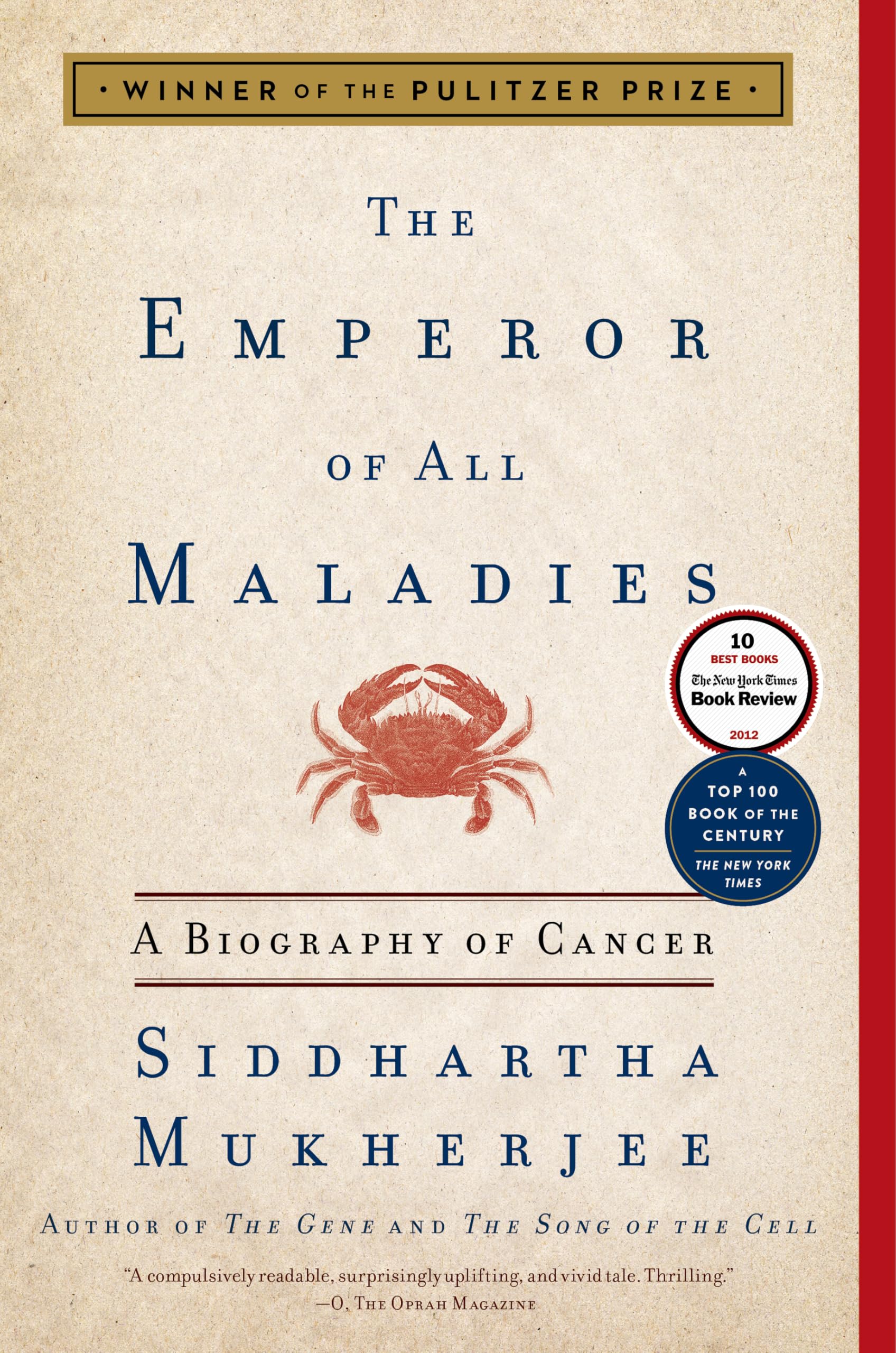
The Emperor of All Maladies: A Biography of Cancer [Mukherjee, Siddhartha] on desertcart.com. *FREE* shipping on qualifying offers. The Emperor of All Maladies: A Biography of Cancer Review: A Literary Achievement of Science - The Emperor of All Maladies: A Biography of Cancer by Siddhartha Mukherjee "The Emperor of All Maladies" is a literary achievement of science. It's an enlightening journey through the history of cancer through the eyes of a coming-of-age oncologist. A beautifully written book that treats this complex topic of cancer with the utmost care and respect while providing the reader valuable insights into the scientific quest to eradicate or control this insidious disease. This outstanding 608-page book is broken out into six major parts: 1. "Of blacke cholor, without boyling", 2. An Impatient War, 3. "Will you turn me out if I can't get better?", 4. Prevention is the Cure, 5. "A Distorted Version of our Normal Selves", and 6. The Fruits of Long Endeavors. Positives: 1. Outstanding accomplishment of literary science. Extensive research of cancer and conveyed to the masses in an enlightening readable fashion. Kudos! 2. Engaging and humane prose. 3. What sets this book apart is the author's ability to interweave human stories into the biography of cancer thus achieving a perfect balance of humanity and science. 4. Great facts and fascinating scientific tidbits about cancer throughout this book. 5. Cancer...what it is, and the never ending scientific quest to eradicate or control it. 6. Cancer has many manifestations. This book covers many of them through the eyes of the patients, scientists and doctors. Leukemia and breast cancer, do get special attention. 7. Innate ability of Dr. Mukherjee to provide details with panache. 8. The history of the drugs developed to combat the many manifestations of cancer. The history of the agencies, and support groups. The scientists behind the design, development and deployment of the drugs. 9. Great quotes, "Cancer thus exploits the fundamental logic of evolution unlike any other illness. If we, as a species, are the ultimate product of Darwinian selection, then so, too, is this incredible disease that lurks inside us". 10. A look into the history of ancient diseases. The progression (not always in a straight line either) of science as it relates to treating diseases. The key discoveries that were instrumental to progress, anesthesia as an example. The discovery of radium in 1902. 11. The history of organizations launched to fund research. Special mention to the tireless efforts of Mary Woodard Lasker and Sidney Farber. 12. Conducting clinical research. The trials and tribulations. The various treatments and effects. A lot of focus on chemotherapy. The multidrug concoctions. The reality of the results. The tamoxifen trial. 13. The causes of cancer. The various theories. As an example a look into the somatic mutation hypothesis of cancer. 14. The quest to understand the biological behavior of cancer before going on an all out attack. Fascinating stuff. 15. The quest to prevent diseases. Many examples of historical cases: the "chimney-sweepers' cancer, tobacco, malaria, to name a few. Find out the extreme experiment that put one scientist's own life at risk. 16. The history behind screening trials. Pap smears, mammography, the findings, and the lessons learned. 17. The insidious disease...AIDS. Retroviruses. 18. The link between chromosomal changes and cancer. The causes. 19. Proto-oncogenes. "Cancer was intrinsically loaded in our genome, awaiting activation". The first cogent and comprehensive theory of carcinogenesis. 20. Understanding the progression of cancer. "Down to their innate molecular core, cancer cells are hyperactive, survival-endowed, scrappy, fecund, inventive copies of ourselves." 21. The six rules that explain core behavior of more than a hundred types of tumors. 22. The three new Achilles' heels of cancer. The three essential ingredients for a targeted therapy for cancer. 23. The current biological and societal challenges of cancer. The pathway disease. 24. Excellent links to notes. 25. The inclusion of a glossary and bibliography. Negatives: 1. At over 600 pages, it does require an investment in time. Thankfully, it's time well invested. 2. Lack of charts and illustrations would have added value. Could have been added to appendices to avoid disrupting elegant prose. 3. It can be an emotional read sometimes as the reader will find themselves invested in the lives of so many people...let's face it, we are talking about dealing with cancer. 4. Some readers will get lost among the many and recurring storylines. 5. The photographs would have added more value if they would have been inserted in the context of the narrative instead of a separate appendix. In summary, this is an outstanding and important book. What sets this book apart is Dr. Mukherjee's ability to weave multiple storylines into a fascinating narrative about the history of cancer with just the right touch of humanity. This was an ambitious book and I can only imagine how daunting a quest this was but the author succeeds and as a result we the readers benefit from the knowledge and wisdom. I can't recommend it enough! Further suggestions: " The Immortal Life of Henrietta Lacks " by Rebecca Skloot, " The Secret History of the War on Cancer " by Devra Davis, " One Renegade Cell: How Cancer Begins (Science Masters Series) " by Robert A. Weinberg, " Cancer as a Metabolic Disease: On the Origin, Management, and Prevention of Cancer ", " The Violinist's Thumb: And Other Lost Tales of Love, War, and Genius, as Written by Our Genetic Code " by Sam Kean, and " Cancer Ward " by Alexander Isayevich Solzhenitsyn. Review: Simply Fascinating! - "Doctors are men who prescribe medicines of which they know little, to cure diseases of which they know less, in human beings whom they know nothing" --Voltaire The Emperor of All Maladies: A Biography of Cancer, is a fascinating book about the history of cancer, a disease that would kill 600,000 people in the United States, and 7 million people worldwide in 2010 alone. The author, an Oncologist, researcher, and professor of medicine began this book when he was a resident at Dana Farber Cancer Institute, and an Oncologist at Mass General Hospital in 2005. Most of the information learned about cancer in this novel takes is from the early 1900's to the present, however, in 440bc, a Greek Historian named Herodotus recorded the story of Atossa, Queen of Persia, who has a "bleeding lump in her breast. Her breast was removed, however, it is uncertain as to whether the cancer had returned when she died. There is also on record a 1,000 year old bone cancer preserved in a mummy that was a member of the Chiribaya Tribe. So it appears that cancer was present in the distant past, but that it was somewhat rare, probably because as the author writes. "people didn't live long enough to get cancer". Today since people are living longer and longer, it makes sense that more of us will die of this disease unless a cure is found, as "mutations in cancer genes increase with age". Today however, although significant advances have been made, the war on cancer has not been won by any means. The book is loaded with interesting information, but a difficult book to review, so I thought I would share a combination of statistics, advances in treatment and quotes, that I found interesting: "Killing a cancer cell in a test tube is easy. The trouble lies in finding a selective poison - a drug that will kill cancer without annihilating the patient" * Between 1970-1994, lung cancer was the #1 killer. Lung cancer with women over age 55 increased by 400%. * Between 1990-2005, mortality declined by about 1% each year for, lung, breast, colon and prostate cancer --despite this, a half million Americans died of cancer in 2005 alone. * 1/400 - 39 year old women will develop breast cancer * 1/9 - 70 year old women will develop breast cancer * As of 1981, radical mastectomy is rarely performed today * Prostate cancer and breast cancer are hormone dependent cancers * Breast cancer and ovarian cancer have been found to be connected In 1962, the drug Tamoxifen was developed for birth control, but was found to have the reverse effects, actually shutting off the estrogen signal to tissues. In 1973, V. Craig Jordan, a bio-chemist from a little known lab in Central Massachusetts found estrogen receptors were highly responsive to Tamoxifen which choke the cells growth, so a trial drug program was designed for women with advanced metastatic breast cancer, which seemed to cut the cancer's recurrence by 50% in women over 50. It lengthened survival, however, many patients eventually relapsed. The book is full of fascinating insights of the discoveries, advances and outcomes made by cutting edge scientists of the past and present, like the discovery of radium oncology in the early 1900s, mammography, PAP tests, and so much more. From the primitive surgeries of the past to the politics of battling insurance companies who deny treatments here today, this book is never dry or dull. The book is like a medical drama of the past and present. There are interesting photos, advertisements and articles as well. The book was easy to read and understand, even if you are someone who does not have a background in science. Don't let the 590+ pages discourage you from reading this wonderful book, as at least 20% of that are sources used for researching this book. HIGHLY RECOMMENDED


| Best Sellers Rank | #71,940 in Books ( See Top 100 in Books ) #1 in Oncology (Books) #3 in History of Medicine (Books) #49 in History of Civilization & Culture |
| Customer Reviews | 4.7 4.7 out of 5 stars (9,752) |
| Dimensions | 6.13 x 1.7 x 9.25 inches |
| Edition | Reprint |
| ISBN-10 | 1439170916 |
| ISBN-13 | 978-1439170915 |
| Item Weight | 2.31 pounds |
| Language | English |
| Print length | 608 pages |
| Publication date | August 9, 2011 |
| Publisher | Scribner |
B**K
A Literary Achievement of Science
The Emperor of All Maladies: A Biography of Cancer by Siddhartha Mukherjee "The Emperor of All Maladies" is a literary achievement of science. It's an enlightening journey through the history of cancer through the eyes of a coming-of-age oncologist. A beautifully written book that treats this complex topic of cancer with the utmost care and respect while providing the reader valuable insights into the scientific quest to eradicate or control this insidious disease. This outstanding 608-page book is broken out into six major parts: 1. "Of blacke cholor, without boyling", 2. An Impatient War, 3. "Will you turn me out if I can't get better?", 4. Prevention is the Cure, 5. "A Distorted Version of our Normal Selves", and 6. The Fruits of Long Endeavors. Positives: 1. Outstanding accomplishment of literary science. Extensive research of cancer and conveyed to the masses in an enlightening readable fashion. Kudos! 2. Engaging and humane prose. 3. What sets this book apart is the author's ability to interweave human stories into the biography of cancer thus achieving a perfect balance of humanity and science. 4. Great facts and fascinating scientific tidbits about cancer throughout this book. 5. Cancer...what it is, and the never ending scientific quest to eradicate or control it. 6. Cancer has many manifestations. This book covers many of them through the eyes of the patients, scientists and doctors. Leukemia and breast cancer, do get special attention. 7. Innate ability of Dr. Mukherjee to provide details with panache. 8. The history of the drugs developed to combat the many manifestations of cancer. The history of the agencies, and support groups. The scientists behind the design, development and deployment of the drugs. 9. Great quotes, "Cancer thus exploits the fundamental logic of evolution unlike any other illness. If we, as a species, are the ultimate product of Darwinian selection, then so, too, is this incredible disease that lurks inside us". 10. A look into the history of ancient diseases. The progression (not always in a straight line either) of science as it relates to treating diseases. The key discoveries that were instrumental to progress, anesthesia as an example. The discovery of radium in 1902. 11. The history of organizations launched to fund research. Special mention to the tireless efforts of Mary Woodard Lasker and Sidney Farber. 12. Conducting clinical research. The trials and tribulations. The various treatments and effects. A lot of focus on chemotherapy. The multidrug concoctions. The reality of the results. The tamoxifen trial. 13. The causes of cancer. The various theories. As an example a look into the somatic mutation hypothesis of cancer. 14. The quest to understand the biological behavior of cancer before going on an all out attack. Fascinating stuff. 15. The quest to prevent diseases. Many examples of historical cases: the "chimney-sweepers' cancer, tobacco, malaria, to name a few. Find out the extreme experiment that put one scientist's own life at risk. 16. The history behind screening trials. Pap smears, mammography, the findings, and the lessons learned. 17. The insidious disease...AIDS. Retroviruses. 18. The link between chromosomal changes and cancer. The causes. 19. Proto-oncogenes. "Cancer was intrinsically loaded in our genome, awaiting activation". The first cogent and comprehensive theory of carcinogenesis. 20. Understanding the progression of cancer. "Down to their innate molecular core, cancer cells are hyperactive, survival-endowed, scrappy, fecund, inventive copies of ourselves." 21. The six rules that explain core behavior of more than a hundred types of tumors. 22. The three new Achilles' heels of cancer. The three essential ingredients for a targeted therapy for cancer. 23. The current biological and societal challenges of cancer. The pathway disease. 24. Excellent links to notes. 25. The inclusion of a glossary and bibliography. Negatives: 1. At over 600 pages, it does require an investment in time. Thankfully, it's time well invested. 2. Lack of charts and illustrations would have added value. Could have been added to appendices to avoid disrupting elegant prose. 3. It can be an emotional read sometimes as the reader will find themselves invested in the lives of so many people...let's face it, we are talking about dealing with cancer. 4. Some readers will get lost among the many and recurring storylines. 5. The photographs would have added more value if they would have been inserted in the context of the narrative instead of a separate appendix. In summary, this is an outstanding and important book. What sets this book apart is Dr. Mukherjee's ability to weave multiple storylines into a fascinating narrative about the history of cancer with just the right touch of humanity. This was an ambitious book and I can only imagine how daunting a quest this was but the author succeeds and as a result we the readers benefit from the knowledge and wisdom. I can't recommend it enough! Further suggestions: " The Immortal Life of Henrietta Lacks " by Rebecca Skloot, " The Secret History of the War on Cancer " by Devra Davis, " One Renegade Cell: How Cancer Begins (Science Masters Series) " by Robert A. Weinberg, " Cancer as a Metabolic Disease: On the Origin, Management, and Prevention of Cancer ", " The Violinist's Thumb: And Other Lost Tales of Love, War, and Genius, as Written by Our Genetic Code " by Sam Kean, and " Cancer Ward " by Alexander Isayevich Solzhenitsyn.
M**S
Simply Fascinating!
"Doctors are men who prescribe medicines of which they know little, to cure diseases of which they know less, in human beings whom they know nothing" --Voltaire The Emperor of All Maladies: A Biography of Cancer, is a fascinating book about the history of cancer, a disease that would kill 600,000 people in the United States, and 7 million people worldwide in 2010 alone. The author, an Oncologist, researcher, and professor of medicine began this book when he was a resident at Dana Farber Cancer Institute, and an Oncologist at Mass General Hospital in 2005. Most of the information learned about cancer in this novel takes is from the early 1900's to the present, however, in 440bc, a Greek Historian named Herodotus recorded the story of Atossa, Queen of Persia, who has a "bleeding lump in her breast. Her breast was removed, however, it is uncertain as to whether the cancer had returned when she died. There is also on record a 1,000 year old bone cancer preserved in a mummy that was a member of the Chiribaya Tribe. So it appears that cancer was present in the distant past, but that it was somewhat rare, probably because as the author writes. "people didn't live long enough to get cancer". Today since people are living longer and longer, it makes sense that more of us will die of this disease unless a cure is found, as "mutations in cancer genes increase with age". Today however, although significant advances have been made, the war on cancer has not been won by any means. The book is loaded with interesting information, but a difficult book to review, so I thought I would share a combination of statistics, advances in treatment and quotes, that I found interesting: "Killing a cancer cell in a test tube is easy. The trouble lies in finding a selective poison - a drug that will kill cancer without annihilating the patient" * Between 1970-1994, lung cancer was the #1 killer. Lung cancer with women over age 55 increased by 400%. * Between 1990-2005, mortality declined by about 1% each year for, lung, breast, colon and prostate cancer --despite this, a half million Americans died of cancer in 2005 alone. * 1/400 - 39 year old women will develop breast cancer * 1/9 - 70 year old women will develop breast cancer * As of 1981, radical mastectomy is rarely performed today * Prostate cancer and breast cancer are hormone dependent cancers * Breast cancer and ovarian cancer have been found to be connected In 1962, the drug Tamoxifen was developed for birth control, but was found to have the reverse effects, actually shutting off the estrogen signal to tissues. In 1973, V. Craig Jordan, a bio-chemist from a little known lab in Central Massachusetts found estrogen receptors were highly responsive to Tamoxifen which choke the cells growth, so a trial drug program was designed for women with advanced metastatic breast cancer, which seemed to cut the cancer's recurrence by 50% in women over 50. It lengthened survival, however, many patients eventually relapsed. The book is full of fascinating insights of the discoveries, advances and outcomes made by cutting edge scientists of the past and present, like the discovery of radium oncology in the early 1900s, mammography, PAP tests, and so much more. From the primitive surgeries of the past to the politics of battling insurance companies who deny treatments here today, this book is never dry or dull. The book is like a medical drama of the past and present. There are interesting photos, advertisements and articles as well. The book was easy to read and understand, even if you are someone who does not have a background in science. Don't let the 590+ pages discourage you from reading this wonderful book, as at least 20% of that are sources used for researching this book. HIGHLY RECOMMENDED
C**M
Questionable quality, good book though
Just preordered and received new version. Was excited to read as an oncology NP but the a 10pg section was not binded in book and fell out as soon as opened it. Having replacement sent hopefully quality is better and got a random bad copy. Update: replacement sent right away and in better condition but binding still doesn't feel as sturdy as others. The book itself is great, very interesting and well written to keep your attention.
A**S
Ürün çok güzel ve beklediğim gibi geldi. Kitap kalitesi ve baskısı güzel. Teşekkür ederim.
A**S
I just finished reading it, and I must say it is definitely worthy of its Pulitzer. THe book features very detailed information (the amount of research needed must have been tremendous), but it is conveyed in a very fluid writing. Dr Mukherjee masterfully guides us through seminal moments in the history of cancer discovery and treatment, highlighting the human characters involved in each of those moments. It's very interesting to see characters and concepts come back again in different moments, often in ways to fill in gaps that seemed obvious in retrospect. The only significant aspect lacking in the book is the role of modern pharmaceutical companies and the government (and professional) entities that regulate them. We see a little bit of it with Genentech and Novartis, and the NCI is a major character in the book. However, the whole of the pharmaceutical industry and agencies like the FDA are not there. This is, nonetheless, a must read for anyone interested in digging deeper into the hows and whys of cancer as it is today. Since it was published in 2010, I would love to see an update (a sort of "sequel") covering the stories of the advancements of the last few years; since it's such a dynamic field.
H**K
From the very first pages, The Emperor of All Maladies captivates you with a rare blend of scientific clarity, historical sweep, and deeply human narrative. This is not just a medical history — it is a story of hope, suffering, reinvention, and the relentless struggle between life and disease. Beyond its scientific depth and historical scope, the book also shines as a work of literature. The prose is never dull — it is vivid, elegant, and often poetic. Siddhartha Mukherjee transforms what could have been a dense medical chronicle into an engrossing narrative, enriched with imagery and metaphor. His phrasing lingers long after the page is turned. When reflecting on a missed scientific opportunity, he observes: “The two halves of cancer, cause and cure, having feasted and been feted together, sped off in separate taxis into the night.” He defines cancer with striking clarity as “…where cells acquire an autonomous will to increase” and issues the ominous reminder that “Cancer is intrinsically loaded into our genes, waiting for activation.” Lines such as these reveal Mukherjee’s rare gift for making science not only understandable, but luminous and memorable. What Makes It Stand Out 1. Brilliant balance of science and story The author weaves detailed biomedical content (cell growth, oncogenes, molecular pathways) with gripping human stories of patients, doctors, and researchers. The technical details never overwhelm — they enrich the narrative, letting you see cancer not as abstraction, but as a tragic force that touches lives. 2. Immense sweep of history The book traces cancer’s battle from early observations through decades of experimentation, innovation, failures, and breakthroughs. You sense how medicine evolved — the shifting paradigms, the false leads, the incremental advances. This gives one a profound appreciation for how fragile and tentative progress often is. 3. Philosophical resonance The book frames cancer as not merely medical but existential. “Cancer is stitched into our genome… a flaw in our growth, but this flaw is deeply entrenched in ourselves.” Mukherjee makes us ask: can we ever fully eradicate cancer without also eradicating the very processes — aging, repair, regeneration — that sustain life? This questioning elevates the book from a chronicle to a meditation. A key insight: that cancer is, in some way, entangled with our very nature — embedded in processes of growth, aging, repair, mutation. 4. Moments of human resilience Between the science, there are stories of patients, physicians, and scientists — people who persevere, fail, adjust course, sometimes triumph. These human threads provide an emotional anchor. You care. You cheer. The personal dimension is not an afterthought — it is integral. 5. Impressive clarity and structure Even when describing complex processes (oncogenes, chemotherapy, genetic mutation), the author keeps explanations lucid and accessible. “Science embodies the human desire to understand nature; medicine, then, is fundamentally a technological art.” With sentences like this, the book feels like a guided journey, not a lecture. Standout Quotes: “Cancer is stitched into our genome… a flaw in our growth, but this flaw is deeply entrenched in ourselves.” “We can rid ourselves of cancer only as much as we can rid ourselves of the processes in our physiology that depend on growth — aging, regeneration, healing, reproduction.” “Science embodies the human desire to understand nature; medicine, then, is fundamentally a technological art.” “Perhaps cancer defines the inherent outer limit of our survival.” In Short: This book deserves five stars. It is rare to find a work that is at once scientifically ambitious and deeply humane, historically comprehensive and emotionally gripping. If you care about medicine, human suffering, scientific ambition, or just the fragility and resilience of life, this will stay with you long after the last page.
E**Y
Fantastic book. I read this during my undergraduate university years as a biology student studying health and disease. It was incredibly insightful, both for its historical storytelling and the slightly greater focus on the science of cancer compared to other similar books tailored for a general audience.
M**N
Una cronología fascinante de la historia del cáncer que ofrece una visión única sobre cómo se desarrollan los descubrimientos médicos y esta lacra no tan moderna de la sociedad. El libro mantiene el suspense de una novela negra basada en hechos reales y bien documentados que dejan al lector mucho más informado de lo que seguramente esperaba al abrir sus páginas por primera vez. Lo recomiendo a cualquier mente curiosa que quiera saber más sobre el mundo que le rodea y sobre todo a aquéllos, por desgracia cada vez más frecuentes, que tengan que vivir el cáncer de cerca.
TrustPilot
2 周前
2 个月前