We remain fully operational. Our teams are working around the clock to ensure your deliveries continue safely.

下载应用程序



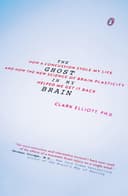
The Ghost in My Brain: How a Concussion Stole My Life and How the New Science of Brain Plasticity Helped Me Get It Back [Elliott, Clark] on desertcart.com. *FREE* shipping on qualifying offers. The Ghost in My Brain: How a Concussion Stole My Life and How the New Science of Brain Plasticity Helped Me Get It Back Review: An Inspiring Story of Concussion Recovery by "Hacking" the Brain With Visual Puzzles and Therapeutic Eye Glasses - Synopsis of the Book: The “Ghost in My Brain” is a fascinating and passionate book about how a concussion can wreck a life – and how avant-garde treatments like visual puzzles and special eyeglasses can quickly rewire the brain into recovery. Author Clark Elliott is a computer science professor at DePaul University in Chicago, Illinois. The book documents eight years of his life, and describes: • The automobile accident that gave him a concussion • The eight years of hell he endured as he struggled to raise a family and keep his university position in spite of concussion-impaired abilities • His rapid recovery (within one year!) after a combined treatment of context-free puzzles developed by psychologist Dr. Donalee Markus, and special therapeutic glasses designed by neuro-optometrist Dr. Deborah Zelinsky Throughout all this, Clark kept a detailed diary of his inner thoughts and personal experiences, and he used this 1200 page record to write the book. One of the book’s key narrative strengths is that he thoroughly describes the tragic ways the concussion sapped his energy and altered his normal brain function, and the ingenious coping strategies he used to appear “normal” to colleagues, friends, and family. Examples of his concussion-induced impairments include: • Taking minutes to recall important information – like the names of his children. • Getting “lost” in parking lots and streets he used every day. • Developing physical pain, nausea, loss of balance, and even seizures when he encountered certain sounds or visual patterns. • When listening to academic lectures, he only had 25 minutes of critical thinking time before he became mentally and physically non-functional. While enduring this for eight years, Clark consulted with the best traditional doctors in the field of brain injury and recovery – who said that he would never get any better, and that he should just learn to live with his symptoms. However, through a chance encounter he was introduced to Dr. Donalee Markus, and through her to neuro-optometrist Dr. Deborah Zelinsky. Working together – Dr. Markus with context free visual puzzles tuned to Clark’s concussion symptoms, and Dr. Zelinsky with glasses that altered the direction and frequency of light hitting his retina – Clark made rapid progress. Within two weeks “the fog lifted”, and he regained a significant portion of his cognitive abilities, and after six months he was largely recovered. What I liked: For me, the most emotionally affecting part of this book was Clark’s description of his “inner world” as a concussion patient, and the many overt and subtle ways that brain damage can impair one’s ability to think clearly and effectively, and to correctly process the “outside” world. Clark describes it as becoming an alien being that walks and talks and acts though he was part of the human race, but that it doesn’t feel that way inside. In addition, I was touched by Clark’s descriptions of how his concussion impaired personal talents that he loved and cherished – such as spatial visualization and reasoning. Having the concussion take away energy is bad enough – but losing the abilities that give one’s life meaning is even more tragic. We have all heard about football players who had to retire due to severe concussions – but how often do we hear about painters abandoning their art because a concussion destroyed their ability to see the world through an artist’s eye? While the book was emotionally inspiring, as a technologist I was also fascinated by the idea that one can “hack” the brain – change its function - through visual stimuli (puzzles) and special eyeglasses. Drs. Markus and Zelinsky altered Clark’s brain function to alleviate his concussion symptoms, but I wonder whether these same techniques can be used to treat other conditions – or to enhance already-existing abilities and talents. For example, Clark is a trained musician and vinyl-listening audiophile, and in the book describes how his therapeutic glasses had the unintended side effect of greatly improving his ability to perceive and visualize classical music. Conclusions: If you have a loved one who has suffered a concussion, I urge you to read this book. It will help you understand and appreciate the challenges they face both externally and internally, and it will also introduce you to new treatments that can be far more effective than traditional "wait and rest" protocols. In addition, technologists and those interested in neural science and brain plasticity should read this book. Clark’s detailed descriptions of his internal processing challenges illustrate the complexity of perception, and the idea of “hacking” (re-wiring) the brain via puzzles and special eyeglasses is a revolutionary idea. The author devotes a detailed chapter to each of these therapies and how they were applied to his condition, and these sections provide a very readable overview of each method’s theory and practice. Review: A terrific memoir about a misunderstood medical condition. - I, like Clark Elliott, suffered a (supposedly minor) concussion that, more than a decade later, continues to profoundly affect my life. I can't hold regular employment. My bouts of brain fog and fatigue rule every minute of my day, every day. I have had to simplify my life, strip it down to spartan basics just to get through my day without being overwhelmed. Given enough time I can perform some complex tasks, such as writing novels and painting, but I have difficulty with speech, simple decisions, daily routines and driving. The negative reviews posted here deride the book because they feel the author's experience is not credible. In my own experience, no one in the emergency room said a thing about a concussion, they were more worried about my neck. I felt fine for 24 hours after my accident (hit by a car while on my bike, fortunately wearing a helmet) then I could not get up for a week. It was my chiropractor who suggested I may suffer from post-concussive syndrome. My neurologiest never suggested an MRI, probably because this type of injury consists of microscopic tears that don't show up on an MRI, and the tests are a waste of money. You either get better, or you are one of the 2% of people with this type of injury who don't. While the field may be changing, in my situation, doctors prescribed anti-depressants and Adderall. Beyond that, they were not interested in any brain injury patient who knew which end of the toothbrush the paste went on. Counseling helps me keep my life on track and provides moral support, but there are really no options for folks like me and Elliot. We fall through the cracks. I belong to a brain injury group consisting of folks like me, who had seemingly minor concussions that ruined their lives. It may all be in our heads, but it is physiological, not psychological. I do not know Mr. Elliott, but I can assure you that the problems he reports are true of many, including the failure of people around him to comprehend his disability, and the failure of the medical community to provide adequate treatment. I have made strides with diet and herbs (in addition to my medications), but I am still about 30%. I am excited by the prospect of new treatment and intend to investigate this for myself. Still, if the treatment that helped Elliott does not help me, that does not negate its possibilities. Even with widely-accepted diseases/syndromes, different people respond to different treatments. If they did not, people would go to mechanics, not doctors.
| Best Sellers Rank | #267,457 in Books ( See Top 100 in Books ) #152 in Neuroscience (Books) #398 in Healing #3,530 in Memoirs (Books) |
| Customer Reviews | 4.6 4.6 out of 5 stars (537) |
| Dimensions | 0.8 x 5.4 x 8.4 inches |
| Edition | Reprint |
| ISBN-10 | 0143108298 |
| ISBN-13 | 978-0143108290 |
| Item Weight | 11 ounces |
| Language | English |
| Print length | 336 pages |
| Publication date | May 31, 2016 |
| Publisher | Penguin Books |
B**E
An Inspiring Story of Concussion Recovery by "Hacking" the Brain With Visual Puzzles and Therapeutic Eye Glasses
Synopsis of the Book: The “Ghost in My Brain” is a fascinating and passionate book about how a concussion can wreck a life – and how avant-garde treatments like visual puzzles and special eyeglasses can quickly rewire the brain into recovery. Author Clark Elliott is a computer science professor at DePaul University in Chicago, Illinois. The book documents eight years of his life, and describes: • The automobile accident that gave him a concussion • The eight years of hell he endured as he struggled to raise a family and keep his university position in spite of concussion-impaired abilities • His rapid recovery (within one year!) after a combined treatment of context-free puzzles developed by psychologist Dr. Donalee Markus, and special therapeutic glasses designed by neuro-optometrist Dr. Deborah Zelinsky Throughout all this, Clark kept a detailed diary of his inner thoughts and personal experiences, and he used this 1200 page record to write the book. One of the book’s key narrative strengths is that he thoroughly describes the tragic ways the concussion sapped his energy and altered his normal brain function, and the ingenious coping strategies he used to appear “normal” to colleagues, friends, and family. Examples of his concussion-induced impairments include: • Taking minutes to recall important information – like the names of his children. • Getting “lost” in parking lots and streets he used every day. • Developing physical pain, nausea, loss of balance, and even seizures when he encountered certain sounds or visual patterns. • When listening to academic lectures, he only had 25 minutes of critical thinking time before he became mentally and physically non-functional. While enduring this for eight years, Clark consulted with the best traditional doctors in the field of brain injury and recovery – who said that he would never get any better, and that he should just learn to live with his symptoms. However, through a chance encounter he was introduced to Dr. Donalee Markus, and through her to neuro-optometrist Dr. Deborah Zelinsky. Working together – Dr. Markus with context free visual puzzles tuned to Clark’s concussion symptoms, and Dr. Zelinsky with glasses that altered the direction and frequency of light hitting his retina – Clark made rapid progress. Within two weeks “the fog lifted”, and he regained a significant portion of his cognitive abilities, and after six months he was largely recovered. What I liked: For me, the most emotionally affecting part of this book was Clark’s description of his “inner world” as a concussion patient, and the many overt and subtle ways that brain damage can impair one’s ability to think clearly and effectively, and to correctly process the “outside” world. Clark describes it as becoming an alien being that walks and talks and acts though he was part of the human race, but that it doesn’t feel that way inside. In addition, I was touched by Clark’s descriptions of how his concussion impaired personal talents that he loved and cherished – such as spatial visualization and reasoning. Having the concussion take away energy is bad enough – but losing the abilities that give one’s life meaning is even more tragic. We have all heard about football players who had to retire due to severe concussions – but how often do we hear about painters abandoning their art because a concussion destroyed their ability to see the world through an artist’s eye? While the book was emotionally inspiring, as a technologist I was also fascinated by the idea that one can “hack” the brain – change its function - through visual stimuli (puzzles) and special eyeglasses. Drs. Markus and Zelinsky altered Clark’s brain function to alleviate his concussion symptoms, but I wonder whether these same techniques can be used to treat other conditions – or to enhance already-existing abilities and talents. For example, Clark is a trained musician and vinyl-listening audiophile, and in the book describes how his therapeutic glasses had the unintended side effect of greatly improving his ability to perceive and visualize classical music. Conclusions: If you have a loved one who has suffered a concussion, I urge you to read this book. It will help you understand and appreciate the challenges they face both externally and internally, and it will also introduce you to new treatments that can be far more effective than traditional "wait and rest" protocols. In addition, technologists and those interested in neural science and brain plasticity should read this book. Clark’s detailed descriptions of his internal processing challenges illustrate the complexity of perception, and the idea of “hacking” (re-wiring) the brain via puzzles and special eyeglasses is a revolutionary idea. The author devotes a detailed chapter to each of these therapies and how they were applied to his condition, and these sections provide a very readable overview of each method’s theory and practice.
G**Y
A terrific memoir about a misunderstood medical condition.
I, like Clark Elliott, suffered a (supposedly minor) concussion that, more than a decade later, continues to profoundly affect my life. I can't hold regular employment. My bouts of brain fog and fatigue rule every minute of my day, every day. I have had to simplify my life, strip it down to spartan basics just to get through my day without being overwhelmed. Given enough time I can perform some complex tasks, such as writing novels and painting, but I have difficulty with speech, simple decisions, daily routines and driving. The negative reviews posted here deride the book because they feel the author's experience is not credible. In my own experience, no one in the emergency room said a thing about a concussion, they were more worried about my neck. I felt fine for 24 hours after my accident (hit by a car while on my bike, fortunately wearing a helmet) then I could not get up for a week. It was my chiropractor who suggested I may suffer from post-concussive syndrome. My neurologiest never suggested an MRI, probably because this type of injury consists of microscopic tears that don't show up on an MRI, and the tests are a waste of money. You either get better, or you are one of the 2% of people with this type of injury who don't. While the field may be changing, in my situation, doctors prescribed anti-depressants and Adderall. Beyond that, they were not interested in any brain injury patient who knew which end of the toothbrush the paste went on. Counseling helps me keep my life on track and provides moral support, but there are really no options for folks like me and Elliot. We fall through the cracks. I belong to a brain injury group consisting of folks like me, who had seemingly minor concussions that ruined their lives. It may all be in our heads, but it is physiological, not psychological. I do not know Mr. Elliott, but I can assure you that the problems he reports are true of many, including the failure of people around him to comprehend his disability, and the failure of the medical community to provide adequate treatment. I have made strides with diet and herbs (in addition to my medications), but I am still about 30%. I am excited by the prospect of new treatment and intend to investigate this for myself. Still, if the treatment that helped Elliott does not help me, that does not negate its possibilities. Even with widely-accepted diseases/syndromes, different people respond to different treatments. If they did not, people would go to mechanics, not doctors.
J**R
I'm very pleased with the book which came in only one day. Thankyou
D**G
My wife suffered a ABI in 2014 and received help early on after her injury.Clark's experience of looking for help and not getting it, for over 8 years was tough to read.I found the recall Clark had from notes taken during that time incredible, but given his background beleiveable.I know two ABI 's are alike but the rehabilitation vision therapies documented in this book are ESSENTIAL to a recovery.This is a must read for victims and family members of anyone suffering from a ABI
M**U
Ein spannender und beklemmender Bericht eines Hirnverletzten, der von der Medizin völlig im Stich gelassen wird. Man kann das Buch kaum weglegen. Nach 8 Jahren unsagbaren Leidens entdeckt er zwei Ärzte, die sein Leben verändern und ihn heilen. Erstaunlich und hoffnungsvoll. In diesem Buch gibt es längere Erörterungen zur Funktion des Hirns und der Verarbeitung von Informationen, die ich sehr interessant fand, die eine weniger Interessierte Person vielleicht als etwas zu ausführlich empfinden könnte. Ein absolutes «must-read» für alle Menschen, die eine Gehirnerschütterung oder Hirnverletzung erlitten haben, oder so jemanden in ihrem Bekanntenkreis oder ihrer Familie haben! Brennend interessant für alle, die sich für Hirnforschung interessieren.
D**N
This is an amazing story and also quite scary. Scary from a number points of view, 1. How easy it can be to suffer T.B.I. and 2. how such an injury can have devastating long term effects. 3 The really scary thing in this story is the fact that Clark had the persistence and determination, not to mention the background education to persist in looking for answers to explain his condition and ultimately find a cure, or the people with the cure. This book highlights the amazing work carried out by Donalee Markus and Deborah Zelinsky and their fantastic knowledge and understanding in their field of expertise, it also highlights the lack of knowledge and even, in my view, lack of interest of the personnel in A&E departments and M.D. practioners when it comes to illness and unusual conditions being presented.
M**T
Well written and explained. A must read
TrustPilot
2 个月前
2 周前