We remain fully operational. Our teams are working around the clock to ensure your deliveries continue safely.

下载应用程序


![The Explosive Child [Sixth Edition]: A New Approach for Understanding and Parenting Easily Frustrated, Chronically Inflexible Children](/_next/image?url=https%3A%2F%2Fm.media-amazon.com%2Fimages%2FI%2F7148uFt7XbL.jpg&w=3840&q=75)
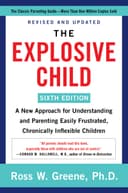
The Explosive Child [Sixth Edition]: A New Approach for Understanding and Parenting Easily Frustrated, Chronically Inflexible Children [Greene PhD, Ross W.] on desertcart.com. *FREE* shipping on qualifying offers. The Explosive Child [Sixth Edition]: A New Approach for Understanding and Parenting Easily Frustrated, Chronically Inflexible Children Review: Game Changer - This book was enthusiastically recommended to me (along with Motivational Interviewing) when I was struggling with a teenage foster son. It has been a game changer with my elementary schooler, who is generally well-behaved but sometimes oppositional. The book teaches a simple recipe for working WITH a child to troubleshoot issues, called Collaborative Problem Solving (CPS). The focus is working with children who are oppositional, reactive, or stubborn to brainstorm and implement solutions that will satisfy both the child and the adult. Over time, CPS can help the child meet expectations, improve the overall climate of the relationship, and help the child develop better executive function. It's simple enough that even I can remember the steps, haha. I would make one observation: TBRI is a prerequisite for CPS; they complement each other. When a child is empowered through feeling safe and calm and having basic needs met, and is primed to learn through playful connection, then the door is wide open for CPS. And CPS will reinforce TBRI; it’s a corrective approach that will also further empower and connect the child. A great way to learn TBRI is to read The Connected Child or to watch the Karyn Purvis Institute videos. Watch the teen TBRI videos if that's your age group. Review: Amazing book - I recommend to everyone I know who works with children or has children.


| Best Sellers Rank | #2,608 in Books ( See Top 100 in Books ) #1 in Behavioral Disorders in Special Ed. #6 in School-Age Children Parenting #8 in Popular Child Psychology |
| Customer Reviews | 4.6 4.6 out of 5 stars (3,181) |
| Dimensions | 5.31 x 0.61 x 8 inches |
| Edition | Updated |
| ISBN-10 | 0063092468 |
| ISBN-13 | 978-0063092464 |
| Item Weight | 2.31 pounds |
| Language | English |
| Print length | 272 pages |
| Publication date | August 17, 2021 |
| Publisher | Harper Paperbacks |
J**R
Game Changer
This book was enthusiastically recommended to me (along with Motivational Interviewing) when I was struggling with a teenage foster son. It has been a game changer with my elementary schooler, who is generally well-behaved but sometimes oppositional. The book teaches a simple recipe for working WITH a child to troubleshoot issues, called Collaborative Problem Solving (CPS). The focus is working with children who are oppositional, reactive, or stubborn to brainstorm and implement solutions that will satisfy both the child and the adult. Over time, CPS can help the child meet expectations, improve the overall climate of the relationship, and help the child develop better executive function. It's simple enough that even I can remember the steps, haha. I would make one observation: TBRI is a prerequisite for CPS; they complement each other. When a child is empowered through feeling safe and calm and having basic needs met, and is primed to learn through playful connection, then the door is wide open for CPS. And CPS will reinforce TBRI; it’s a corrective approach that will also further empower and connect the child. A great way to learn TBRI is to read The Connected Child or to watch the Karyn Purvis Institute videos. Watch the teen TBRI videos if that's your age group.
A**L
Amazing book
I recommend to everyone I know who works with children or has children.
N**E
learning how to relate to an explosive child
I cannot say enough good about this book. We adopted 2 boys, both having FASD, one presenting very explosive behaviors. Most times we wouldn’t know what provoked him. He was in therapy with a Dr for 7 years (he’s 10 now). We finally pulled him out of the useless therapy. Public schools gave up on him. (Actually a good thing). He was admitted to a therapeutic day school. The entire staff are therapists, and trained in behavior therapy. AMAZING. But after reading this book and implementing plan B, the improvement we saw at home has been amazing. We are now seeing behavioral issues way less often. I highly recommend everyone, parents and foster parents to read this book. It brings everything into perspective. Your family will be so stress free, just by not walking on eggshells constantly
D**.
Good not great
Not what I thought it would be but it had some good points. We have a child with severe Autism and I feel as though not everything would be fitting to the diagnosis situation. It’s worth the read I believe if you have a child struggling with behavioral issues/authority. Perhaps a head strong toddler?
A**L
Don't be distracted by the title.
The title seems a bit jarring but ultimately this book is about learning to recognize patterns of disruption for your child, and learning ways to proactively avoid stressful situations when you can...and tools for discussions when you cant. Highly recommend!
B**P
The most important book parents, teachers, and anyone who works with kids should read!!!!!
Seven years ago I found the earlier version of this book and have been using it in my practice as a mental health counselor ever since. It is, by far, the most important book in my library and I urge all the parents of the kids I work with to purchase, read, and use the CPS method. I also urge teachers and school administrators to read the two book Dr. Ross Greene has written specifically for use in schools to eliminate corporal punishment, detentions, in-school suspensions, and out of school suspensions. If you want to stop behavior problems, READ THIS BOOK AND USE THE METHOD!
C**I
Psych book
Excellent for college
A**S
Children can't solve all of their problems
My first-grader has had difficulty going to school. My ex-husband's girlfriend has found this book helpful in her work with foster children, so he recommended this book to me. I said, the child isn't explosive. She gets overwhelmed and can't face the day. He said the book is about more than just explosive children. Rather than miss a possible answer, I bought the book. There are a lot of examples of children acting out in the book that did not fit my child, but the basic premise of the book is that children do well if they can, so ask them what they need to solve problems. I think that is a reasonable premise. It isn't unique to this book, but it is reasonable. However, sometimes children have big problems. My child saw her parents separate, the effects of my tumor and surgery, and her dad and his girlfriend start blending families, all within one year. What she needs is impossible. But what she does asks for is to stay home from school and be held all day. I snuggle and hold her as much as I can at other times, but some days it seems there are not enough snuggles possible to fill her up and she can't face the world. Her needs are reasonable and she is doing a great job of telling me what her needs are. But school is not optional. She has to go to school. The premise of this book is fine, but what can be done when a child has big, reasonable needs like stability and security that cannot be met, through no fault of the child's? Sometimes grown-ups have responsibilities for creating situations, and in some cases labels like "Explosive Child" can potentially give parents excuses. It is possible that asking a child to solve their own needs could potentially be twisted into something unhealthy, especially in the case of young children adapting to gown-up problems. My child says what she needs clearly, "I need snuggles". But I simply cannot fill up her need for safety and security enough. That isn't on her. I can't just pat myself on the back and say, "I invited her to solve her own problems, I did my part." I don't know how to solve these problems, but I do not see that a label like "explosive child" (or imploding), "chronically inflexible", or even "behaviorally challenging" is helpful in our situation.
J**S
Very helpful I wish have found it earlier in my motherhood journey If you have pre teen or a teen it will be great to read this. I loved the book and the idea of lacking skills did help us at home.
O**A
He hecho el plan b de emergencia, mi hijo tiene 4 y en realidad el no intervino tanto en el plan pero me dió más paciencia y encontrar la raíz del problema en el paso de empatía. Pienso que este libro es útil, seguro lo involucraré más conforme crezca.
L**E
Absolutely amazing i loved the book definitely recommended for parents or teachers that teach young students
P**G
Good
A**Y
This book helped me to understand my daughter and try a different approach. Just when I was feeling like all hope was lost and I was beyond breaking point with her, after reading this I have hope again that we can repair and things can change for the better for both of us
TrustPilot
2 个月前
1 周前