We remain fully operational. Our teams are working around the clock to ensure your deliveries continue safely.

下载应用程序


Buy anything from 5,000+ international stores. One checkout price. No surprise fees. Join 2M+ shoppers on Desertcart.
Desertcart purchases this item on your behalf and handles shipping, customs, and support to Taiwan.
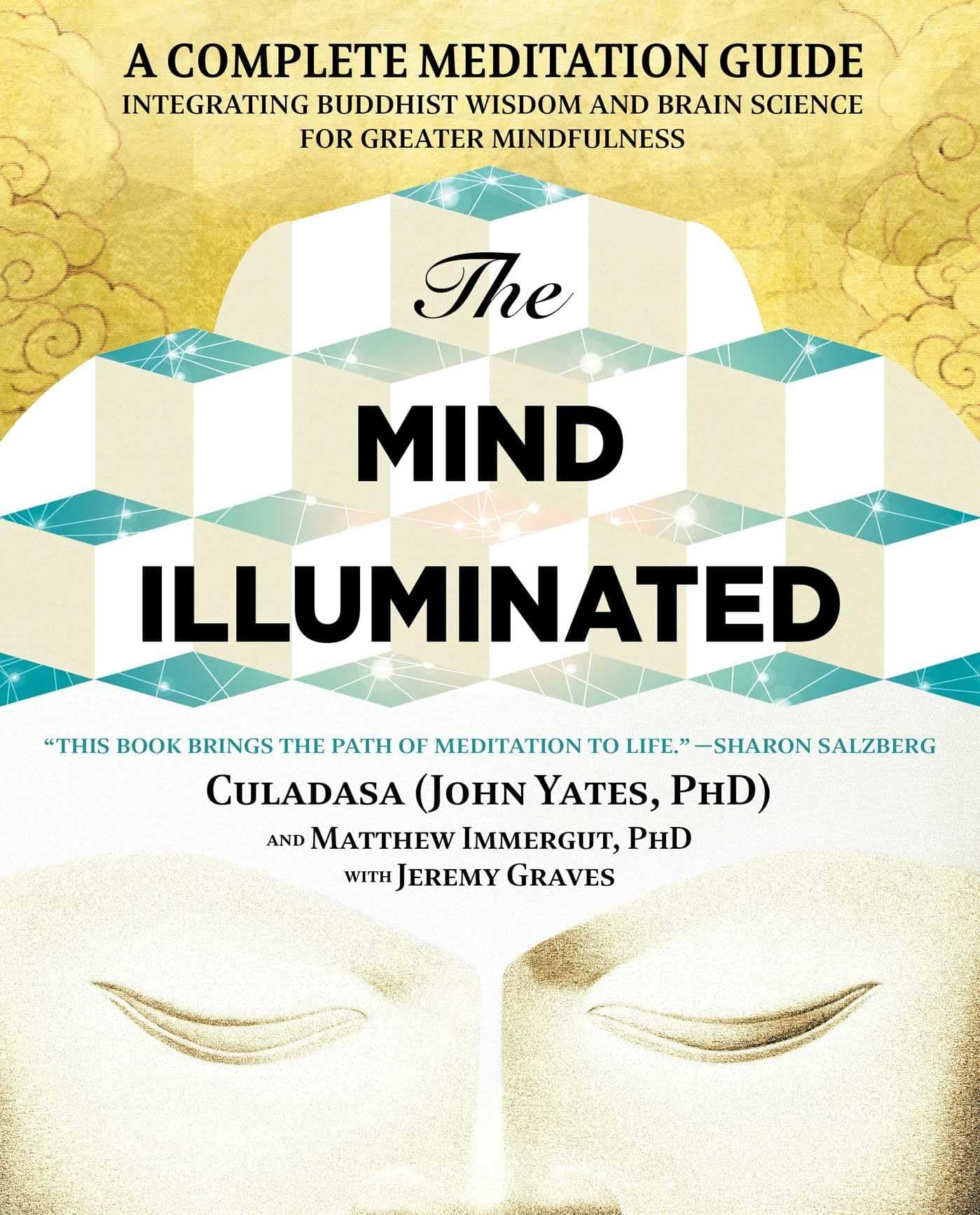
Buy The Mind Illuminated: A Complete Meditation Guide Integrating Buddhist Wisdom and Brain Science for Greater Mindfulness on desertcart.com ✓ FREE SHIPPING on qualified orders Review: The very best book on meditation I've read - The very best book on meditation I've read, and I have read many. My primary interests have been in Zen, Theravada / Thai Forest Buddhist teachings, and S.N. Goenka's meditation teachings. Most secular Buddhist types will probably have a similar background so this review is for you. I don't know Culadasa (John Yates) or any of his students or much of anything about his school. This book was my first exposure to his teaching. I came away from reading it with what feels like a crystal clear understanding in broad terms of the path of meditative practice. The ideas laid out in this book unified and stitched together various teachings I've bumped into across different traditions, and made sense of all of them by introducing clear standardized terminology and doing away with all abstraction and poetic pretense. It was immediately obvious to me reading The Mind Illuminated exactly where in Culadasa's 10 step demarcation of the path I am currently. It was also immediately obvious how my years of spiritual practice so far lined up against the 10 stage model; it is not a simple forward progression. Demoralizing backslides and sudden bursts of insight are given perfectly sound rational explanation in this book, and in that way many of my greatest hangups about meditative practice have been put to rest. The second major point here is that even the stages I haven't reached were absolutely clear on first reading. Without any grasping attempts at fully describing heightened meditative experiences, just enough reference is given so that even someone at an earlier stage will understand what later stages might be like, and exactly what changes/effort are required to reach them. The entire spectrum from bored / tentative beginner to full Awakening are represented such that any layman will understand what is meant, and in that way this book is extremely motivating. A third striking feature of this book is that it hardly comes across as a book about Buddhism. If you read only the main body of text and ignore all the endnotes, you will see only two or three significant mentions of Buddhism or Buddhist-specific terminology (except for the quite vanilla Anapanasati Sutta, which is briefly referenced at the end of most chapters). It is presented as a basically secular layman's meditation manual. However if you are familiar with Buddhism and the various traditions of meditative practice, those concepts will jump right out at you and if you flip to the endnotes you'll be treated to lovely, lengthy selections and citations straight from the Pali Canon and other widely studied Buddhist sources. The appendices are very helpful and flesh out all the most important peripheral practices that are NOT simple concentration on the breath: walking meditation, metta, jhanas, progress of insight, etc. I have to add my main criticism here as well, to be fair. I feel Culadasa shied away from discussing ethical conduct at any great length, perhaps for good pedagogical reasons and not wanting to put anyone off. But at least in my experience, meditation never bore any fruit whatsoever until it connected with my daily life in the form of practicing sila. I would have loved to see an appendix discussing the traditional five precepts, or any other permutation of tangible moral guidelines. Instead the extend of ethical discussion is something like, "don't hurt people because it will destroy your peace of mind," which is fine, but too general to be useful. In terms of the eightfold path and three trainings model (sila, samadhi, panna), this book only really addresses samadhi. It is clear why sila is important to support samadhi, and why samadhi is important to cultivate panna, but actual teachings on sila or panna are extremely thin. To summarize my glowing review, reading this book clarified and energized my practice unlike any other book I've read, and each chapter felt like another years-old mystery was laid to rest. I truly believe this is the best "owner's manual" for the meditator's mind that has ever been put together. Practicing meditation without having read this is like teaching yourself microbiology with just a microscope and no textbook or teacher... It'll take years to even figure out the basics for yourself, which could have been mastered in a few weeks with proper explanation. Review: A Scientific Milestone and Masterpiece - It may sound strange, but this is a meditation book that I would recommend even to people who have no intention of ever meditating: I'm on my second cover-to-cover reading of this 500-page tome, and I'm convinced it will be regarded by future historians as a scientific milestone and a masterpiece. The reason I would recommend it to everyone (meditator or not) is that it describes, better than any previous effort I've seen, how the human mind actually works. And it does so clearly, in astonishing detail, and with scientific rigor. The author is a neuroscientist, and has a fully scientific worldview, but he's also a 40-year-veteran meditator and scholar of the Buddhist literature on the mind. He's done something unprecedented here: He's taken the wordy, redundant, and nearly indecipherable gobbledygook of the ancient Buddhist teachings, lifted out the real scientific truths concealed in the old mystical language, and combined it with modern neuroscience to come up with a super-clear, step-by-step description of how a mind works and how meditation works to train a mind. An analogy: What he's done here is like a modern scientist taking the old witch-doctor recommendation to chew the bark of a willow when you have a toothache. The modern scientist analyzes willow bark to find that it contains salicylic acid (which it does) and then points out: This recommendation is valid because willow bark contains aspirin. That's why this folk remedy works. And also, here is exactly how much bark you should chew to get the effective dose. Or if you prefer, I have some bottled aspirin here you could take instead. Yates has done an immense service to humankind by separating the wheat from the chaff of this 2600-year-old practice. And I'm even more impressed, on the second reading, with the astonishing level of detail and clarity with which he presents this. It's incredibly detailed in its presentation of a step-by-step guide through ever-advancing stages of mental training via meditation. Basically 500 pages of step-by-step instruction through ten "Stages" of progress as a meditator (I discovered that I'm on Stage 3). I had felt stalled for years as a meditator, but since reading this I'm rapidly making progress again. And more importantly, I see a clear path ahead to clearly defined goals for the first time. And I have easy-to-understand criteria to measure progress and know where I'm going and why. This is revolutionary. It's so different from the vaguely defined practices and goals taught by traditional teachers. It's also great to see what the full path looks like, through all 10 stages, and to realize that there are important benefits to be found at each stage, even if you don't want to reach the top of the mountain. I still don't know if I want to reach "Awakening" (in theory the ultimate goal of meditation), because I'm not sure I want to be one with the universe, or at least at this point in my life. I'm having too much fun with my compulsions and bad habits to want full enlightenment right now. But maybe one day. (Regarding Awakening, I often feel like St. Augustine, who famously prayed: "Lord give me chastity, but not yet.") I think anyone who is highly introspective, and who wants to understand his or her own mind better, can benefit from reading this book. Of course, I can't imagine reading it and NOT wanting to meditate intensively, but I think it would be valuable to anyone. And for me, it has been super-helpful to understand that I'm at Stage 3 of the 10 stages, and his practical tips have me "unstuck" and moving toward Stage 4 rapidly (well I hope it's rapidly). I recommend the physical book, not Kindle, because the illustrations are extremely clarifying and they may not come through as well in Kindle format. I can't say enough good things about this book. A real achievement.
| Best Sellers Rank | #13,930 in Books ( See Top 100 in Books ) #11 in Buddhist Rituals & Practice (Books) #33 in Meditation (Books) #36 in Cognitive Psychology (Books) |
| Customer Reviews | 4.7 4.7 out of 5 stars (2,198) |
| Dimensions | 7.38 x 1.28 x 9.12 inches |
| ISBN-10 | 1501156985 |
| ISBN-13 | 978-1501156984 |
| Item Weight | 1.88 pounds |
| Language | English |
| Print length | 512 pages |
| Publication date | January 3, 2017 |
| Publisher | Atria Books |
E**T
The very best book on meditation I've read
The very best book on meditation I've read, and I have read many. My primary interests have been in Zen, Theravada / Thai Forest Buddhist teachings, and S.N. Goenka's meditation teachings. Most secular Buddhist types will probably have a similar background so this review is for you. I don't know Culadasa (John Yates) or any of his students or much of anything about his school. This book was my first exposure to his teaching. I came away from reading it with what feels like a crystal clear understanding in broad terms of the path of meditative practice. The ideas laid out in this book unified and stitched together various teachings I've bumped into across different traditions, and made sense of all of them by introducing clear standardized terminology and doing away with all abstraction and poetic pretense. It was immediately obvious to me reading The Mind Illuminated exactly where in Culadasa's 10 step demarcation of the path I am currently. It was also immediately obvious how my years of spiritual practice so far lined up against the 10 stage model; it is not a simple forward progression. Demoralizing backslides and sudden bursts of insight are given perfectly sound rational explanation in this book, and in that way many of my greatest hangups about meditative practice have been put to rest. The second major point here is that even the stages I haven't reached were absolutely clear on first reading. Without any grasping attempts at fully describing heightened meditative experiences, just enough reference is given so that even someone at an earlier stage will understand what later stages might be like, and exactly what changes/effort are required to reach them. The entire spectrum from bored / tentative beginner to full Awakening are represented such that any layman will understand what is meant, and in that way this book is extremely motivating. A third striking feature of this book is that it hardly comes across as a book about Buddhism. If you read only the main body of text and ignore all the endnotes, you will see only two or three significant mentions of Buddhism or Buddhist-specific terminology (except for the quite vanilla Anapanasati Sutta, which is briefly referenced at the end of most chapters). It is presented as a basically secular layman's meditation manual. However if you are familiar with Buddhism and the various traditions of meditative practice, those concepts will jump right out at you and if you flip to the endnotes you'll be treated to lovely, lengthy selections and citations straight from the Pali Canon and other widely studied Buddhist sources. The appendices are very helpful and flesh out all the most important peripheral practices that are NOT simple concentration on the breath: walking meditation, metta, jhanas, progress of insight, etc. I have to add my main criticism here as well, to be fair. I feel Culadasa shied away from discussing ethical conduct at any great length, perhaps for good pedagogical reasons and not wanting to put anyone off. But at least in my experience, meditation never bore any fruit whatsoever until it connected with my daily life in the form of practicing sila. I would have loved to see an appendix discussing the traditional five precepts, or any other permutation of tangible moral guidelines. Instead the extend of ethical discussion is something like, "don't hurt people because it will destroy your peace of mind," which is fine, but too general to be useful. In terms of the eightfold path and three trainings model (sila, samadhi, panna), this book only really addresses samadhi. It is clear why sila is important to support samadhi, and why samadhi is important to cultivate panna, but actual teachings on sila or panna are extremely thin. To summarize my glowing review, reading this book clarified and energized my practice unlike any other book I've read, and each chapter felt like another years-old mystery was laid to rest. I truly believe this is the best "owner's manual" for the meditator's mind that has ever been put together. Practicing meditation without having read this is like teaching yourself microbiology with just a microscope and no textbook or teacher... It'll take years to even figure out the basics for yourself, which could have been mastered in a few weeks with proper explanation.
P**E
A Scientific Milestone and Masterpiece
It may sound strange, but this is a meditation book that I would recommend even to people who have no intention of ever meditating: I'm on my second cover-to-cover reading of this 500-page tome, and I'm convinced it will be regarded by future historians as a scientific milestone and a masterpiece. The reason I would recommend it to everyone (meditator or not) is that it describes, better than any previous effort I've seen, how the human mind actually works. And it does so clearly, in astonishing detail, and with scientific rigor. The author is a neuroscientist, and has a fully scientific worldview, but he's also a 40-year-veteran meditator and scholar of the Buddhist literature on the mind. He's done something unprecedented here: He's taken the wordy, redundant, and nearly indecipherable gobbledygook of the ancient Buddhist teachings, lifted out the real scientific truths concealed in the old mystical language, and combined it with modern neuroscience to come up with a super-clear, step-by-step description of how a mind works and how meditation works to train a mind. An analogy: What he's done here is like a modern scientist taking the old witch-doctor recommendation to chew the bark of a willow when you have a toothache. The modern scientist analyzes willow bark to find that it contains salicylic acid (which it does) and then points out: This recommendation is valid because willow bark contains aspirin. That's why this folk remedy works. And also, here is exactly how much bark you should chew to get the effective dose. Or if you prefer, I have some bottled aspirin here you could take instead. Yates has done an immense service to humankind by separating the wheat from the chaff of this 2600-year-old practice. And I'm even more impressed, on the second reading, with the astonishing level of detail and clarity with which he presents this. It's incredibly detailed in its presentation of a step-by-step guide through ever-advancing stages of mental training via meditation. Basically 500 pages of step-by-step instruction through ten "Stages" of progress as a meditator (I discovered that I'm on Stage 3). I had felt stalled for years as a meditator, but since reading this I'm rapidly making progress again. And more importantly, I see a clear path ahead to clearly defined goals for the first time. And I have easy-to-understand criteria to measure progress and know where I'm going and why. This is revolutionary. It's so different from the vaguely defined practices and goals taught by traditional teachers. It's also great to see what the full path looks like, through all 10 stages, and to realize that there are important benefits to be found at each stage, even if you don't want to reach the top of the mountain. I still don't know if I want to reach "Awakening" (in theory the ultimate goal of meditation), because I'm not sure I want to be one with the universe, or at least at this point in my life. I'm having too much fun with my compulsions and bad habits to want full enlightenment right now. But maybe one day. (Regarding Awakening, I often feel like St. Augustine, who famously prayed: "Lord give me chastity, but not yet.") I think anyone who is highly introspective, and who wants to understand his or her own mind better, can benefit from reading this book. Of course, I can't imagine reading it and NOT wanting to meditate intensively, but I think it would be valuable to anyone. And for me, it has been super-helpful to understand that I'm at Stage 3 of the 10 stages, and his practical tips have me "unstuck" and moving toward Stage 4 rapidly (well I hope it's rapidly). I recommend the physical book, not Kindle, because the illustrations are extremely clarifying and they may not come through as well in Kindle format. I can't say enough good things about this book. A real achievement.
A**O
The Mind Illuminated is one of the most comprehensive and well-structured books on meditation I’ve ever read. It combines traditional Buddhist wisdom with modern neuroscience to create a clear, step-by-step path for deepening mindfulness and concentration. What I appreciated most is how the author breaks the journey into ten well-defined stages, making what can feel like a vague or abstract practice into something practical and measurable. Whether you're a beginner or an experienced meditator, this book offers insights that can support a lifelong practice. It’s not a quick or light read — it’s meant to be studied and returned to — but if you're serious about meditation, it's an incredibly valuable resource.
A**O
Las enseñanzas de Buda explicadas para mentes occidentales, con un sesgo quasi cientifico a veces, cosa con la que personalmente conecto. Agradezco a los autores el esfuerzo clarificador y a todos, los que a lo largo de la historia han permitido que la expresión de las enseñanzas contenidas en el libro, hayan llegado a todos nosotros.
P**J
Easy to read and follow, very informative and interesting. Probably the best book out there in its genre.
B**.
This book is a guidebook. It is a completely banal thing to say, but the fact is that it is the first real meditation guidebook that I ever found. It is clear, very detailed, very well structured, soundly documented and based on a combination of both neuroscientific knowledge and deep and advanced meditation knowledge. The first book which treats meditation in a typically western technical and scientific way, making it completely usable by a western mind, while at the same time not being afraid to talk about awakening. it is a complete gold mine for the meditator. It completely changed my practise by giving me some very clear and documented guidelines about how to proceed, so that the mastery of meditation becomes a planned and controlled thing rather than a romantic realisation. The timing itself is another story and will of course completely depend on each apprentice.
A**R
This is the most simpler way to understand meditation and it's scientific sides. Written in simpler language, i learnt a lot from this book. Thank you for this amazing book.