We remain fully operational. Our teams are working around the clock to ensure your deliveries continue safely.

下载应用程序


Buy anything from 5,000+ international stores. One checkout price. No surprise fees. Join 2M+ shoppers on Desertcart.
Desertcart purchases this item on your behalf and handles shipping, customs, and support to Taiwan.
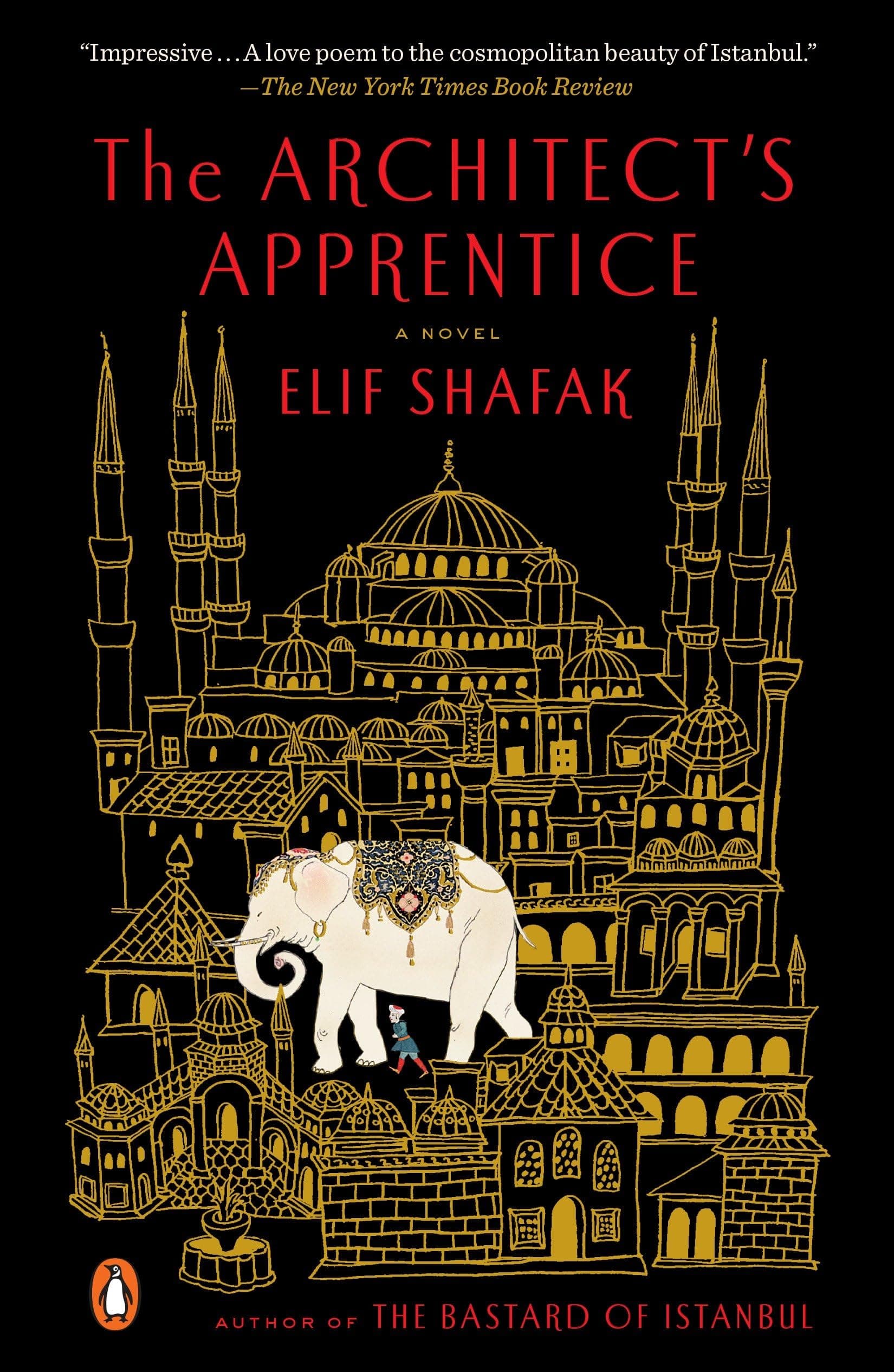
Buy Random House Books for Young Readers The Architect's Apprentice by Shafak, Elif online on desertcart.ae at best prices. ✓ Fast and free shipping ✓ free returns ✓ cash on delivery available on eligible purchase. Review: Elif Shafak tells us the History of the Middle East in her books. Each of her stories is different. She's got imagination and talent. I love this book ! Review: Muy entretenido y aprende uno de la cultura Otomona de 1600 d.c.


| Best Sellers Rank | #521 in Historical Fiction #2,066 in Literary Fiction |
| Customer reviews | 4.5 4.5 out of 5 stars (858) |
| Dimensions | 13.94 x 2.44 x 21.31 cm |
| Edition | Reprint |
| ISBN-10 | 0143108301 |
| ISBN-13 | 978-0143108306 |
| Item weight | 318 g |
| Language | English |
| Print length | 432 pages |
| Publication date | 31 May 2016 |
| Publisher | Penguin Books |
M**D
Elif Shafak tells us the History of the Middle East in her books. Each of her stories is different. She's got imagination and talent. I love this book !
V**R
Muy entretenido y aprende uno de la cultura Otomona de 1600 d.c.
V**R
This is the story of Jahan, beginning when he is barely twelve and stretching beyond a hundred years of life. Set primarily in Istanbul and later in India, during the time when the Taj Mahal was being conceptualized and built, the novel revolves around architects and architecture. Alongside this, history is seamlessly woven in through real historical figures such as Mimar Sinan, around whom Jahan’s life revolves. How Jahan reaches Istanbul, meets Chota - his so-called milk-brother elephant - falls in love with Mihrimah, becomes Sinan’s apprentice, and finally journeys to India is nothing short of mesmerizing. A true roller-coaster ride, Jahan’s life is marked by plagues, the loss of loved ones, betrayal by close friends, nights in dark dungeons, and unexpected acts of protection and kindness. One of Jahan’s reflections on these unexpected blessings stayed with me: “How bizarre it was. While he had been running after things that were never going to happen and resenting life for the gifts it had denied him, there had been people supporting him without drawing attention to themselves. They had given and expected nothing in return.” The Ottoman Empire is vividly brought to life through descriptions of architectural marvels such as the Süleymaniye Mosque, Selimiye Mosque, the restoration of Hagia Sophia, and many other mosques, bridges, and aqueducts. The building and eventual destruction of the observatory built for Sultan Murad III’s astronomer, Takiyuddin, is especially heart-wrenching - particularly the loss of priceless books and manuscripts. It makes one wonder how much knowledge humanity has lost over centuries. The novel is divided into three sections: Before Master, Master, and After Master. Jahan’s description of Sinan is particularly beautiful: “It was after this incident that Jahan understood his master’s secret resided not in his toughness, for he was not tough, nor in his indestructibility, for he was not indestructible, but in his ability to adapt to change and calamity, and to rebuild himself, again and again out of the ruins. While Jahan was made of wood, and Davud of metal, and Nikola of stone, and Yusuf of glass, Sinan was made of flowing water. When anything blocked his course, he would flow under, around, above it, however he could; he found his way through the cracks, and kept flowing forward.” Through another reflection by Jahan, Shafak captures the fleeting nature of human existence: “.. in truth, this world, too, was a spectacle. One way or another, everyone was parading. They performed their tricks, each of them, some staying longer, others shorter, but in the end they all left through the back door, similarly unfulfilled, similarly in need of applause.” As always, Elif Shafak ends the novel on a hopeful note, reminding us that even amid immense suffering, there is always a silver lining - we simply need the eyes to see it. I highly recommend this book to all lovers of literature. A must-read. Hats off to Elif Shafak.
R**M
One of the great pleasures of reading is the ability to be taken away to different places and times. The Architect’s Apprentice does a splendid job in both respects, following the life of a boy/young man who finds himself, along with a white elephant, in the court of Suleiman the Magnificent. The book follows him as he grows, becomes the mahout of the elephant and apprentice to the royal architect, Sinan. Along the way he meets the Sultan’s only daughter, becomes involved in court intrigues, and much more. Ms. Shafak brilliantly creates a world so different from ours (and so similar in some ways as well), and I find it hard to believe that anyone could read this book and not be thoroughly engrossed and enthralled. I admit that it’s sort of a fairy tale, but it’s nonetheless fascinating. I’ll also point out that I started to read this book 10 years ago, when it was first published, and couldn’t get into it. It’s a lesson for avid readers - if at first you don’t succeed, don’t give up. I recently had a similar experience with Demon Copperhead, and I’d like to think I’ve learned my lesson.
G**A
I still haven't read the book. Delivery was fast as usual and also they sent me sample of the book for my kindle. So I can start reading it until the book arrives. I am very pleased with the service.
TrustPilot
2 个月前
2 周前