We remain fully operational. Our teams are working around the clock to ensure your deliveries continue safely.

下载应用程序


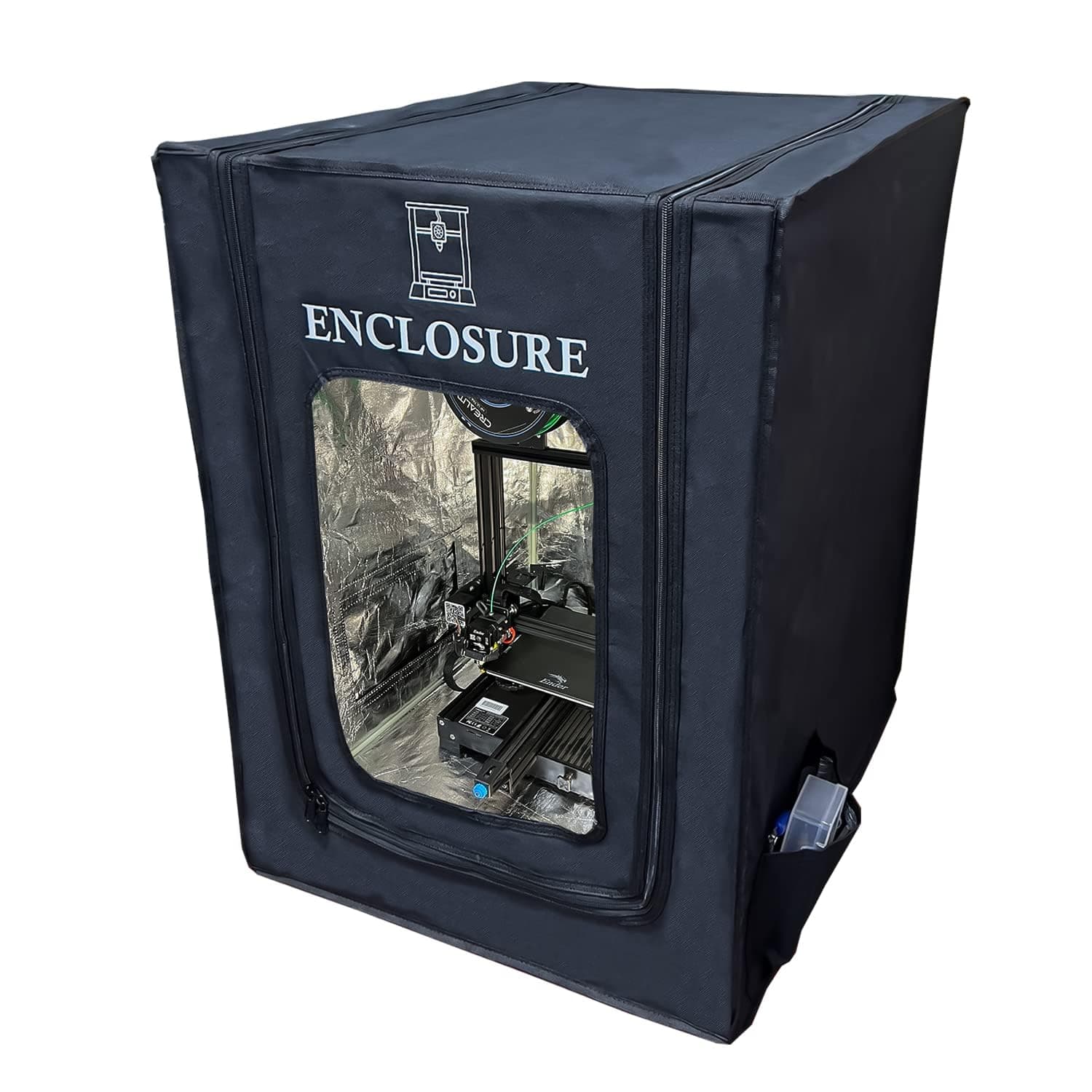
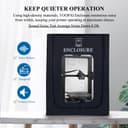
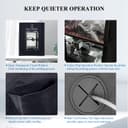
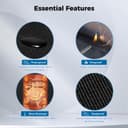
🔥 Elevate your 3D printing game with fireproof precision and silent style! 🌡️
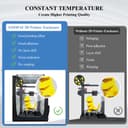
This 2025 3D Printer Enclosure offers a fireproof, dustproof, and noise-isolating environment with stable temperature control, compatible with popular Ender and Anycubic models. Its durable fiberglass and stainless steel build ensures safety and longevity, while the clear front door and quick installation make it a must-have upgrade for professional-grade 3D printing.


| Brand | UNIDO |
| Color | Black |
| Compatible Devices | Laptop, Personal Computer, Smartphone |
| Customer Reviews | 4.2 out of 5 stars 680 Reviews |
| Item Weight | 1.61 Kilograms |
| Material | Aluminum , Fiberglass, Stainless Steel |
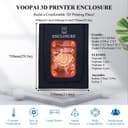
| Product Dimensions | 29.5"D x 25.6"W x 29.5"H |
C**S
Neptune 3 Pro fits
Assembly was simple. The "tent" was a little tight trying to get it on the frame, but it ultimately fit well without any sagging. An Elegoo Neptune 3 Pro fits in this enclosure without any modifications to either the printer or enclosure. The large clear door is nice to be able to easily see how prints are progressing. The only negative I have to mention is the zipper is a little tight in one corner when closing the door, but at such a low price point, it is expected. It may loosen up over time or I may add some lubrication to this area.
A**N
Tight fit
I struggled to get this together only because the enclosure was so tight around the frame. I ended up heating up the corners of the frame with a hair dryer. Heating seemed to relax things enough to allow the cover to fit. It was a tight pull over the last corner even with the heat. This is my second enclosure and it is definitely a better quality than the first one I got. The exterior material is thicker and more sturdy. The canvas exterior material seems better quality than the rubbery exterior of the other enclosure I got. This one seems to be more air tight also...not so many pin holes. Overall I would buy this one again and probable will.
J**I
Working great, but had to mod it to fit the tent.
Not sure who was on the QA team when checking the tent measurements, but the tent would not fit around the frame once I got it assembled. I made sure all poles were in as far as they could go, but I could not get the tent on. In the process of trying to fit it, the seams on one side of it ripped and that told me that I was forced to do something about it. I was forced to cut about 1 inch off from several of the poles using my rotary tool, so I could finally get the tent on. Once I did that, it fit perfectly. Now my first 3D printer's environment stays around 95F+ when printing and my curling problem is mostly gone. I'm using a fridge thermometer to monitor the ambient temp inside the tent. It's magnetic, so you will see it sticking to the filament holder arm in the video. The top two temps are the sensors in my fridge, while the bottom is the ambient temp in the tent. I still get the occasional issue with curling or collisions because of leveling and heat bed temps as you may see in the video, still sort of learning and I had to abort that print, but you can see it is staying a nice temp of about 96F, despite it being placed right in the path of my A/C vent. Aside from the fitting issue, the only other complaint really is that there is not clear window on the top or other sides to allow light in, so I picked up these great little remote controlled lights and hung them onto the top bars. (In opposite corners) Now with a remote from the outside, I can turn on both lights with a single remote click and see how the print is doing. Because of the reflective material inside the tent, the remote works great to turn both lights on, despite them not being in line of sight with the remote or each other. I never have to open it to turn the lights on and see how it's doing. Just needed to run the usb cables up to the lights to always keep them charged. Except for the initial assembly issues, I'm pretty happy with this tent, but you will need to make sure you have space for it. The tent is very large and should house most printers that do not have lots of extended hardware like multiple filament spools and all that.
T**S
Good Enclosure
I really like this enclosure it fits my ender 3 perfectly it's almost too big but honestly the space is nice. the enclosure stays about 30-50°C but when I put a blanket over it I can get as high as 60°C the frame fit is spectacular the walls are nice and straight the cord routing out the back is nice and the little velcro on the left side is suprisingly handy! Update: (the photo is updated as well) I've been using this enclosure for a good amount of time now it's the first proper enclosure I've used. It's really good at maintaining temperature. But if you don't have a large printer, you're probably better off getting the smaller one. I have both this one for my Ender 3 v2, and the "official" one is housing my Ender 3 V3 SE. There's a dramatic quality difference in multiple places; neither is better than the other in whole. This enclosure has excellent fiberglass and connectors; the official has terrible connectors, and the fiberglass is drilled off-center. This enclosure has kind of bad insulation when directly compared to the "official" one. The "official" one has much better insulation. With no blanket over it, and no chamber heater it can reach 60°C. With a blanket over the top, it can get as high as 80°C. Which is a drastic difference when printing higher temperature filaments like Nylon, ABS, and Polycarbonate. After this long of ownership, the only degradation so far is a little fraying on the bottom seam, which was easily fixed with a lighter to melt the threads together. Also, the front flap is starting to get a little loose, but really it's not an issue. I will continue to use this chamber as it suits my needs.
K**L
Definitely a noticeable improvement!
A 3D printer tent is a great way to keep your 3D printer running smoothly and efficiently. It helps to keep the temperature consistent, which can improve the quality of your prints. It also helps to keep out dust and other debris, which can damage your printer or cause your prints to fail. I have been using a 3D printer tent for a few months now, and I have been very happy with it. It has helped to improve the quality of my prints, and it has also made my printer more reliable. I would definitely recommend a 3D printer tent to anyone who is serious about 3D printing. Here are some of the benefits of using a 3D printer tent: Improved print quality: A consistent temperature is essential for good print quality. A 3D printer tent helps to keep the temperature inside the tent consistent, which can improve the quality of your prints. Reduced print failures: Dust and other debris can damage your printer or cause your prints to fail. A 3D printer tent helps to keep out dust and other debris, which can help to reduce the number of print failures. More reliable printer: A 3D printer tent can help to make your printer more reliable. By keeping the temperature consistent and keeping out dust and other debris, a 3D printer tent can help to reduce the number of problems that you have with your printer. If you are serious about 3D printing, then I would definitely recommend a 3D printer tent. It is a relatively inexpensive investment that can make a big difference in the quality of your prints and the reliability of your printer.
R**D
Absurd Design Flaws
This product is basically just a plastic pole frame over a canvas cover. Sounds simple in theory, but the designers made the measurements so incredibly close that it really isn't the slightest bit practical. Expect a minimum of an hour to put this together (I needed to take breaks for finger pain, and I don't have arthritis or anything like that). Ultimately I'd recommend pliers to pull the final corner or two into place, and a hammer to ensure that all the pipes have actually gone into their connecters, as the connector diameters vary wildy (some are so loose the pieces slide right apart, while others are so tight you won't be getting the pipe in without hammering). The most nonsensical part of the process is the zippers. You'd think, with as insanely tight this is, somebody would have considered the need for quality zippers to keep it all together. But these are the cheapest zippers I've seen on anything in a long time. Drag is awful, and naturally they constantly split due to the tight fit, compromising the entire structure. The stitches also pull nearly to the point of ripping in some places. Even a single inch worth of additional slack would have been enough for all of this to fit together without causing any functional issues, but the way it is now, the zippers basically aren't of any use. Last thing--Although I knew this enclosure was going to be big (I checked the measurements), seeing it in person is...good lord. The enclosure is more than three times the size of an Ender 3 pro, so, picture something larger than a minibar refrigerator. It would probably fine for a dedicated workbench, but it's completely impractical for desktop use. It took two attempts before I got one with all the pieces in the box. Sadly it looks like it's going back anyway. It's possible to get this thing put together and in use, but the zippers are a huge design flaw that can't be overlooked. I'm not a believer in the "you get what you pay for" excuse. Make a product of at least the minimal quality required for it to function, or don't make a product at all. It's not the consumer's fault what you choose to charge for it.
S**A
Great idea - poor execution and QA
This product sounds great and the instructional video for assembly is very nice but it is not what you will likely get. I am saying likely because I got two of these enclosures and putting them together was way harder than the video. The problem was the tolerances - the cover isn't big enough for the supplied frames or the fit is extremely tight. At first I tried to assemble it just like the video suggests but was not able to drape the cover on top of the frame. I had almost given up but decided to try one idea from a comment I read. I had to assemble it wall by wall starting from the bottom from inside the cover. Made the bottom, slid it in, pretty tight fit on both. Made the side wall, slid it in. Then the back wall and then the other side wall. The last side wall is going to be the hardest to put on, had to use tools like shoehorns, almost gave up on the second one. I left the top front beam for last. Even with this tactic, the cover is really tight, the beams are bent and I fear for the longevity of the zippers, I do not think they will last too long. And after all that, on one of the enclosures it was so tight I couldn't put in the top front beam because I wasn't be able to zip it up. So I just left it floating in the middle... Great price and idea but that's what you get with a price like that. If you're strong and handy, and want to save some money, roll the dice, maybe you'll have better luck. But if you don't want potential headaches, go elsewhere.. P.S. Forgot to mention, one of them ripped slightly while I was trying to install... SO TIGHT!
J**B
It works well and it fits most Enders and Ender clones (BIQU B1)
I'm using this enclosure with my BIQU B1 and I have plenty of room inside for the printer, top mounted spool, and space on the sides for tools and other things. Very well insulated, keeps my printing temps very stable and I've noticed way fewer first layer adhesion issues since putting this around my printer. The viewing window on the front is plenty big enough to see everything going on inside when you have the thing zipped up. Obviously I haven't tested the fireproof of it, but it does seem to be made of the proper material inside and I think it would stand up to a small flame without issue. Putting it together was somewhat difficult by myself. The included directions are sub-par at best but I got through putting together the frame just fine. Stretching the actual enclosure over the frame was the hard part. Would have been easier if I had a second person to hold the frame steady while I stretched the enclosure over it.