We remain fully operational. Our teams are working around the clock to ensure your deliveries continue safely.

下载应用程序



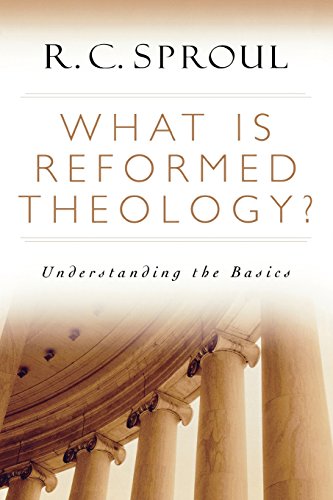


What is Reformed Theology?: Understanding the Basics [Sproul, R. C.] on desertcart.com. *FREE* shipping on qualifying offers. What is Reformed Theology?: Understanding the Basics Review: Good introduction to Reformed Theology - Every Christian should want to know more about God. This knowledge comes from listening and reading the Word of God. Theology, more specifically Reformed theology, is the way we can accomplish this knowledge more effectively. This book is a very good and balanced introduction to Reformed Theology, always grounded in Scripture, R. C. Sproul gives us an effective introduction to the TULIP Calvinistic acronym, Luther motivations, and where Reformed Theology differs from Roman Catholicism theology. I highly recommend it. Review: (4.98 stars) The solid answers to what the Reformists believe and why they believe it. - Most Americans call themselves Christian, yet much confusion exists as to what “Christian” actually means. Some Christians call themselves “Reformists” or “Calvinists” but lack a comprehensive understanding of what these labels actually mean. R.C. Sproul clarifies the confusion in What is Reformed Theology? by helping the reader to answer two fundamental questions from the Reformed perspective: (1) What do you believe? and (2) Why do you believe it? Consequently, this book is an intellectually engaging and doctrinally sound introduction to the foundational doctrines of Reformed Theology and the five main points of Calvinism. As the author writes on page 163, “The primary axiom of all Reformed theology is this: ‘Salvation is of the Lord.’” What is Reformed Theology? solidifies this core idea in two parts. The first discusses the foundation of theology which is principally theocentric (God-centered). Hence, the resultant foundational stones (based on the Bible alone, committed to faith alone, devoted to Christ, and structured by three covenants) all result from this theocentric posture. The second part of the book clarifies the five main points of Calvinism or the specific doctrines unique to Reformed theology: total depravity, unconditional election, limited atonement, irresistible grace and perseverance of the saints. Throughout What is Reformed Theology?, Sproul does what he always does: provide clear, concise and Biblically sound arguments to support his claims. He engages heavily with the Westminster Confession of Faith and cites numerous renowned theologians (Calvin and Luther) to clarify central ideas. What I appreciate most about this book is that Sproul does not simply write, “This is how it is.” Rather, and particularly for claims that are more controversial (e.g. limited atonement), he raises the loudest objections from other schools of theological thought, and masterfully responds with coherent counter-arguments. In fact, Sproul’s treatment of Christ’s purposeful atonement (Chapter 8) is a theological masterpiece that makes an airtight case and defense for limited atonement, or the idea that Christ’s sacrifice on the Cross made certain the salvation of the elect only. Ultimately, one would have to search very hard to find a subpar book from R.C. Sproul (and you would end up empty handed). What is Reformed Theology? is no exception and an excellent introduction to the Reformist perspective and undoubtedly will lay the foundation from the Church Fathers who “got it right.” For Bible students, pastors, church leaders or the generally curious, this is a fantastic place to start.
| Best Sellers Rank | #376,576 in Books ( See Top 100 in Books ) #2 in Calvinist Christianity (Books) #77 in Presbyterian Christianity #215 in Christian Theology (Books) |
| Customer Reviews | 4.8 4.8 out of 5 stars (1,320) |
| Dimensions | 6 x 0.75 x 8.75 inches |
| ISBN-10 | 0801065593 |
| ISBN-13 | 978-0801065590 |
| Item Weight | 14.4 ounces |
| Language | English |
| Print length | 240 pages |
| Publication date | June 1, 2005 |
| Publisher | Baker Books |
P**S
Good introduction to Reformed Theology
Every Christian should want to know more about God. This knowledge comes from listening and reading the Word of God. Theology, more specifically Reformed theology, is the way we can accomplish this knowledge more effectively. This book is a very good and balanced introduction to Reformed Theology, always grounded in Scripture, R. C. Sproul gives us an effective introduction to the TULIP Calvinistic acronym, Luther motivations, and where Reformed Theology differs from Roman Catholicism theology. I highly recommend it.
D**L
(4.98 stars) The solid answers to what the Reformists believe and why they believe it.
Most Americans call themselves Christian, yet much confusion exists as to what “Christian” actually means. Some Christians call themselves “Reformists” or “Calvinists” but lack a comprehensive understanding of what these labels actually mean. R.C. Sproul clarifies the confusion in What is Reformed Theology? by helping the reader to answer two fundamental questions from the Reformed perspective: (1) What do you believe? and (2) Why do you believe it? Consequently, this book is an intellectually engaging and doctrinally sound introduction to the foundational doctrines of Reformed Theology and the five main points of Calvinism. As the author writes on page 163, “The primary axiom of all Reformed theology is this: ‘Salvation is of the Lord.’” What is Reformed Theology? solidifies this core idea in two parts. The first discusses the foundation of theology which is principally theocentric (God-centered). Hence, the resultant foundational stones (based on the Bible alone, committed to faith alone, devoted to Christ, and structured by three covenants) all result from this theocentric posture. The second part of the book clarifies the five main points of Calvinism or the specific doctrines unique to Reformed theology: total depravity, unconditional election, limited atonement, irresistible grace and perseverance of the saints. Throughout What is Reformed Theology?, Sproul does what he always does: provide clear, concise and Biblically sound arguments to support his claims. He engages heavily with the Westminster Confession of Faith and cites numerous renowned theologians (Calvin and Luther) to clarify central ideas. What I appreciate most about this book is that Sproul does not simply write, “This is how it is.” Rather, and particularly for claims that are more controversial (e.g. limited atonement), he raises the loudest objections from other schools of theological thought, and masterfully responds with coherent counter-arguments. In fact, Sproul’s treatment of Christ’s purposeful atonement (Chapter 8) is a theological masterpiece that makes an airtight case and defense for limited atonement, or the idea that Christ’s sacrifice on the Cross made certain the salvation of the elect only. Ultimately, one would have to search very hard to find a subpar book from R.C. Sproul (and you would end up empty handed). What is Reformed Theology? is no exception and an excellent introduction to the Reformist perspective and undoubtedly will lay the foundation from the Church Fathers who “got it right.” For Bible students, pastors, church leaders or the generally curious, this is a fantastic place to start.
D**T
Superb overview of Reformed theology
As a student of Scripture that disagrees slightly with Calvin, but is in ministry with some Reformed people, I picked up this book in hopes of understanding Reformed theology. Dr. Sproul's book does a superb job of this. The book is designed to center around the central themes in Reformed theology. He begins with what Reformed theology is not, and gives a short description of how Reformed theology came to be. He does not use the standard terms in his descriptions, like the 5 Solas or the 5 points of Calvin, aka TULIP. Basically, Sproul uses the evidence he proposes to work into these terms instead. He discusses how Reformed theology relates to other Christian theologies, namely Catholicism and Lutheranism. In my ministry, I have been in contact with some from the Reformed theology that puts their beliefs in pretty harsh language when comparing it to others' theology. Sproul makes his case without this harsh language, which I thought refreshing. His discussion is scholarly without being too much for lay-people to understand. He discusses the history and controversies throughout, and many early and current theologians. He does not ignore the arguments used against ideas such as perseverance of the saints, and gives the opposition a fair shake. This is a superbly written and thorough introduction to Reformed theology. He does not go to tradition or teachings of others first and then go to Scripture as some do in their defense of Reformed theology. And, he follows the Christian precept given in 2 Tim 4:2 telling us to carefully instruct by speaking in less harsh tones. Overall, this is a perfect book to learn about Reformed theology's teachings.
B**R
Superb overview of Reformed Theology
Dr Sproul is gifted with making the deeper truths of Scripture understandable. This book is an example of that. I found myself reading it three times because it affected me profoundly. At first, this book is a "high level" overview of Reformed Theology (as it is distinguished from broad evangelicalism and Roman Catholicism especially and explains what doctrines are held in common, as well). While Reformed theology is composed of "the five points of Calvinism" and covenant theology as a framework, it is more than that, including a starting point doctrine of God that is controlling and related to every other doctrine. Along the way, the book deals with some of the profound truths of Scripture such as how Jesus can be both man and God in an easy-to-read format. It conveys a sense of history with such events as the Council of Nicea in which the broader Church established these doctrines. It took a couple read-throughs to digest these and now has greatly helped my understanding of them. Not only is this book a good overview with good substantive explanation of key points but it useful as a reference text or as text for a Sunday school class. This book has the quality and information of many books all wrapped up in one. Absolutely outstanding.
A**S
I highly recommend this book, with the work of R.C. It has great value and will greatly encourage the believer.
M**Z
This book has a kind of summary of the reformed theology. Easy to read and easy to comprehend the whole idea and the acronym TULIP. There is a lot more but I would like to cite two ideas from this book that are really good: First one is the Right of Private Interpretation (Bible) “The right of private interpretation means that every Christian has the right to read and interpret the Bible for himself or herself. This does not give an individual the right to misinterpret or distort the Bible. The Bible is not a waxed nose to be twisted and shaped to fit one’s fancy. With the right of private interpretation comes the responsibility of handling the Bible carefully and accurately…” The second one is “…difference between the Roman (Catholic Church) view of justification and the Protestant view is misstated. Some say Rome believes in justification by merit and Protestants believe in justification by grace. Rome believes in justification by works, while Protestants believe in justification by faith. Rome believes in justification by the church, while Protestants believe in justification by Christ. To state the differences this way is to radically distort the issue and to be guilty of gross slander against Rome. The Roman Catholic church believes that grace, faith, and Christ are all necessary for the sinner’s justification. They are necessary conditions, but not sufficient conditions. While grace is necessary for justification, it is not enough. Merit (at least congruous merit) must be added to grace. Rome declares that faith is necessary for justification. Faith is called the foundation (fundamentum) and the root (radix) of justification. Works must be added to faith, however, for justification to occur. Likewise the righteousness of Christ is necessary for justification. This righteousness must be infused into the soul sacramentally. The sinner must cooperate with and assent to this infused righteousness so that real righteousness becomes inherent in the person before he can be justified. Missing from the Roman Catholic formula for justification is the crucial word alone. It is not an exaggeration to say that the eye of the Reformation tornado was this one little word. The Reformers insisted that justification is by grace alone (sola gratia), by faith alone (sola fide), and through Christ alone (soli Christo)…”
M**N
“What is Reformed Theology?: Understanding the Basics” is an excellent primer for anyone seeking to grasp the core principles of this historic Christian tradition. The book thoughtfully unpacks the foundational beliefs that define Reformed theology, including the sovereignty of God, the authority of Scripture, salvation by grace, and the significance of covenant theology. Written in clear and accessible language, it makes complex theological concepts understandable without oversimplifying their depth. What makes this book particularly valuable is its balanced approach—it traces the roots of Reformed theology back to the Protestant Reformation while also explaining its ongoing relevance today. It covers important doctrines such as the five solas, predestination, and the role of the church in a way that is informative for newcomers and enriching for those already familiar with the faith. Overall, this book is a highly recommendable resource for anyone wanting a reliable and engaging introduction to Reformed theology.
N**E
Das Buch ist zweigeteilt: Im ersten Teil geht es darum erstmal zu zeigen wie die Ansätze der reformatorischen Theologie sind zB: Gott-Zentriertheit, Sola Scriptura etc.. Im zweiten Teil gehts es speziell um die häufig auch als "5 Punkte des Calvinismus" umschriebenen Konzepte, die aber hier um der häufigen Missverständnisse die manchmal aus der traditionellen Betitelung hervorgehen leicht abgewandelte Namen tragen. Jetzt nach 500 Jahren Reformation kann man sich gut und gerne auch mal wieder damit befassen was damals tatsächlich geleistet und losgetreten wurde (hier nicht geschichtlich, sondern theologisch). Die Rückbesinnung auf die Heilige Schrift und die Ergebnisse die das vor allem für das Heilsprinzip hat, dürften für den einen oder anderen erfreuliche Nachricht sein. Denn trotz dass das Prinzip der Errettung aus Gnade allein schon immer schwarz auf weiß in der Bibel zu finden ist, hält sich das falsche Konzept der Gerechtigkeit durch Werke, religiöse Rituale uvm. bis heute wacker. Wer ganz gut Englisch kann und sich mit reformatorischer Theologie auseinandersetzen möchte, ist hier genau richtig. Große Empfehlung.
A**H
Each chapter clearly expounds the central theological claims of the Reformed tradition. A well-written and accessible introduction to the teaching of Scripture through the eyes of a Protestant.
TrustPilot
2 周前
1 个月前