We remain fully operational. Our teams are working around the clock to ensure your deliveries continue safely.

下载应用程序



Buy anything from 5,000+ international stores. One checkout price. No surprise fees. Join 2M+ shoppers on Desertcart.
Desertcart purchases this item on your behalf and handles shipping, customs, and support to Taiwan.
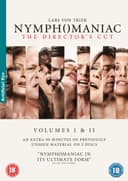
The most controversial film of 2014 is finally released as it was meant to be appreciated with Lars Von Trier's full 5½ hour long director s cut. Passed completely uncut by the BBFC. Review: The Final Part of The Depression Trilogy - NYMPHOMANIAC - VOLS 1 & 2 DIRECTOR'S CUT - Directed by Lars Von Trier **Huge Erect Spoilers** NYMPHOMANIAC takes place inside the head of Lars Von Trier. Or any manic depressive. There is no escaping this fact. Both Joe (Charlotte Gainsbourg) and Seligman (Stellan Skarsgard) are the dual aspects of a single personality. The tiny room in which these two damaged people talk to one another is filled with Seligman's intellectual and cultural reference points, as well as his past. Joe cannibalises what's there to spark her stories - none of which are true - to rebel, shock, titillate and antagonise the intellect. She is emotional chaos, abandon and sexuality. He is order, the rationale, culture and - being asexual - pure and virgin. The room is grim, dirty, with two windows - eyes being the windows of the soul - gazing out upon a brick wall where, after the long night, a glimpse of sunlight can be seen, but nobody knows where from. Seligman can't fathom it. Joe thinks it's beautiful. However, this being Von Trier - and with 'no happy endings', because there are no happy endings with mental illness, only coping mechanisms - Seligman and Joe play a game. It's the beyond of what they're both capable of achieving. Balance. NYMPHOMANIAC is about the struggle for balance, survival, and the lies we tell ourselves in order to continue. What's interesting about the film is the disappointment audiences feel at the punchline. They feel betrayed, because the relationship between Joe and Seligman seems so real. That these two lonely souls have, at last, both found respite and true friendship. Von Trier knows this to be bull. The idea that we must love ourselves in order to find true happiness, that we - and only we - can save ourselves, is one of the biggest lies sold on the market. It's impossible for a permanently damaged person - even a species - to do such a thing. And that's what makes NYMPHOMANIAC such a bold and daring film. Seligman just doesn't listen to Joe at all in the film. He hears her stories, but then tries to fit them into a rational framework. She is bored of his methods from the word go. As the story continues, and as Joe steals from Seligman's - and Von Trier's - body of work (there is a direct and very amusing reference to both ANTI-CHRIST and MELANCHOLIA) Joe and Seligman subconsciously collude to bring about the climax of the final chapter, THE GUN. Seligman even telling Joe HOW to shoot it. Joe informing Seligman that the executed should be grateful to their killer. It's the corruption of the rational mind, armed only with useless facts, by manic depression and anxiety. Nothing, absolutely nothing, can stop the cycle. The apparent reprieve is a lie. Joe crosses a line - maybe it's even suicide? - and flees the scene in darkness. Seligman, the rational thought, is dead. And it's not attempted rape, as some observe (remember, it's - literally - a psychological drama). Seligman expects Joe to respond in kind, but he can't even get it up. Of course he can't. It's an area he can not control or master. Some see the film as a strong feminist tract. They are wrong. It has a strong female character, that's all, but she's gradually broken as the film continues. The ways of coping become more extreme, she is damaged, loses feeling, sacrifices her family, performs a self-abortion, has sympathy for Hitler (Von Trier mocking his infamous 2011 slip-up) and paedophiles. She's not a likeable character, which is the point - nobody with depression is - they become selfish and driven to destruction. Juliet in MELANCHOLIA literally summons the planet Melancholia and ends all life on earth. That's the (usually unspoken of) ego of the mentally ill. And if you think I'm wrong, consider the scene where Joe points out the mirror to Seligman. He looks over and - from his point of view - we see the reflected image of a camera shooting the film the audience is watching. However, it takes a person struggling with manic depression and OCD to understand and create a trilogy of films about the subject. NYMPHOMANIAC is a masterpiece. A film full of hard-core sex, transgression, dark humour (and some very crude, childish humour - spoons, is all I'm saying) and a no-holds-barred look at what it is to experience and struggle with depression in the most explicit way I've ever seen. Review: Heavy going but memorable. - This is a heavy-duty film. The beginning is so slow and dark I thought the DVD would have to be sent back as there appeared to be nothing recorded on it. It turns out that the dour start is mirrored by the tragic ending; between the two there are effectively two films in one. The first consists entirely of a conversation between two people, Joe and her rescuer, in a depressingly dull room. The second is a series of flashbacks as Joe recounts events in her life leading up to her current plight. The question is whether the overall effect is a serious study, pretentious nonsense or just downright disgusting. Probably it comprises all three, the proportions depending on your sensibility. In her mid-teens a close friend advises Joe to ask the “wh... questions” in order to engage in conversation. One such question for the director is “why did you make this film?”. The discs include interviews with some of the actors and a question and answer session. Normally these extras don’t interest me but in this case they do provide a worthwhile background to the film. Unfortunately the director himself does not appear, so we are left to guess at his motives. It might be claimed that this is an overdue exploration of female sexuality. All well and good, if so, but can that ever be done by a man? Isn’t any such attempt bound to be some kind of fantasy? In this case the point about Joe’s sexuality is that it is excessive: would many women identify with it as typical of themselves? She accuses herself of being a bad person because her obsession spoils other people’s lives, marriages and her own parenting. In a way her sexuality is incidental (how similar could the story have been if she was lesbian?) the main point is her obsession: it might almost as well have been about stamp-collecting. The conversation with Joe in the first of the two strands of the film is extremely wide ranging. From cutting finger nails to fly fishing, from helicopter dynamics to the components of Bach’s chords, they’re all there. Even Fibonacci numbers are applied to the number of sexual thrusts when Joe loses her virginity. This is where accusations of pretentiousness could be levelled. Some of the subjects are intended to provide analogies for events in Joe’s life but it becomes hard not to hit the fast-forward button. Another wh... question is “where is the film set?”. On a train, the ticket inspector wears a British uniform and sterling money is used but the train itself is clearly continental. In the street, the cars used are British and right-hand drive but the street itself and other settings do not appear to be in Britain. Maybe the mixing up was deliberate, to show that Joe’s story is a human one rather than related to any nationality, but I think a consistent setting would have given more integrity. The overall impression to me is one of almost unremitting gloom. There is beauty; there is even some love, between Joe and her father for instance, but what seems to be entirely lacking is humour. It came as a surprise therefore to hear the actors talk, in their interviews, about the humour of the writing and direction. I must have missed something. However, after slogging through both discs, the film leaves a lasting impression and raises all sorts of questions such as those above. Thus, if it can make the viewer think, not just ogle, at least it can claim to be art.





| Contributor | Charlotte Gainsbourg, Christian Slater, Jamie Bell, Lars von Trier, Louise Vesth, Manuel Alberto Claro, Shia LaBeouf, Stacy Martin, Stellan Skarsgård, Uma Thurman, Willem Dafoe Contributor Charlotte Gainsbourg, Christian Slater, Jamie Bell, Lars von Trier, Louise Vesth, Manuel Alberto Claro, Shia LaBeouf, Stacy Martin, Stellan Skarsgård, Uma Thurman, Willem Dafoe See more |
| Customer Reviews | 4.2 out of 5 stars 585 Reviews |
| Format | PAL |
| Genre | Drama |
| Manufacturer | Artificial Eye |
| Number of discs | 2 |
| Runtime | 5 hours and 52 minutes |
I**R
The Final Part of The Depression Trilogy
NYMPHOMANIAC - VOLS 1 & 2 DIRECTOR'S CUT - Directed by Lars Von Trier **Huge Erect Spoilers** NYMPHOMANIAC takes place inside the head of Lars Von Trier. Or any manic depressive. There is no escaping this fact. Both Joe (Charlotte Gainsbourg) and Seligman (Stellan Skarsgard) are the dual aspects of a single personality. The tiny room in which these two damaged people talk to one another is filled with Seligman's intellectual and cultural reference points, as well as his past. Joe cannibalises what's there to spark her stories - none of which are true - to rebel, shock, titillate and antagonise the intellect. She is emotional chaos, abandon and sexuality. He is order, the rationale, culture and - being asexual - pure and virgin. The room is grim, dirty, with two windows - eyes being the windows of the soul - gazing out upon a brick wall where, after the long night, a glimpse of sunlight can be seen, but nobody knows where from. Seligman can't fathom it. Joe thinks it's beautiful. However, this being Von Trier - and with 'no happy endings', because there are no happy endings with mental illness, only coping mechanisms - Seligman and Joe play a game. It's the beyond of what they're both capable of achieving. Balance. NYMPHOMANIAC is about the struggle for balance, survival, and the lies we tell ourselves in order to continue. What's interesting about the film is the disappointment audiences feel at the punchline. They feel betrayed, because the relationship between Joe and Seligman seems so real. That these two lonely souls have, at last, both found respite and true friendship. Von Trier knows this to be bull. The idea that we must love ourselves in order to find true happiness, that we - and only we - can save ourselves, is one of the biggest lies sold on the market. It's impossible for a permanently damaged person - even a species - to do such a thing. And that's what makes NYMPHOMANIAC such a bold and daring film. Seligman just doesn't listen to Joe at all in the film. He hears her stories, but then tries to fit them into a rational framework. She is bored of his methods from the word go. As the story continues, and as Joe steals from Seligman's - and Von Trier's - body of work (there is a direct and very amusing reference to both ANTI-CHRIST and MELANCHOLIA) Joe and Seligman subconsciously collude to bring about the climax of the final chapter, THE GUN. Seligman even telling Joe HOW to shoot it. Joe informing Seligman that the executed should be grateful to their killer. It's the corruption of the rational mind, armed only with useless facts, by manic depression and anxiety. Nothing, absolutely nothing, can stop the cycle. The apparent reprieve is a lie. Joe crosses a line - maybe it's even suicide? - and flees the scene in darkness. Seligman, the rational thought, is dead. And it's not attempted rape, as some observe (remember, it's - literally - a psychological drama). Seligman expects Joe to respond in kind, but he can't even get it up. Of course he can't. It's an area he can not control or master. Some see the film as a strong feminist tract. They are wrong. It has a strong female character, that's all, but she's gradually broken as the film continues. The ways of coping become more extreme, she is damaged, loses feeling, sacrifices her family, performs a self-abortion, has sympathy for Hitler (Von Trier mocking his infamous 2011 slip-up) and paedophiles. She's not a likeable character, which is the point - nobody with depression is - they become selfish and driven to destruction. Juliet in MELANCHOLIA literally summons the planet Melancholia and ends all life on earth. That's the (usually unspoken of) ego of the mentally ill. And if you think I'm wrong, consider the scene where Joe points out the mirror to Seligman. He looks over and - from his point of view - we see the reflected image of a camera shooting the film the audience is watching. However, it takes a person struggling with manic depression and OCD to understand and create a trilogy of films about the subject. NYMPHOMANIAC is a masterpiece. A film full of hard-core sex, transgression, dark humour (and some very crude, childish humour - spoons, is all I'm saying) and a no-holds-barred look at what it is to experience and struggle with depression in the most explicit way I've ever seen.
C**E
Heavy going but memorable.
This is a heavy-duty film. The beginning is so slow and dark I thought the DVD would have to be sent back as there appeared to be nothing recorded on it. It turns out that the dour start is mirrored by the tragic ending; between the two there are effectively two films in one. The first consists entirely of a conversation between two people, Joe and her rescuer, in a depressingly dull room. The second is a series of flashbacks as Joe recounts events in her life leading up to her current plight. The question is whether the overall effect is a serious study, pretentious nonsense or just downright disgusting. Probably it comprises all three, the proportions depending on your sensibility. In her mid-teens a close friend advises Joe to ask the “wh... questions” in order to engage in conversation. One such question for the director is “why did you make this film?”. The discs include interviews with some of the actors and a question and answer session. Normally these extras don’t interest me but in this case they do provide a worthwhile background to the film. Unfortunately the director himself does not appear, so we are left to guess at his motives. It might be claimed that this is an overdue exploration of female sexuality. All well and good, if so, but can that ever be done by a man? Isn’t any such attempt bound to be some kind of fantasy? In this case the point about Joe’s sexuality is that it is excessive: would many women identify with it as typical of themselves? She accuses herself of being a bad person because her obsession spoils other people’s lives, marriages and her own parenting. In a way her sexuality is incidental (how similar could the story have been if she was lesbian?) the main point is her obsession: it might almost as well have been about stamp-collecting. The conversation with Joe in the first of the two strands of the film is extremely wide ranging. From cutting finger nails to fly fishing, from helicopter dynamics to the components of Bach’s chords, they’re all there. Even Fibonacci numbers are applied to the number of sexual thrusts when Joe loses her virginity. This is where accusations of pretentiousness could be levelled. Some of the subjects are intended to provide analogies for events in Joe’s life but it becomes hard not to hit the fast-forward button. Another wh... question is “where is the film set?”. On a train, the ticket inspector wears a British uniform and sterling money is used but the train itself is clearly continental. In the street, the cars used are British and right-hand drive but the street itself and other settings do not appear to be in Britain. Maybe the mixing up was deliberate, to show that Joe’s story is a human one rather than related to any nationality, but I think a consistent setting would have given more integrity. The overall impression to me is one of almost unremitting gloom. There is beauty; there is even some love, between Joe and her father for instance, but what seems to be entirely lacking is humour. It came as a surprise therefore to hear the actors talk, in their interviews, about the humour of the writing and direction. I must have missed something. However, after slogging through both discs, the film leaves a lasting impression and raises all sorts of questions such as those above. Thus, if it can make the viewer think, not just ogle, at least it can claim to be art.
S**D
a piece of cinematic sex art
"Nymphomaniac" is a complex, serious and dark movie which amounts, in my opinion, to nothing less than cinematic gold. It's dramatic and bold, representing a piece of sexual art on film. This is a superbly made movie, directed by Lars von Trier (whose earlier work includes “Melancholia” and “Antichrist”), and who is known for making explicit and artistic films. It is a two-part drama, and involves both fantastic writing and great acting. There are several well-known actors in the film, including Christian Slater, Shia LaBeouf, Uma Thurman, Willem Dafoe, and Stellan Skarsgård. Yet the stand-out contributions are by Charlotte Gainsbourg and Stacy Martin – especially Martin, who takes lead role as the central character Joe aged from 15 to 31. But in many ways, it's an ensemble piece - and all contributions are top notch. The film is about a woman who's telling her life story, from childhood to her 40's. And the defining aspect of her life is that she's a nymphomaniac. The movie explores her sexual adventures, which are many and varied. And full-on sex is shown ... I'm impressed that the film received an 18 rating, rather than an 18R (attitudes are obviously becoming more liberal). I bought the two volume director's cut (at 5 1/2 hours long) on Blu-ray. Excellent picture and sound quality. Note: the movie is in English. It's not a happy film, and the lead character is often very depressed with her life. Yet, as a viewer, I found myself engaged and connected to the difficulties and plight of this woman. Often the film is demanding, as it deals with tragic and problematic issues, but it always adopts a serious (rather than wontedly titillating) approach. While I'm sure that this film isn't for everyone, I thoroughly recommend it for adult viewers who are interested in this sort of explicit, character-driven story.
K**H
A sad tale.
This is full version of a film that understandably appears elsewhere in a cut down form. Some of the sequences go on far too long and don't need to be that length. For example the hospital sequence in chapter 4 is so drawn out that I almost thought I had been admitted. There's lots of sex using body doubles for the more intimate aspects. There's no lovemaking. It's all very emotionless and cold. It's a pretty sad tale of a girl raped whilst still a child who becomes dependent on sex for her survival. There are some good performances and fine direction but you end up feeling numb.
J**R
There is no love in her life and when she meets somebody who ...
"CHARLOTTE GAINSBOURG" is the most inspirational thought provoking actress that I have ever witnessed.Taking her roles beyond any bounderies that most actresses would ever venture.Definetely not a prude.In "ANTI-CHRIST" she acheived this successfully and produced shock and awe with total disbelief to any watching audiences.In "NYMPHOMANIAC" I think she goes even further and takes her role to even more extreems,takes acting to an even greater level.Her warm relationship with director "LARS VAN TRIER" is obvious and this is very important in what he demands of her.she respects him and trusts him which is vital."LARS VAN TRIER" also stayed very loyal to all the actors and actresses that he has used in his triology series of films that he made.A lot of reviewers state that this film is just an excuse to make a porn film with lots of graphic sex but I think that they miss the point of the film.Which shows how a female copes throughout her life with being diagnosed with "NYMPHOMANIA" .The film explores how complicated and difficult life becomes when coping with this problem.There is no love in her life and when she meets somebody who she thinks that she could be in love with, she cannot recognizes this and ends up in turmoil not knowing whether it is just lust.I recommend that you only purchase the full running version the "DIRECTORS CUT" it plays for over five hours.yes their is graphic sex in this film and there is a obvious reason for this, but this content only covers a period of just over 20 mins.
D**D
Themes and thoughts that linger
Firstly, viewing the director's cuts of the two movies is to be preferred. The extra length of viewing is worth the while as it enables the themes of the movies to be more explicable, therefore understood. This is important if the movies are to avoid the criticism of being sexually gratuitous. The more insight into the mind of the Charlotte Gainsborough character, the more the subject of the two-part movie (for that is the nature of the whole) can be understood and explained. I watched the movies at two separate viewing sessions - necessary not only because of the length of each, but also in view of the harrowing nature of the movies' subject(s). It is difficult to imagine any one individual experiencing the range of sexual experiences as undertaken by the female lead. The films are to be commended for their explicitness - necessary in a narrative as raw and wide-ranging as depicted in the movies. It is a case of the imagination being generally unable to comprehend mere verbal description - the physical is necessary to bind philosophy and ethics together. However, the female characters chosen for the sexual content do not betray the film's principles by being excessively glamorous or physically well-endowed. This could not be said for the male characters, perhaps deliberately so in order to express the extent and violence of male domination. Perhaps if there is a weakness in parts 1 and 2 it is the somewhat unreal intellectual ability given to the listener to the story, the male who offers sanctuary to the ill-treated nymphomaniac. His range of understanding of topics discussed by the film, including the more esoteric quasi-scientific subjects, stretches the imagination. In a two-part movie as sexually and physically violent as Nymphomaniac 1 & 2, it is unlikely that the story will end peacefully - yet the ending arrives with, for this viewer, a totally unexpected twist (which shall remained unrevealed). Yet, the ending is entirely predictable when the overall theme and content of the total movie are overviewed. Perhaps the most confrontational movie from the Lars von Trier catalogue, powerful in visual and psychological presentation, wringing-out the last drops of sexual emotion from the viewer, demanding a wide range of understanding and appreciation. It is hard to imagine a more real depiction of the subject matter of the movies - the sexual content without the multi-dimensional story would be pornographic; a softer focus would render the movie graphically unimaginative, emotionally vacuous and physically unappealing. A two-part movie that lingers long in the after-thought, and for more reasons than suggested by the mere title of the films.
C**N
Here in all its glory
I ran to the cinema when this came out last year , yet I enjoyed this dvd version even more . Longer , more graphic , sexier and more of what Van trier wanted I think this is a marvellous epic film which can be watched over and over . So pleased than unlike so many other explicit classics the censor did not snip , this is OTT cinema at its best . A film that stays in the mind and one to discuss. It wont be for every ones taste but that is exactly why it has to be seen . In days of multiplex bland this is a film to celebrate . lets have more like this .
D**G
Great story.
Good film.
TrustPilot
1 周前
1天前