We remain fully operational. Our teams are working around the clock to ensure your deliveries continue safely.

下载应用程序




Buy anything from 5,000+ international stores. One checkout price. No surprise fees. Join 2M+ shoppers on Desertcart.
Desertcart purchases this item on your behalf and handles shipping, customs, and support to Taiwan.
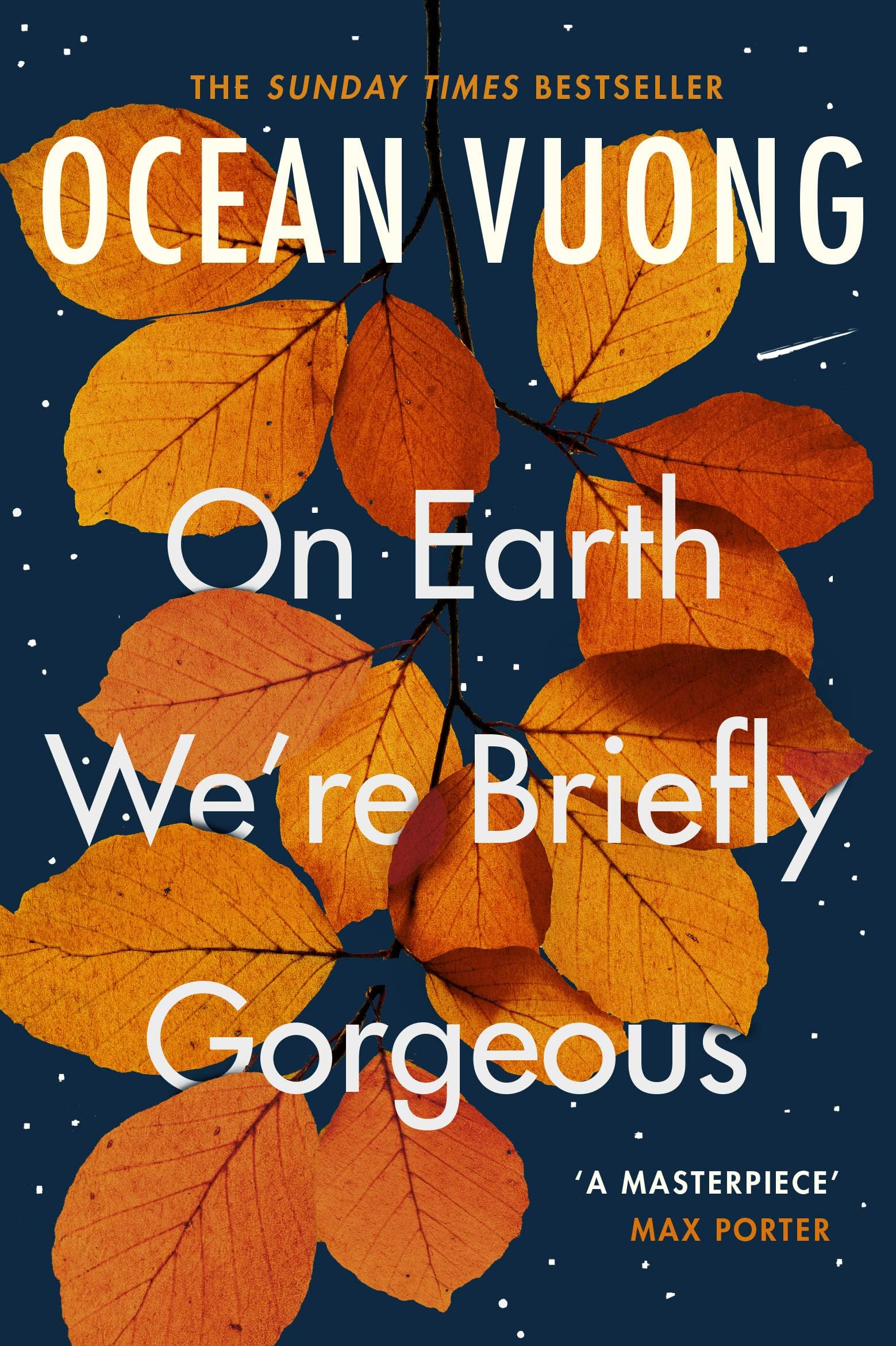
desertcart.com: Ocean Vuong On Earth We're Briefly Gorgeous /anglais: 9781529110685: Ocean Vuong: Books Review: De gustibus non est disputandum - Reading the reviews of this book here, I found a fascinating snapshot of who we are: richly feeling and yet constrained, open and still closed in mind and heart, welcoming and resolutely petty, loving but spiteful. The book itself was, for me, incandescent, soaring to great heights, and crushing, dragging me as reader to terrible depths. In the balance, the book is a paean to beauty in all its forms--and beauty takes shapes that pierce the spirit with both pain and joy. Regarding literary sensibility, for me there are strains of Proust in the seemingly involuntary function of memory. Another reviewer related this to Whitman and I can absolutely understand why. The references to Barthes, Duchamp, etcetera are part of my regular lexicon of references (given my own work) so Vuong's literary allusions felt natural to me, though I could imagine others growing discontent with the exposure to the unfamiliar--when they don't wish to be sidetracked by new ideas. For me that was always a joy in reading a well-read writer (e.g., Eco or Borges). Vuong loves language with a passion; that is obvious. His ardor sings. The tune is a sometimes a dithyramb, often an elegy, occasionally a hymn, and at times a heartbreaking lament. If I were to offer a criticism of faults, there were a few moments of uneveness of quality in parts II and III. But these seemed exceedingly minor to me in the context of the total work. The book is not for everyone. I write that in manner similar to saying that Joyce isn't for everyone. Readers who claim the book is bad because they couldn't understand it, because Vuong doesn't follow a straight line or leave a clear thread in the labyrinth for them to follow are claiming a rather pedestrian criterion for a universal judgment. By that measure, "Finnegans Wake" is a crime against humanity! Here's a thought: "I don't like this sort of writing" is a very different statement from "this is bad writing." The former is wholly understandable and might just be a matter of individual taste. The latter is a declaration of critical finality, the rightful domain of consensus and posterity. And to those who recoiled in homophobic disgust, I beg you to try opening yourself up to the world as others live it. I'm a straight white male, so I share neither the same sexual desires nor experiences of America (or world) as the author, but allowing myself to empathize with the characters Vuong writes only makes the scope of human understanding that much broader for me. To feel like some agenda is being pushed upon one here is less a reflection on author, publisher, or reviewers than upon one's own defense mechanisms and inability to momentarily leave a world that only affirms only a dominant narrative that reflects one's own experiences. The abuse of the narrator and other figures, the violence against animals: these things are horrific and abject, yes. But they are also a part of life. As part of life they are subjects of poetic reflection; life is not all happy songs and roses, why should art be? I remember someone complaining that Goya's "Disasters" were so horrific as to render his art bad, or not art at all. Most of us would find that idea risible, but I see the sentiment repeated here. Turning our backs on brutality is to give it access to us unchecked and unexamined. The violence in "On Earth," never felt gratuitous to me nor aestheticized for the sake of glorifying violence or excusing it. Rather, it seemed to me that Vuong explored the ambivalences of our brutality, our ability to be loving, caring monsters, beautiful and horribly flawed. Anyhow, I loved the book and recommend it if you are looking for a read that with at once enthrall and challenge you. I read it in one sitting, so I can say that Vuong captured something profound and compelling for me, personally. I honestly find it hard to believe how young he is; there is a wealth of experience and reflection here that is seemingly beyond his years. I look forward to his future endeavors. Review: A beautifully raw story about a person’s life,& the people before them - This was a great and quick read. In total it took me 5 hours to complete this book. This story is a story of an immigrant living and retelling the stories of the immigrants before him such as his mom and grandma. Beautifully written. Loved the portrayal of color. In the beginning of the book, the narrator describes colors to inanimate objects/feelings. As he grows older, other people begin to see him as his own skin color, hence they began to project their understanding of color on to him. Suddenly, color no longer describes an object/feeling but it becomes a weapon that divides people. Color becomes a tool that allows him to be put into a box before ever having the opportunity to give others a chance to know him. Color becomes his identity, as well as the identity of everyone around him. It’s also interesting how trauma affects not only those who lived through traumatic experiences, but also their children who will end up growing up with that trauma. The book has many themes including: • Race • Growing up as an American • Growing up with different cultural identities • Self Identity/Self Discovery • Generational Trauma • Inherited Trauma •Post war affects • Growing up bi racial • Complex parental relationships • Immigrants •Immigrants (due to war) •LGBT Things I disliked: Children having sex: Although the narrator is telling his story, and he is going back in time. I felt highly uncomfortable with the explicit scenes of minors having sex. There was no need to describe certain parts of the body as he did. Simply because of the fact that they were minors when this physical relationship happened. He could have easily mentioned how he felt instead of drawing explicit pictures for his audience. Neutral comment: Parts the story seemed messy, however I personally liked it and I understood it because that’s how my brain works. Making footnotes of footnotes. At the same time, it made sense for the story to be “messy” as he’s writing a letter to his mother. It’s not going to be neat. When you write a letter to your loved ones, many times you’re reminiscing about the old times, and so one memory will turn into another into another into another, and so it gives off the authentic vibes of a letter to someone close to you. You want them to remember the scene that you were at. As many have mentioned, this book isn’t for everyone. Overall, I rate this book 8.0279/10 It’s a great book, easy to read, and it brought me out of my reading hiatus!

| Best Sellers Rank | #1,010,858 in Books ( See Top 100 in Books ) |
| Customer Reviews | 4.3 4.3 out of 5 stars (22,900) |
| Dimensions | 5.08 x 0.63 x 7.8 inches |
| Edition | International Edition |
| ISBN-10 | 1529110688 |
| ISBN-13 | 978-1529110685 |
| Item Weight | 6.5 ounces |
| Language | English |
| Print length | 246 pages |
| Publication date | September 1, 2020 |
| Publisher | Vintage |
D**G
De gustibus non est disputandum
Reading the reviews of this book here, I found a fascinating snapshot of who we are: richly feeling and yet constrained, open and still closed in mind and heart, welcoming and resolutely petty, loving but spiteful. The book itself was, for me, incandescent, soaring to great heights, and crushing, dragging me as reader to terrible depths. In the balance, the book is a paean to beauty in all its forms--and beauty takes shapes that pierce the spirit with both pain and joy. Regarding literary sensibility, for me there are strains of Proust in the seemingly involuntary function of memory. Another reviewer related this to Whitman and I can absolutely understand why. The references to Barthes, Duchamp, etcetera are part of my regular lexicon of references (given my own work) so Vuong's literary allusions felt natural to me, though I could imagine others growing discontent with the exposure to the unfamiliar--when they don't wish to be sidetracked by new ideas. For me that was always a joy in reading a well-read writer (e.g., Eco or Borges). Vuong loves language with a passion; that is obvious. His ardor sings. The tune is a sometimes a dithyramb, often an elegy, occasionally a hymn, and at times a heartbreaking lament. If I were to offer a criticism of faults, there were a few moments of uneveness of quality in parts II and III. But these seemed exceedingly minor to me in the context of the total work. The book is not for everyone. I write that in manner similar to saying that Joyce isn't for everyone. Readers who claim the book is bad because they couldn't understand it, because Vuong doesn't follow a straight line or leave a clear thread in the labyrinth for them to follow are claiming a rather pedestrian criterion for a universal judgment. By that measure, "Finnegans Wake" is a crime against humanity! Here's a thought: "I don't like this sort of writing" is a very different statement from "this is bad writing." The former is wholly understandable and might just be a matter of individual taste. The latter is a declaration of critical finality, the rightful domain of consensus and posterity. And to those who recoiled in homophobic disgust, I beg you to try opening yourself up to the world as others live it. I'm a straight white male, so I share neither the same sexual desires nor experiences of America (or world) as the author, but allowing myself to empathize with the characters Vuong writes only makes the scope of human understanding that much broader for me. To feel like some agenda is being pushed upon one here is less a reflection on author, publisher, or reviewers than upon one's own defense mechanisms and inability to momentarily leave a world that only affirms only a dominant narrative that reflects one's own experiences. The abuse of the narrator and other figures, the violence against animals: these things are horrific and abject, yes. But they are also a part of life. As part of life they are subjects of poetic reflection; life is not all happy songs and roses, why should art be? I remember someone complaining that Goya's "Disasters" were so horrific as to render his art bad, or not art at all. Most of us would find that idea risible, but I see the sentiment repeated here. Turning our backs on brutality is to give it access to us unchecked and unexamined. The violence in "On Earth," never felt gratuitous to me nor aestheticized for the sake of glorifying violence or excusing it. Rather, it seemed to me that Vuong explored the ambivalences of our brutality, our ability to be loving, caring monsters, beautiful and horribly flawed. Anyhow, I loved the book and recommend it if you are looking for a read that with at once enthrall and challenge you. I read it in one sitting, so I can say that Vuong captured something profound and compelling for me, personally. I honestly find it hard to believe how young he is; there is a wealth of experience and reflection here that is seemingly beyond his years. I look forward to his future endeavors.
R**B
A beautifully raw story about a person’s life,& the people before them
This was a great and quick read. In total it took me 5 hours to complete this book. This story is a story of an immigrant living and retelling the stories of the immigrants before him such as his mom and grandma. Beautifully written. Loved the portrayal of color. In the beginning of the book, the narrator describes colors to inanimate objects/feelings. As he grows older, other people begin to see him as his own skin color, hence they began to project their understanding of color on to him. Suddenly, color no longer describes an object/feeling but it becomes a weapon that divides people. Color becomes a tool that allows him to be put into a box before ever having the opportunity to give others a chance to know him. Color becomes his identity, as well as the identity of everyone around him. It’s also interesting how trauma affects not only those who lived through traumatic experiences, but also their children who will end up growing up with that trauma. The book has many themes including: • Race • Growing up as an American • Growing up with different cultural identities • Self Identity/Self Discovery • Generational Trauma • Inherited Trauma •Post war affects • Growing up bi racial • Complex parental relationships • Immigrants •Immigrants (due to war) •LGBT Things I disliked: Children having sex: Although the narrator is telling his story, and he is going back in time. I felt highly uncomfortable with the explicit scenes of minors having sex. There was no need to describe certain parts of the body as he did. Simply because of the fact that they were minors when this physical relationship happened. He could have easily mentioned how he felt instead of drawing explicit pictures for his audience. Neutral comment: Parts the story seemed messy, however I personally liked it and I understood it because that’s how my brain works. Making footnotes of footnotes. At the same time, it made sense for the story to be “messy” as he’s writing a letter to his mother. It’s not going to be neat. When you write a letter to your loved ones, many times you’re reminiscing about the old times, and so one memory will turn into another into another into another, and so it gives off the authentic vibes of a letter to someone close to you. You want them to remember the scene that you were at. As many have mentioned, this book isn’t for everyone. Overall, I rate this book 8.0279/10 It’s a great book, easy to read, and it brought me out of my reading hiatus!
D**E
Quality of the book looks perfect
V**O
An extremely powerful narrative of a Vietnamese boy and his relationship with his mother and grandmother living as expatriates in the USA. Also it portrays a coming of age story set in a rural part of America seen with different lenses and the discovery for his first love for a bitterly sad teenage boy. Writing a letter to his illiterate mother, the narrator reveals all the suffering and complexities that their lives carried away and their struggle for mutual understanding living in a new country. This a debut autobiographical novel by the highly-awarded poet Ocean Vuong who gives us a heartbreaking punch of his experience for being a foreigner in America. The narrative is full of poetry in its poignant fabric of his personal life and reminded me of a great Portuguese writer as well: Valter Hugo Mãe. It was a great pleasure to read such a captivating and intense novel.
C**Z
Style does not sit with me, but then again I am not a native english speaker.
J**I
Such a moving book. Could not put it down.
S**L
The travails of migration, always being a stranger in your adopted ‘new land’. Loved this book, rich in story and pathos.