We remain fully operational. Our teams are working around the clock to ensure your deliveries continue safely.

下载应用程序



Buy anything from 5,000+ international stores. One checkout price. No surprise fees. Join 2M+ shoppers on Desertcart.
Desertcart purchases this item on your behalf and handles shipping, customs, and support to Taiwan.
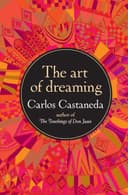
The Art of Dreaming: Bestselling Author Carlos Castaneda Introduces the Worlds Within [Castaneda, Carlos] on desertcart.com. *FREE* shipping on qualifying offers. The Art of Dreaming: Bestselling Author Carlos Castaneda Introduces the Worlds Within Review: the real deal - For anyone who has read through all of them, this is by far Castaneda's most controversial book. It's fascinating reading, featuring long-awaited direct contacts with the Tenant (by whatever name -- he is known by a few different designations in Spanish) in equally long-awaited scenes taking place in Tula, the home of the ancient Toltecs. Besides being such a gripping reading experience, the dreaming practices are real and can be experienced. For the practical-minded, this is a huge improvement over jumping into abysses and some of the other not very practical sorts of things done in the other books. Now as for the rest: 1. There is no don Juan in this book. When dJ left this world (in the book Tales of Power), Carlos was still piddling about trying to see his hands in dreams. The advanced dreaming practices outlined in this book could not have possibly been learned back in those years when dJ was here. Either there was another teacher (and he did confirm that he had at least one other teacher), or... 2. The book is stylistically inconsistent with all of his previous books. Was the author getting old? Did he stop employing the services of his usual editor? or did someone else write this book? At any rate, this book has virtually nothing in common with any of his other books, either in practice or stylistically. As we depart from this book, we come to the Cleargreen years and the Magical Passes, which I won't even bother to review. It's clear from this book and everything after it that, despite the unifying presence of the name "don Juan," Castaneda's books are about at least four distinctly different sets of practices that have little to do with each other. Discerning readers should distinguish from among them and use what is useful for them. To be more explicit about that claim, CC's first three books are more or less ethnography about practices associated with Indians, the fourth book goes way beyond that, the fifth through eighth books introduce us to nagual groups and the concept of the assemblage point, the ninth (this) book covers someone's dreaming practice, Magical Passes covers just that, Wheel of Time looks back at the other books, and, not quite finally (we might include the books by Armando Torres here), Active Side of Infinity is a kind of autobiography that seems to have been written earlier and then withheld until after his passing. The Art of Dreaming is absolutely the best book of its kind, thus its rating. Anyone who can understand this book could not possibly have any use for any of the other more popular books about lucid dreaming, except perhaps to use the paper for, as don Juan said in one of the other books, well, "you know what we use paper for in Mexico..." One point to make is that while books by psychologists about lucid dreaming put the dreaming self at the service of the rational waking mind, a truer practice would put the mind at the disposal of the self that dreams, by whatever name; in other words, by experiencing dreams with ones awareness (as we also experience waking life) instead of trying to control their content. The former treats them as real, while the latter treats them as a product of our mind, which is the flaw of all psychology including (or especially) Jungian. But I guess all that hinges on what "real" means. Regardless of the events that tarnished Castaneda's personal reputation during the 1990s, regardless of the stylistic deficiencies and the anachronistic use of don Juan as a character, regardless of whether we believe all the stuff that happened in Tula, as a book about dreaming, this book is the real deal. Review: If you loved the movie INCEPTION this book is for you. - If you want to control your dreams, control your “projections”, control your emotions, desires, adventure, dream setting.. you’ll want to get this book. I highly recommend reading this if you’re interested in altering your dreams to your liking. It does indeed mention sorcery. Although some christians and religious groups may avoid this book it’s a fictional one but every thing it describes in the book will change the way you dream. It won’t work all the time but when you are aware in the dream state the possibilities are endless. There are many gates of dreaming. Have you ever woke up from a dream within a dream?? It means you were in a deep sleep and you reached the 2nd or 3rd gate of dreaming. Imagine in your dream you are walking in the city, turn and walk up a building with ease. Defy gravity. Dive into a puddle of water in the ground. Stop and observe every detail in the dream and hold on the image before it shifts. Rub your hands together. Become friends with your worst fears. Diet and stress play a roll in dreaming. The better you treat your body the better the dreams. The worse you treat your body you will unlock weird and horror nightmares which are difficult to control.
| Best Sellers Rank | #43,119 in Books ( See Top 100 in Books ) #9 in Native American Religion #21 in Native American Demographic Studies #28 in Shamanism (Books) |
| Customer Reviews | 4.7 out of 5 stars 620 Reviews |
J**E
the real deal
For anyone who has read through all of them, this is by far Castaneda's most controversial book. It's fascinating reading, featuring long-awaited direct contacts with the Tenant (by whatever name -- he is known by a few different designations in Spanish) in equally long-awaited scenes taking place in Tula, the home of the ancient Toltecs. Besides being such a gripping reading experience, the dreaming practices are real and can be experienced. For the practical-minded, this is a huge improvement over jumping into abysses and some of the other not very practical sorts of things done in the other books. Now as for the rest: 1. There is no don Juan in this book. When dJ left this world (in the book Tales of Power), Carlos was still piddling about trying to see his hands in dreams. The advanced dreaming practices outlined in this book could not have possibly been learned back in those years when dJ was here. Either there was another teacher (and he did confirm that he had at least one other teacher), or... 2. The book is stylistically inconsistent with all of his previous books. Was the author getting old? Did he stop employing the services of his usual editor? or did someone else write this book? At any rate, this book has virtually nothing in common with any of his other books, either in practice or stylistically. As we depart from this book, we come to the Cleargreen years and the Magical Passes, which I won't even bother to review. It's clear from this book and everything after it that, despite the unifying presence of the name "don Juan," Castaneda's books are about at least four distinctly different sets of practices that have little to do with each other. Discerning readers should distinguish from among them and use what is useful for them. To be more explicit about that claim, CC's first three books are more or less ethnography about practices associated with Indians, the fourth book goes way beyond that, the fifth through eighth books introduce us to nagual groups and the concept of the assemblage point, the ninth (this) book covers someone's dreaming practice, Magical Passes covers just that, Wheel of Time looks back at the other books, and, not quite finally (we might include the books by Armando Torres here), Active Side of Infinity is a kind of autobiography that seems to have been written earlier and then withheld until after his passing. The Art of Dreaming is absolutely the best book of its kind, thus its rating. Anyone who can understand this book could not possibly have any use for any of the other more popular books about lucid dreaming, except perhaps to use the paper for, as don Juan said in one of the other books, well, "you know what we use paper for in Mexico..." One point to make is that while books by psychologists about lucid dreaming put the dreaming self at the service of the rational waking mind, a truer practice would put the mind at the disposal of the self that dreams, by whatever name; in other words, by experiencing dreams with ones awareness (as we also experience waking life) instead of trying to control their content. The former treats them as real, while the latter treats them as a product of our mind, which is the flaw of all psychology including (or especially) Jungian. But I guess all that hinges on what "real" means. Regardless of the events that tarnished Castaneda's personal reputation during the 1990s, regardless of the stylistic deficiencies and the anachronistic use of don Juan as a character, regardless of whether we believe all the stuff that happened in Tula, as a book about dreaming, this book is the real deal.
A**X
If you loved the movie INCEPTION this book is for you.
If you want to control your dreams, control your “projections”, control your emotions, desires, adventure, dream setting.. you’ll want to get this book. I highly recommend reading this if you’re interested in altering your dreams to your liking. It does indeed mention sorcery. Although some christians and religious groups may avoid this book it’s a fictional one but every thing it describes in the book will change the way you dream. It won’t work all the time but when you are aware in the dream state the possibilities are endless. There are many gates of dreaming. Have you ever woke up from a dream within a dream?? It means you were in a deep sleep and you reached the 2nd or 3rd gate of dreaming. Imagine in your dream you are walking in the city, turn and walk up a building with ease. Defy gravity. Dive into a puddle of water in the ground. Stop and observe every detail in the dream and hold on the image before it shifts. Rub your hands together. Become friends with your worst fears. Diet and stress play a roll in dreaming. The better you treat your body the better the dreams. The worse you treat your body you will unlock weird and horror nightmares which are difficult to control.
B**G
One of the mysterious Castaneda subjects
I think that I get it. What we call dreaming during sleep is a similar process to what we call perception in the waking state. Except that most of us are asleep, really, while we are supposed to be awake. We seem to spend more time thinking about the past, past grudges and hurts, and worrying about what might be in the future, that we completely miss the moment of now, the only time in which we may perceive at all. Instead, we create stories in our heads, stories in which we are the star and the center of everything we experience. Others, family, friends, are all supporting players. It's not personal. Most of us cannot distinguish between what is and what we have made of it: do we like it, hate it, want more of it, want to get away from it, are angry about it, what we think it means, and so on down the rabbit hole. We layer all of that what little that is really out there with all of this stuff that we add to it. Memory of the past has an enormous impact on our experience. We humans are capable of reliving the past thousands of times instead of once and then moving on. That's why we have baby boomers who are still fighting and complaining about their parents and others when the the boomer was five. Imagine that. A 60 year old stuck at a five year old mentality. What's the fun in that? Our minds never register reality; we register at best a simplified model of what we imagine reality to be. Some call this a map; I call it a virtual world we create in our minds. Then, we are unaware that we have made all if this stuff up and we believe all of it. This is what we do, we dream when we are supposed to be awake. Not surprising, some of us have nightmares. Not all of the time for some, and some have occasional good dreams. But, dreams they are. And, we're stuck with that as far as ordinary awareness goes. There is more than ordinary awareness, but it is extraordinary to experience it. So, stuck with dreaming most of the time: What to do? Well, learn that you are dreaming, that it's you doing it and learn to dream a better dream. If you have to dream, at least dream a good dream.
D**D
Excellent Final Work of the great Interpreter of the Shaman World
An excellent end-of-lifetime summary of Carlos's adventures into modern shamanism. Some new characterisations are introduced, and there are several autobiog cameos of persons in his earlier life whose contributions are at last recognised.
N**R
Good
On yonecsndcwellloacksged oackaged
T**N
Interesting Techniques For Lucid Dreaming
A lot has come out in recent years addressing the question of whether the author wrote fiction or nonfiction and how much he was influenced by the work of others- but in the case of this book some of the techniques he writes about might be very useful to you if you're interested in exploring your own dreams or the idea of lucid dreams in general. The author had a gift for wrapping ideas and techniques in wild imagery so his delivery doesn't come across as a dry academic text- if you're interested in dreams then this might increase your sense of wonder in the topic.
M**K
Either it's true or the truth is crazier than is presented.
Wordy and eloquent: Castaneda is reminiscent of Zen koans, - which break your logic leaving you more open to the fluidity of intuition. His abstract presentation will have you dancing across a bridge you never saw on footprints you never planted. While it is part of a series, this book is presented as an independent work - concerning only the teachings pertaining to dreaming. In this one, Carlos is left to learn the art of dreaming on his own with only vague and sparse suggestion from Don Juan. After passing the first two gates of dreaming, shadowy beings begin to appear and it's clear immediately that Carlos is easy prey to their manipulations. The events that follow burgeon into a foolproof scheme to trap him forever in there world. Carlos may be just dumb enough to fall for it. The tenant's in this one too.
J**.
Great Book.
Great read weather you take it literally or not this can change your perspective on reality and what dreaming really is.