We remain fully operational. Our teams are working around the clock to ensure your deliveries continue safely.

下载应用程序


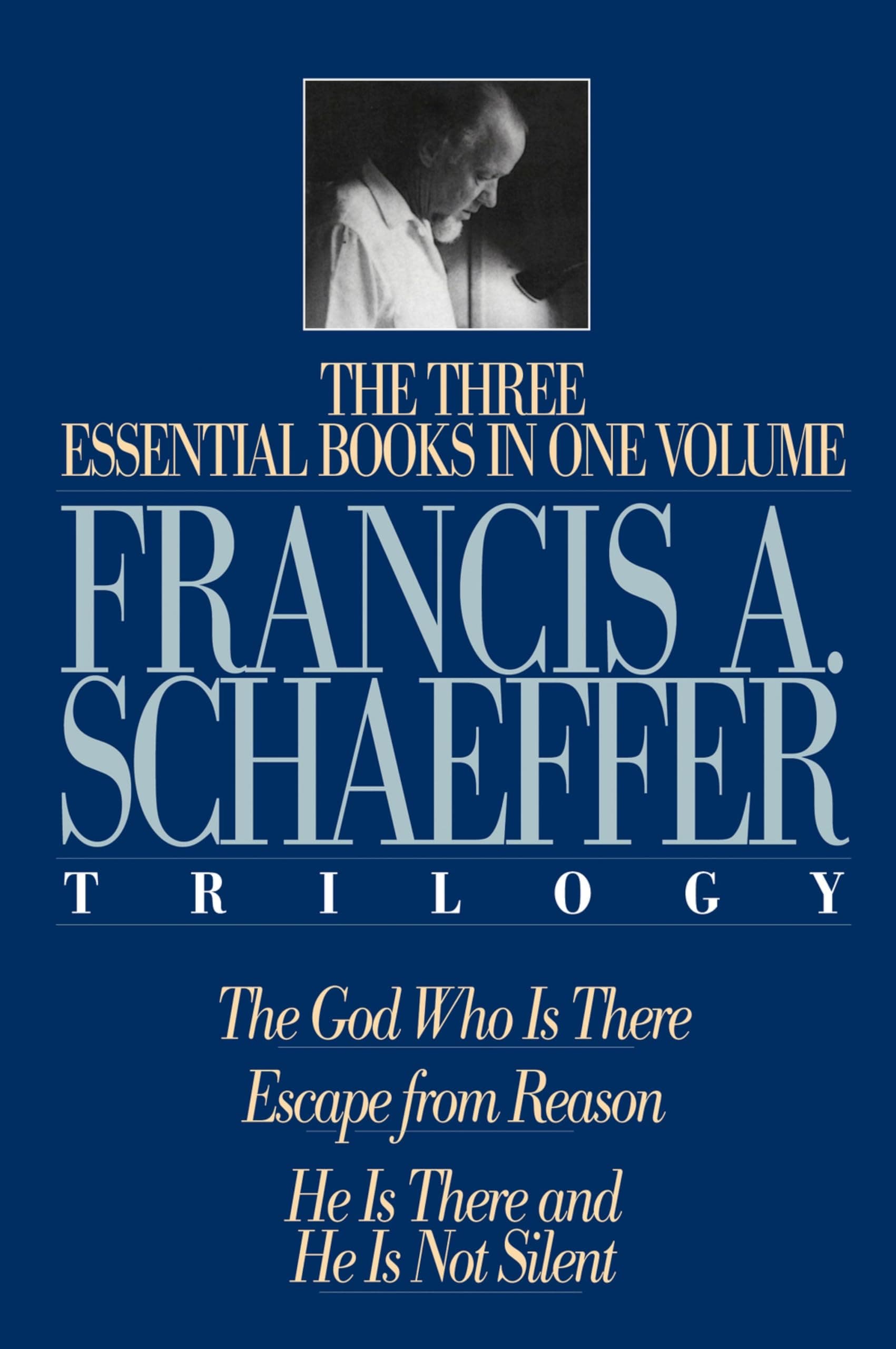

The Francis A. Schaeffer Trilogy: Three Essential Books in One Volume [Schaeffer, Francis A., Dennis, Lane T., Packer, J. I.] on desertcart.com. *FREE* shipping on qualifying offers. The Francis A. Schaeffer Trilogy: Three Essential Books in One Volume Review: The Francis A. Schaeffer Trilogy: Three Essential Books in One Volume - Excellent! Good price, and fast shipping. The book’s title says it all! This is ESSENTIAL for anyone wanting to begin a study of Schaefer’s writings. Extremely insightful explanation of how the Christian Worldview has been significantly replaced with progressive thought. I recommend Schaefer’s “Genesis in Space and Time” and “How Should We Then Live” as follow-up books. Review: Reviewing the links between culture and religion - This book contains three books. It is an anthology of Francis Schaeffer's work. The books are "The God Who Is There," "Escape from Reason," and "He Is There and He Is Not Silent." Francis Schaeffer was an author who tried to keep fingers on the pulse of culture. He often related arts and other cultural institutions to the changing world views throughout history. Schaeffer was indeed a Christian, and one of the most engaging Christians with the world in a period through the 60's when many said, like Nietzsche, that "God is dead." Yet his primary point, notwithstanding, is that the philosophy of the modern west no longer maintained a view of absolute truth which unified fields of knowledge and rational thought. Schaeffer's primary critique of western culture was its shift from Aristotelian and logical forms of epistemology, to Hegelian synthesis. Where once ideas could be considered distinctly "true" or "false," the modern Hegelian method would be an ongoing syncretism, a synthesis, of different propositions. Sometimes these propositions would even be contradictory ones. Instead of saying either A or B, A is true, therefore B is false, the new logic says A and B are opposing views, but they can come together to form something new. Thus reason itself is endangered. If neither true nor false can exist, then the weight of authority is ultimately placed on the individual, and a new form of sophistry (man is the measure of all things) is born. This philosophy of synthesis became the underpinning for moral, theological, and epistemological relativism. Yet if truth which is absolute does exist in the world, then our modern system of thought does not accurately "correspond" to reality. The Christian believes that absolute truth exists, and is communicated in understandable form through the Bible. Francis Schaeffer suggests the Bible is proof that "He Is There and He Is Not Silent." Through the Bible, important truths, truths which appeal to all people, and are therefore absolute, become known. As for myself, I can attest that "the hermeneutics of suspicion" and "deconstructionism" are so fully employed as philosophies at our universities and graduate schools today, that views like Francis Schaeffer's are quite literally censored. On the first day of class, my OT teacher came in and the first thing she said was "there is no absolute truth." Considering how strongly I felt to the contrary, I almost got up and left, but I stayed and tried to politely remain a good student. Point being, I have direct experience with Schaeffer's predictions. Love or hate the man, his evaluation of what western culture has become philosophically is nearly flawless in how prevalently it has come true. I likewise find that critics that say that this is feelgood pap for Evangelicals haven't read the book thoroughly. Schaeffer accuses Evangelicals of being intellectually lazy and decadent. Furthermore, he accuses us of being morally and philosophically complicit in the advances of Hegelian synthesis as a cultural modus operandi. This man is a man who truly understood the implications, the ripples, caused by the introductions of new philosophy into a culture. Christians and even open-minded skeptics will find Schaeffer to be full of great insights and challenges. I deeply love this man's work, and also recommend "How Should We Then Live?"


| ASIN | 0891075615 |
| Best Sellers Rank | #102,102 in Books ( See Top 100 in Books ) #353 in Christian Apologetics (Books) #669 in Inspirational Spirituality (Books) #8,186 in Christian Living (Books) |
| Customer Reviews | 4.7 4.7 out of 5 stars (405) |
| Dimensions | 6 x 1.24 x 9 inches |
| Edition | First Edition |
| ISBN-10 | 9780891075615 |
| ISBN-13 | 978-0891075615 |
| Item Weight | 1.49 pounds |
| Language | English |
| Print length | 368 pages |
| Publication date | April 10, 1990 |
| Publisher | Crossway |
T**E
The Francis A. Schaeffer Trilogy: Three Essential Books in One Volume
Excellent! Good price, and fast shipping. The book’s title says it all! This is ESSENTIAL for anyone wanting to begin a study of Schaefer’s writings. Extremely insightful explanation of how the Christian Worldview has been significantly replaced with progressive thought. I recommend Schaefer’s “Genesis in Space and Time” and “How Should We Then Live” as follow-up books.
C**H
Reviewing the links between culture and religion
This book contains three books. It is an anthology of Francis Schaeffer's work. The books are "The God Who Is There," "Escape from Reason," and "He Is There and He Is Not Silent." Francis Schaeffer was an author who tried to keep fingers on the pulse of culture. He often related arts and other cultural institutions to the changing world views throughout history. Schaeffer was indeed a Christian, and one of the most engaging Christians with the world in a period through the 60's when many said, like Nietzsche, that "God is dead." Yet his primary point, notwithstanding, is that the philosophy of the modern west no longer maintained a view of absolute truth which unified fields of knowledge and rational thought. Schaeffer's primary critique of western culture was its shift from Aristotelian and logical forms of epistemology, to Hegelian synthesis. Where once ideas could be considered distinctly "true" or "false," the modern Hegelian method would be an ongoing syncretism, a synthesis, of different propositions. Sometimes these propositions would even be contradictory ones. Instead of saying either A or B, A is true, therefore B is false, the new logic says A and B are opposing views, but they can come together to form something new. Thus reason itself is endangered. If neither true nor false can exist, then the weight of authority is ultimately placed on the individual, and a new form of sophistry (man is the measure of all things) is born. This philosophy of synthesis became the underpinning for moral, theological, and epistemological relativism. Yet if truth which is absolute does exist in the world, then our modern system of thought does not accurately "correspond" to reality. The Christian believes that absolute truth exists, and is communicated in understandable form through the Bible. Francis Schaeffer suggests the Bible is proof that "He Is There and He Is Not Silent." Through the Bible, important truths, truths which appeal to all people, and are therefore absolute, become known. As for myself, I can attest that "the hermeneutics of suspicion" and "deconstructionism" are so fully employed as philosophies at our universities and graduate schools today, that views like Francis Schaeffer's are quite literally censored. On the first day of class, my OT teacher came in and the first thing she said was "there is no absolute truth." Considering how strongly I felt to the contrary, I almost got up and left, but I stayed and tried to politely remain a good student. Point being, I have direct experience with Schaeffer's predictions. Love or hate the man, his evaluation of what western culture has become philosophically is nearly flawless in how prevalently it has come true. I likewise find that critics that say that this is feelgood pap for Evangelicals haven't read the book thoroughly. Schaeffer accuses Evangelicals of being intellectually lazy and decadent. Furthermore, he accuses us of being morally and philosophically complicit in the advances of Hegelian synthesis as a cultural modus operandi. This man is a man who truly understood the implications, the ripples, caused by the introductions of new philosophy into a culture. Christians and even open-minded skeptics will find Schaeffer to be full of great insights and challenges. I deeply love this man's work, and also recommend "How Should We Then Live?"
M**N
Essential!
Consolidated and reprinted with good reason! Ever bit as relevant today as when written, perhaps more. In my opinion, this book should be required reading. It will influence the way you view nearly everything you read thereafter, whether a Christian book or not. Schaeffer does expect you to know something about the great philosophers but the book can be read without having read them, especially if the reader is willing to visit wikipedia to get a little more background. He does have certain biases: pre-suppositional and reformed perspectives and a unique view of natural law but they do not detract from the prominent themes. Those themes, btw, are that postmodern humanity does not understand that he has lost certain aspects of his reason, that he does not know how he got that way, and that Christians should not hide but stand up in the marketplace of ideas because Christianity can soundly compete and win over what passes for legitimate discourse in that marketplace. It is important to note that this trilogy is the cornerstone of his writings. Many have read his commentaries, particularly, "The Christian Manifesto," but even those cannot be properly understood without having read the trilogy. He was a prolific writer but this (or the constituent writings) is the book with which to start.
L**R
Critical Christian thinking at its best.
I can't imagine any library serving a serious student or writer about Christian faith without this book. Dr. Schaeffer has no equal when it comes to combining faith, history, and logic to support scripture and explain how we got to where we are today. How do we know there's a God? Why are atheists and "seekers" so miserable? Why have so many brilliant people died in despair? Would you like to trace the root that produced the weed that populates societal gardens today? Dr. Schaeffer identified it, describes it, and teaches us a whole bunch that we didn't know was relevant to our walk with Christ today. Do you want to be comforted, sustained, and become even more positive that your faith is placed in One who IS THERE and who is deserving? Brilliant. Obedient. Dr. Schaeffer isn't always an easy read, but if you put in the effort you will be amply rewarded.
J**S
Excellent insight into modern worldview
Deep and very insightful into the condition of the modern worldview, and helpful for the modern Christian to understand the errors of that view and more effectively counter it. I feel these books could be more effective if better organized and the key points more clearly presented. I feel like constructing a detailed summary of what I believe Schaeffer is teaching in order to help solidify it in my own mind.
L**E
What a wonderful find!
I did not have an opportunity to finish this book, as I met a young man on a plane from California to Dallas that needed it more than I did, so I gave it to him. I need to purchase another one as it addresses so many of the issues we face today. What a precious gift to the body of Christ was Francis Schaeffer. May his life and his writings continue to instruct, inspire and uplift each passing generation.
J**N
A TOP-QUALITY READING INVESTMENT
Anyone desiring a much clearer understanding of why evil confusion and violence are over-running common decency and common sense will be well-served by the information presented in this book. Without equivocation I can say it is one of the best reading investments I have ever made. The love and compassion that Francis Schaeffer has for all of God's children is reflected in the kindly, accessible language that he uses to express difficult, complex ideas.
J**N
AWESOME
A**E
Alles super. Danke
N**H
An excellent insight into the mind of Francis Schaeffer and a good read for anyone looking into Christian world-view. Totally recommended!
R**E
Schaeffer's three books contained in this volume, although they repeat their coverage of some issues, present a prescient and modern way of looking at the world of Christian evangelism. Their treatment of the arts may be somewhat dated, but the trend Schaeffer recognized has only entrenched itself in the interim. There is indeed a line of despair and our modern Western culture is firmly below it. Values are appealed to vaguely and only have meaning as a "leap of faith" into the upper story. If we want our modern culture to understand Christian thought we must first "take the roof off". As long as the current culture prevails, this book will continue to have relevance.
H**S
A great combination from a brilliant mind.
TrustPilot
1 个月前
1天前