
下载应用程序


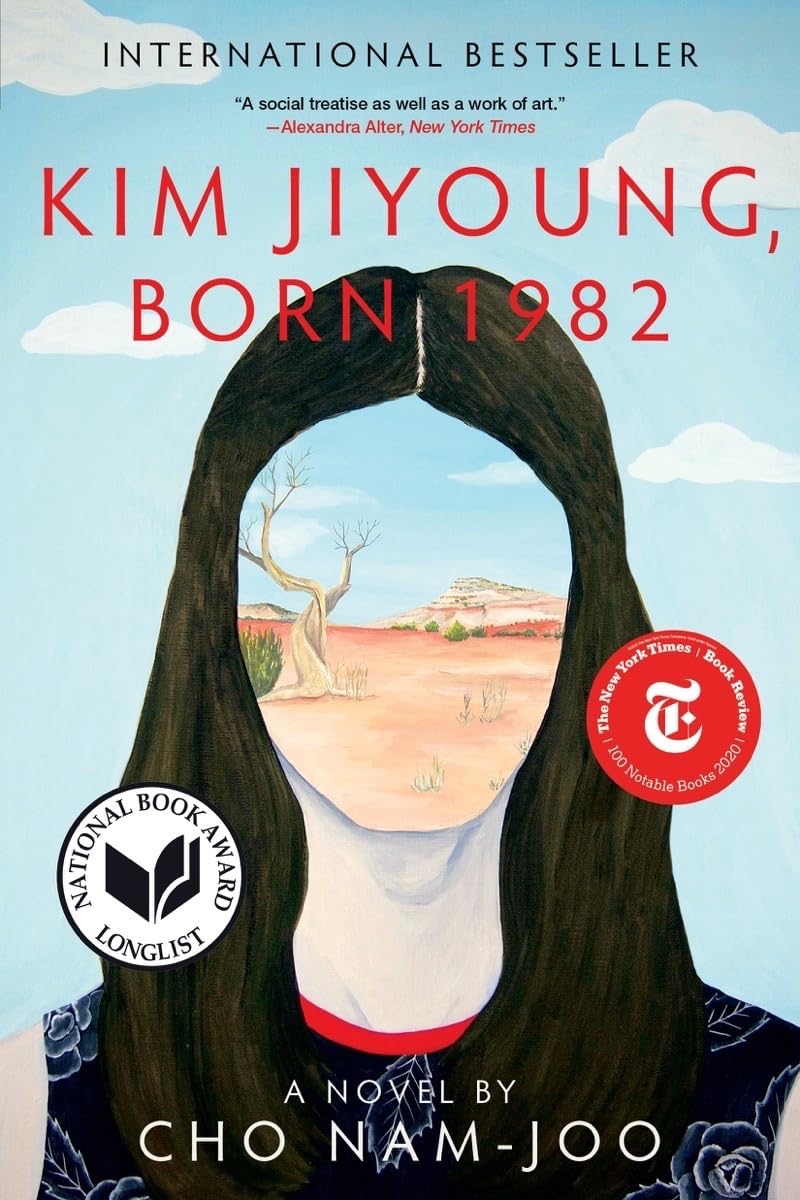
desertcart.com: Kim Jiyoung, Born 1982: A Novel: 9781631498671: Nam-joo, Cho, Chang, Jamie: Books Review: This novel is worth your time. It is more than a collection of archetypes of discrimination. - I think this book is worth your time. But I think it is also worth tempering your expectations against the way the book has been advertised, especially in its English translation. For example, according to the inside of the hardcover dust jacket this is presented as the story of “a thirtysomething ‘millenial everywoman … at the center of our global #MeToo movement.’” I want to gently push back on this marketing copy as I think the novel and the characters rise above that of archetype and stereotype. There can be something flattening about how the everyday indignity of sexism and discrimination is unintentionally smoothed over when described as “universal.” When discrimination happens to you, what can be so shattering is how excruciatingly individual and direct that pain can feel; how hard it can be to put what just specifically happened to you into words, let alone speak of it to others; finally, it is astonishing how difficult it can be for others to truly understand in a meaningful way what you, as an individual, went through: This is the experience that Cho Nam-Joo attempts to capture in this novel and one I feel the author succeeds in doing. You are never left in doubt that this is a novel about Kim Jiyoung, and as you read, you will be told more about her older sister Kim Eunyoung, her mother Oh Misook, her grandmother Koh Boonsoon, and more. The circle of women in her life shape and inform, guide and restrict, challenge and sometimes even seem to possess her as their lives unfold and fold into each other’s. This is not a novel full of exquisite prose and brutal interiority that delves deep into the stream-of-consciousness of our central character. It is not slow or meditative. It is a blunt book. The narrative does not dawdle and is structured to move quickly across several periods of Kim Ji Young’s life labelled “childhood,” “early adulthood,” and (tellingly) “marriage.” In the English translation by Jamie Chang, the plot of the novel carries an urgency and reads as taut like a spring, uncoiling as you read it. The story presents a steady, ceaseless stream of individual, highly personal episodic events from Kim Ji Young’s life as well as the other women in her life: Moments where their status as a woman was used by others to truncate a dream, bring them fear, make them uncertain, to be imposed on them by another as a way to reduce their ambitions or their agency. These moments begin in slow waves at first. And at a certain point, the narrator even begins to cite statistics from the likes of the Economist, or the Ministry of Labor, or Statistics Korea at the end of a narrative event, in the same manner as one might add an underscore or italics for emphasis. By the end, these moments arrive almost ceaselessly, one after the other. I certainly felt overwhelmed as a reader. At 163 pages, I was able to finish the slim, hardcover version in a single sitting, on a quiet Friday. The ending of the novel, which I leave for you to discover, made me feel more acutely than ever the challenges we have in lasting empathy or understanding. The novel shows how easy it is, for anecdotes or accounts of suffering to induce a moment of clarity, and empathy, to bemoan the circumstances. It also shows how easy it is to revert to the mean, to proscribe a platitude, to once more slip into a norm of everyday inequity. I found this book to be a source of many good conversations, and an opportunity to discuss our individual experiences, and made me hope for more lasting awareness of our capacity to discriminate – unintentional or not – but also our ability to be better. Review: Short in length, long in honesty - This book found me. It reads more like a fact-born, biography couched in a fictional easy chair. Very interesting in that respect. As a woman raised in the US, it gave me significant pause. We moan about our plight but let's consider women in other lands. I've traveled to South Korea several times but as a visitor it is very difficult to truly grasp truth in culture. This book allows for that and its' honesty is both compelling and admirable. It is difficult for a woman to read this book and not consider that humanity is indeed still struggling with significant reform when it comes to gender roles, marriage, workplace equality, and child rearing. How did our species get so lost and confused about such basic aspects of existence? Great book for the instigation of serious thought and potential to spur others towards profound change for the benefit of all.
| Best Sellers Rank | #33,252 in Books ( See Top 100 in Books ) #507 in Psychological Fiction (Books) #1,068 in Women's Domestic Life Fiction #2,620 in Literary Fiction (Books) |
| Customer Reviews | 4.3 out of 5 stars 9,274 Reviews |
J**N
This novel is worth your time. It is more than a collection of archetypes of discrimination.
I think this book is worth your time. But I think it is also worth tempering your expectations against the way the book has been advertised, especially in its English translation. For example, according to the inside of the hardcover dust jacket this is presented as the story of “a thirtysomething ‘millenial everywoman … at the center of our global #MeToo movement.’” I want to gently push back on this marketing copy as I think the novel and the characters rise above that of archetype and stereotype. There can be something flattening about how the everyday indignity of sexism and discrimination is unintentionally smoothed over when described as “universal.” When discrimination happens to you, what can be so shattering is how excruciatingly individual and direct that pain can feel; how hard it can be to put what just specifically happened to you into words, let alone speak of it to others; finally, it is astonishing how difficult it can be for others to truly understand in a meaningful way what you, as an individual, went through: This is the experience that Cho Nam-Joo attempts to capture in this novel and one I feel the author succeeds in doing. You are never left in doubt that this is a novel about Kim Jiyoung, and as you read, you will be told more about her older sister Kim Eunyoung, her mother Oh Misook, her grandmother Koh Boonsoon, and more. The circle of women in her life shape and inform, guide and restrict, challenge and sometimes even seem to possess her as their lives unfold and fold into each other’s. This is not a novel full of exquisite prose and brutal interiority that delves deep into the stream-of-consciousness of our central character. It is not slow or meditative. It is a blunt book. The narrative does not dawdle and is structured to move quickly across several periods of Kim Ji Young’s life labelled “childhood,” “early adulthood,” and (tellingly) “marriage.” In the English translation by Jamie Chang, the plot of the novel carries an urgency and reads as taut like a spring, uncoiling as you read it. The story presents a steady, ceaseless stream of individual, highly personal episodic events from Kim Ji Young’s life as well as the other women in her life: Moments where their status as a woman was used by others to truncate a dream, bring them fear, make them uncertain, to be imposed on them by another as a way to reduce their ambitions or their agency. These moments begin in slow waves at first. And at a certain point, the narrator even begins to cite statistics from the likes of the Economist, or the Ministry of Labor, or Statistics Korea at the end of a narrative event, in the same manner as one might add an underscore or italics for emphasis. By the end, these moments arrive almost ceaselessly, one after the other. I certainly felt overwhelmed as a reader. At 163 pages, I was able to finish the slim, hardcover version in a single sitting, on a quiet Friday. The ending of the novel, which I leave for you to discover, made me feel more acutely than ever the challenges we have in lasting empathy or understanding. The novel shows how easy it is, for anecdotes or accounts of suffering to induce a moment of clarity, and empathy, to bemoan the circumstances. It also shows how easy it is to revert to the mean, to proscribe a platitude, to once more slip into a norm of everyday inequity. I found this book to be a source of many good conversations, and an opportunity to discuss our individual experiences, and made me hope for more lasting awareness of our capacity to discriminate – unintentional or not – but also our ability to be better.
R**D
Short in length, long in honesty
This book found me. It reads more like a fact-born, biography couched in a fictional easy chair. Very interesting in that respect. As a woman raised in the US, it gave me significant pause. We moan about our plight but let's consider women in other lands. I've traveled to South Korea several times but as a visitor it is very difficult to truly grasp truth in culture. This book allows for that and its' honesty is both compelling and admirable. It is difficult for a woman to read this book and not consider that humanity is indeed still struggling with significant reform when it comes to gender roles, marriage, workplace equality, and child rearing. How did our species get so lost and confused about such basic aspects of existence? Great book for the instigation of serious thought and potential to spur others towards profound change for the benefit of all.
L**Y
The Countless Realizations are Food for Thought for Everyone of Every Nationality
I read this book to find out how a therapist would guide a patient to "countless realizations" about themselves to deal with depression. I am glad the author put in the therapists questioning and comments. I also enjoyed reading the reviews to discover that Korean women are so subordinate even to men to this day. One thing I noticed is that the main character has the same coping skill as her father......beating people down (including herself) aka weakening them by attacking them makes her feel stronger. It takes a lot of courage to write a book, and especially one about her journey through her mental suffering and depression. I really enjoyed this book and the many thoughtful perceptions it raised. Most of all, who really cares if I like it or not except me and how I chose to spend my afternoon reading it? What matters is the author enjoyed writing it, and it was cathartic for her to see herself and others three dimensionally.
F**O
An overdue backlash against outdated attitudes
This is basically an expose of everything that has been wrong with the way South Korea treats, and has treated women. I think it is quite clever in the way it is written, a mixture of memoir, diary and novella. It communicates its message through character archetypes and typical social scenarios. Its mass appeal stems from the way in encapsulates the experience of most Korean women born in from the 70’s to the 90’s. It functions as an awakening, a long-due dam-burst of expression in a society known for its cultural straightjacket. The Republic of Korea is a country that modernized quickly in terms of infrastructure but lags when it comes to quality of life and social justice. Things have improved a bit since this book was penned, but it can still be a stressful and frustrating place if you are female or belong to a minority. It is a society of advanced technology yet still in the grip of outdated traditional practices and oppressive societal expectations. It is a fairly quick read, you will get through it in under a week. This is because it is quite brief but also fairly engaging. It will be of interest to anyone who has spent time in the country. It begins to dismantle a carefully constructed façade, the illusion of a perfect country, an image oft presented to the international community and one that has depended on Korea being still relatively unknown to the world at large.
K**E
Magnificent
I read this entire book in one sitting, I couldn’t put it down. As a white American woman, I found this novel, big picture wise, all too relatable. I don’t think the take away of the book is necessarily that “men suck and can’t be relied on” as some people claim, but rather a more hopeful message of how much change can happen in one generation and how important it is for us as women to support one another, just as the women in Jiyoung’s life supported her, and how in her psychosis she was able to share their stories and be a voice for them. An absolutely brilliant distillation of the female experience in a male weighted world.
W**A
Unique format
Although this is a fictional narrative, it’s peppered with facts and citations throughout the text to remind us that while we are reading a story, the text is also a scathing indictment of the misogynistic policies that constitute the everyday reality of Korean women. To be honest, all of this was a surprise to me. I had no idea that women in Korea suffered to this extent, so I was intrigued to learn that gender inequality in South Korea is ranked one of the highest in the world, and this book’s publication actually led to a heated debate about sexism in the country. Perhaps Cho Nam-Joo saw this coming, and that’s why she wrote the book in a very unique style. It reads like an academic paper or newspaper article. It’s very clinical in its approach, almost daring the reader to argue with her or to dispute the premise on which the story is written.
K**Z
A Must-read
This book is a work of fiction, and yet so real. It portrays the struggles of a woman in South Korea and here I am sitting in the Dominican Republic (13,644 km away) relating to it, blows my mind. 🤯 I loved the way the author captures the buildup of sexism and gender discrimination women face from the moment they are born while intertwining the story with real facts. Regardless of where we live, we experience sexism and gender-based violence and discrimination. Women are judged for every decision they make. You are judged if you want kids and if you don't, if you choose to pursue your career or stay at home, and even when you do "what's expected of a woman in society" you are judged and everything is your own fault. It is overwhelming. This book and the movie that came later lit up the feminist movement in South Korea, revealing that even though we’re not in 1984 anymore, some of the struggles for women are still the same. This is an eye-opener that demonstrates how we should all work together towards equality.
S**E
Kim Jiyoung, Born 1982
Quick read that is a kick square in the balls. You don't need to be a woman or have a strong background in Korean history to appreciate the power of this story. This is not an uplifting, feel good story. This is a direct look into misogyny and its far-reaching impact. I am going to be thinking about this book for a long time and will buy a physical copy for my collection of favorite books.