We remain fully operational. Our teams are working around the clock to ensure your deliveries continue safely.

下载应用程序


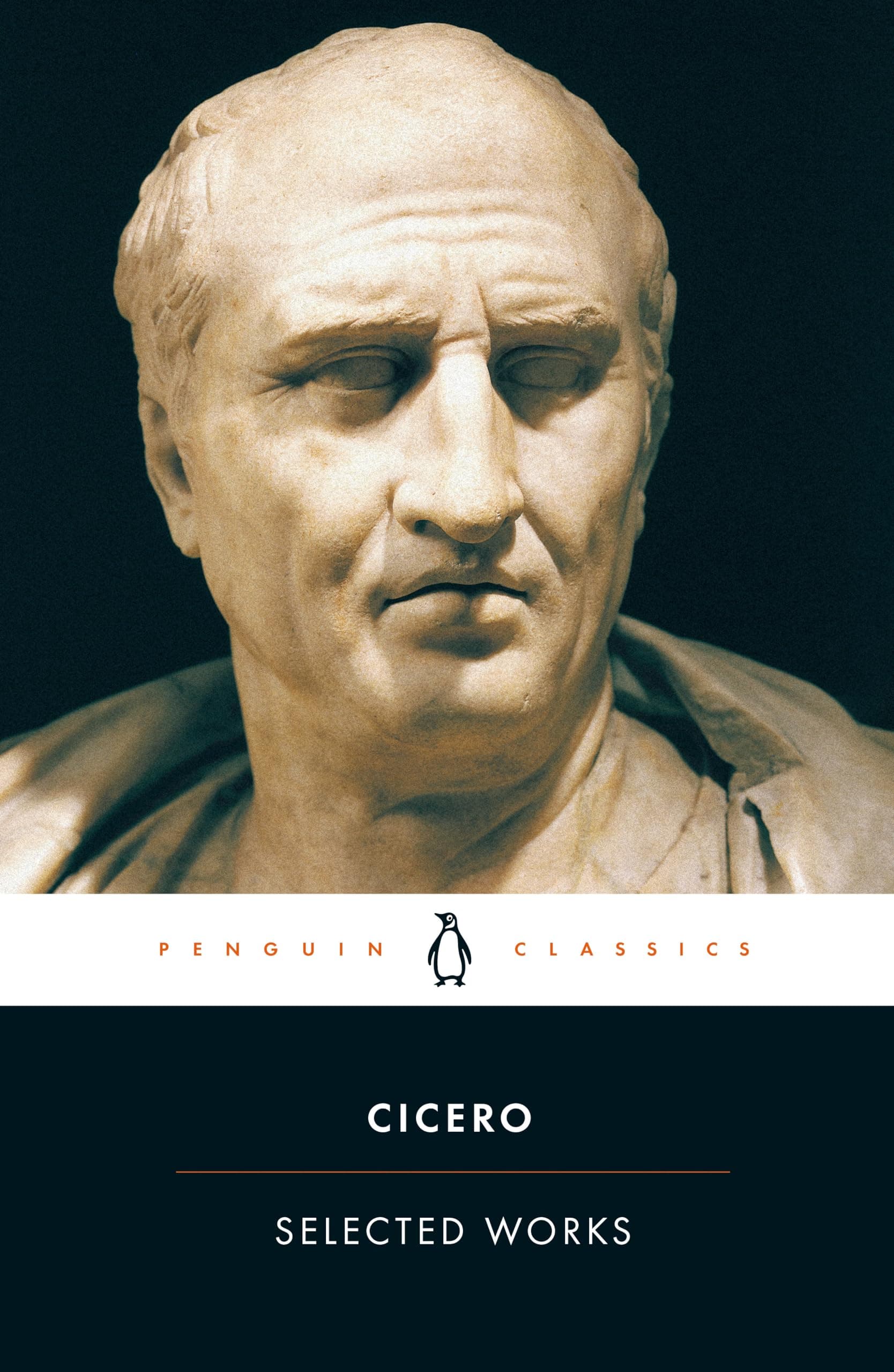
desertcart.com: Cicero: Selected Works: 8601300100951: Cicero, Marcus Tullius, Grant, Michael, Grant, Michael: Books Review: Selected Works of the great Roman orator/statesman/philosopher Cicero is an excellent book for anyone ... - Selected Works of the great Roman orator/statesman/philosopher Cicero is an excellent book for anyone approaching his work for the first time. Not only are there selections from Cicero’s writings on politics, moral philosophy and old age but there is a superb 30 page introduction written by Michael Grant. Thank you, Penguin books and thank you, Michael Grant! To provide a little Roman rasa, below are several quotes from the book along with my comments. From Michael Grant’s Introduction “Cicero was not often a very successful politician, but he derives unmistakable greatness from his insistence, against odds, that such dictatorial rulers were in the wrong because they unjustifiably curtailed the freedom of the individual; whereas the ultimate authority should be not themselves but certain unchangeable moral principles.” --------- Anybody who picks up a newspaper anywhere in the world will recognize immediately how Cicero’s writings are as relevant today as they were in ancient Rome. Matter of fact, with our omnipresent multinational corporations added to the political mix, perhaps even more relevant. “Cicero’s task was not an easy one; the Greek philosophers, to which with the added infusion of his own personality, he gave eloquent expression – far more eloquent than that of their original authors – contain much that was complicated and difficult, especially to unphilosophical Romans. ---------- Cicero’s achievement strikes home for me personally, living as I do in the unphilosophical Rome of the modern world: America. We should never take for granted we have access to the writings of ancient philosophers presented in well-crafted and clearly presented books such as this one. “The moral emphasis of Stoicism (when its dogma was toned down) was very acceptable to him, and indeed the basis of a great deal of his thought and feelings on moral and ethical problems. ---------- Michael Grant provides an easy-to-read short overview of how Cicero drew from not only Stoicism but many streams of Greek philosophy, such as the Pythagoreans , Platonists, Peripatetics (followers of Aristotle) and two schools Cicero particularly despised: the Cyrenaics (immediate happiness is the ultimate good) and the Epicureans (the philosophical school that shunned pubic life). Such lively and informative readings makes for a real treat. From ‘Against Verres’ “One thing, then, that has influenced me is this gloating of yours over your tyrannical dominance in our courts; and another is the evident existence of men who feel not the slightest shame or disgust for their repulsive and outrageous behavior.” --------- In the world of Roman opulence and excess, Cicero could tell it like it is. From ‘On Duties’ “Once I lived with great crowds around me, in the forefront of Roman publicity. But now I shun the sight of the scoundrels who swarm on every side. I withdraw as completely as I can; and I am often alone. However, as the philosophers instruct, one must not only choose the least among evils, one must extract from them any good that they may contain.” --------- This is a lesson we can all learn from: make the best of a less than ideal situation. “ “Another objection urges that one ought to take account of compatriots but not of foreigners. But people who put forward these arguments subvert the whole foundation of the human community – and its removal means the annihilation of all kindness, generosity, goodness, and justice.” ------- Cicero’s words have a modern ring, as if he anticipated our 21st century world-wide culture and society. From: ‘On Old Age’ “An actor need not remain on the stage until the very end of the play: if he wins applause in those acts in which he appears, he will have done well enough. In life, too, a man can perform his part wisely without staying on the stage until the play is finished. However short your life may be, it will still be long enough to live honestly and decently.” --------- This is but one of the many gold nuggets of ancient wisdom a reader will find in Cicero’s essay. Review: recommend this seller - great product, great seller






| Best Sellers Rank | #42,355 in Books ( See Top 100 in Books ) #5 in Medieval Literary Criticism (Books) #20 in Ancient & Classical Literary Criticism (Books) #96 in Evolution (Books) |
| Customer Reviews | 4.5 4.5 out of 5 stars (514) |
| Dimensions | 7.72 x 5.1 x 0.69 inches |
| Edition | First Edition |
| Grade level | 12 and up |
| ISBN-10 | 0140440992 |
| ISBN-13 | 978-0140440997 |
| Item Weight | 7.2 ounces |
| Language | English |
| Print length | 272 pages |
| Publication date | September 30, 1960 |
| Publisher | Penguin Classics |
| Reading age | 18 years and up |
G**L
Selected Works of the great Roman orator/statesman/philosopher Cicero is an excellent book for anyone ...
Selected Works of the great Roman orator/statesman/philosopher Cicero is an excellent book for anyone approaching his work for the first time. Not only are there selections from Cicero’s writings on politics, moral philosophy and old age but there is a superb 30 page introduction written by Michael Grant. Thank you, Penguin books and thank you, Michael Grant! To provide a little Roman rasa, below are several quotes from the book along with my comments. From Michael Grant’s Introduction “Cicero was not often a very successful politician, but he derives unmistakable greatness from his insistence, against odds, that such dictatorial rulers were in the wrong because they unjustifiably curtailed the freedom of the individual; whereas the ultimate authority should be not themselves but certain unchangeable moral principles.” --------- Anybody who picks up a newspaper anywhere in the world will recognize immediately how Cicero’s writings are as relevant today as they were in ancient Rome. Matter of fact, with our omnipresent multinational corporations added to the political mix, perhaps even more relevant. “Cicero’s task was not an easy one; the Greek philosophers, to which with the added infusion of his own personality, he gave eloquent expression – far more eloquent than that of their original authors – contain much that was complicated and difficult, especially to unphilosophical Romans. ---------- Cicero’s achievement strikes home for me personally, living as I do in the unphilosophical Rome of the modern world: America. We should never take for granted we have access to the writings of ancient philosophers presented in well-crafted and clearly presented books such as this one. “The moral emphasis of Stoicism (when its dogma was toned down) was very acceptable to him, and indeed the basis of a great deal of his thought and feelings on moral and ethical problems. ---------- Michael Grant provides an easy-to-read short overview of how Cicero drew from not only Stoicism but many streams of Greek philosophy, such as the Pythagoreans , Platonists, Peripatetics (followers of Aristotle) and two schools Cicero particularly despised: the Cyrenaics (immediate happiness is the ultimate good) and the Epicureans (the philosophical school that shunned pubic life). Such lively and informative readings makes for a real treat. From ‘Against Verres’ “One thing, then, that has influenced me is this gloating of yours over your tyrannical dominance in our courts; and another is the evident existence of men who feel not the slightest shame or disgust for their repulsive and outrageous behavior.” --------- In the world of Roman opulence and excess, Cicero could tell it like it is. From ‘On Duties’ “Once I lived with great crowds around me, in the forefront of Roman publicity. But now I shun the sight of the scoundrels who swarm on every side. I withdraw as completely as I can; and I am often alone. However, as the philosophers instruct, one must not only choose the least among evils, one must extract from them any good that they may contain.” --------- This is a lesson we can all learn from: make the best of a less than ideal situation. “ “Another objection urges that one ought to take account of compatriots but not of foreigners. But people who put forward these arguments subvert the whole foundation of the human community – and its removal means the annihilation of all kindness, generosity, goodness, and justice.” ------- Cicero’s words have a modern ring, as if he anticipated our 21st century world-wide culture and society. From: ‘On Old Age’ “An actor need not remain on the stage until the very end of the play: if he wins applause in those acts in which he appears, he will have done well enough. In life, too, a man can perform his part wisely without staying on the stage until the play is finished. However short your life may be, it will still be long enough to live honestly and decently.” --------- This is but one of the many gold nuggets of ancient wisdom a reader will find in Cicero’s essay.
D**.
recommend this seller
great product, great seller
G**H
The importance and relevance of Cicero
As Michael Grant explains in his introduction, Cicero's reputation has waxed and waned over the past two thousand years. That reputation was at its zenith at the time of the founding of the United States, and Cicero was like an old friend to Thomas Jefferson and the Founding Fathers. He was admired for many reasons, but perhaps the most outstanding was his concept of Natural Law, which had an enormous influence on the people who wrote the Constitution. And for that reason alone, it's worth getting to know Cicero. Relevant? You can hardly get more than a few pages into "On Duties (III)" before you come across this: "Granted that there is nothing unnatural in a man preferring to earn a living for himself rather than someone else, what nature forbids is that we should increase our own means, property and resources by plundering others." I would guess that the Founding Fathers agreed with this sentiment completely, for the simple reason that once citizens begin plundering one another, one of the primary social goals (living safely and without fear of your neighbor) is instantly destroyed. I would also guess that they didn't write this into the Constitution because it was so terribly obvious: every well-educated man understood Cicero and his concept of Natural Law. But they lived before the advent of Karl Marx... I also suspect that Cicero's "religion" was pretty close to the religion of the Founding Fathers. Cicero imagined the mind of the Universe to be God, while the physical body of the universe was made up by all the natural phenomena around us, and he was quite sure that each one of us carried within himself a spark of that divinity. As far as the afterlife, Cicero basically whittled the possibilities down to two. Either we cease to exist, and cease to feel pain, or there is an afterlife, and we will enter it. In either case, there is no reason to fear death. Another essay included in this book, "On Old Age," is a true Ciceronian classic. If I had my druthers, everyone would receive a free copy on his 60th birthday. It's a simple, short read, and cannot really be summarized in a short review. Another excellent book by Michael Grant!
E**.
Good book
Everything arrived on time and as advertised
G**.
Cicero Selected topics
Easy to read, follow, understand. So great intro to Cicero.
D**L
Cicero's Selected Works Revisited
A compliment to Amazon Kindle is entailed here. I got the Amazon Kindle version of the "Selected Works" of Cicero when my Penguin copy fell apart through overuse! This is the second time I have been motivated to get the Kindle version of a much read work: the other being my favorite autobiography: Ulysses S. Grant's "Personal Memoirs". Any literary work I value is henceforth going to go on Kindle: I'm through with perishable dead-tree books! I studied Latin through high school and Cicero's letters were an eye opener because of their clear Latin. Some of the best of these letters are in this volume of Cicero's "Selected Works". Unfortunately, we weren't allowed to read the good stuff in high school Latin: Cicero's 2nd Philippic against Anthony--often considered the greatest political pamphlet of all time--was probably considered too racy for schoolboys. Instead, we were forced to read the "Aeneid." (I never want to see that damned poem again!) But I got my own kids to read the 2nd Philippic, I hope to their benefit. And there are other great essays of Cicero's in his "Selected Works." Enjoy and benefit!
S**A
quality
The cover is scratched up. It looks unread but not new.
T**N
Not necessarily for the casual reader
I wish I had paid more attention in my philosophy classes in college as we discussed some of these writings. If you're not familiar with Cicero, take it slowly, think about what you're reading and remind yourself of the purpose of their discussion. These are adversarial conversations so keep that in mind.
A**R
very beauty
R**N
Loved this book but would suggest that you need to have a knowledge of ancient Rome
A**L
The Selected Works of Cicero is a good selection of pieces written at various times in Cicero’s life. If you’re not familiar with Cicero’s work (and I was not), this is a good way to sample his writing and get an idea of whether you would want to read more. And it’s one that has made me interested in reading more of Cicero (which I suppose would be a fair marker of success for this volume). It’s overall a very accessible collection for non-specialists. This volume covers several different themes, with different aspects of law, politics and philosophy being featured. Regardless of the subject matter, Cicero’s writing comes across as clear and vigorous, with a very strong sense of moral sentiment throughout. Grant seems (to my non-specialist sensibilities) seems to have done an admirable job of translating these works into a modern English that still conveys the vivid character of the author. The introductory notes to each piece are very helpful and serve to give the unfamiliar reader some historical and social context to the writing, to understand the many conflicts of the period that animated Cicero’s writing – the often violent events in the latter days of the Roman Republic and its transition to empire. The kindle version seems well laid out. There’s a live table of contents, helpful notes, some okay maps and introductory material. One odd note about the introductory material, Grant tries to place Cicero into modern political categories, stating “He started his political career on the left…” which strikes me as a rather artificial and forced bit of categorization. Otherwise, the introductory material is well written and informative.
I**N
内外の書を問わず、老人の哲学書を読みたいとだいぶん前から思っていた。初め、仏教書に何かないかと物色したのだが、それは小生の方向違いのようであった。 Ciceroの On Old Ageを見つけたのは朝日新聞だった。英語版で読んでみようと、Amazonで探したらあるわ、あるわ。廉価の、中古ペーパーバックを買った。活字が小さくて往生した。 彼のSelected Worksの中のOn Old Ageだけを読んだ。難しい単語もかなりあったが、いまは電子辞書があるからすいすいだった。それよりもギリシャ神話に出てくる固有名詞に悩まされた。世界史の参考書を座右に置いて読まれるとよい。 心にしみるフレーズにいくつか出会った。それらに赤線を引いておいた。再読のおりに熟読玩味するつもりだ。機会があればだが。
C**N
The kindle version is unfortunately full of typos and formatting problems.
TrustPilot
2 周前
5天前