We remain fully operational. Our teams are working around the clock to ensure your deliveries continue safely.

下载应用程序


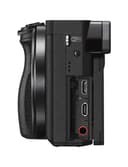
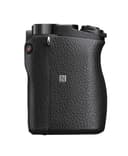
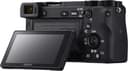
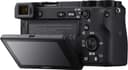
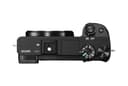
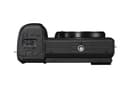
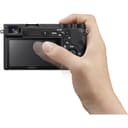
🚀 Capture Every Moment Like a Pro — Don’t Just Shoot, Dominate!
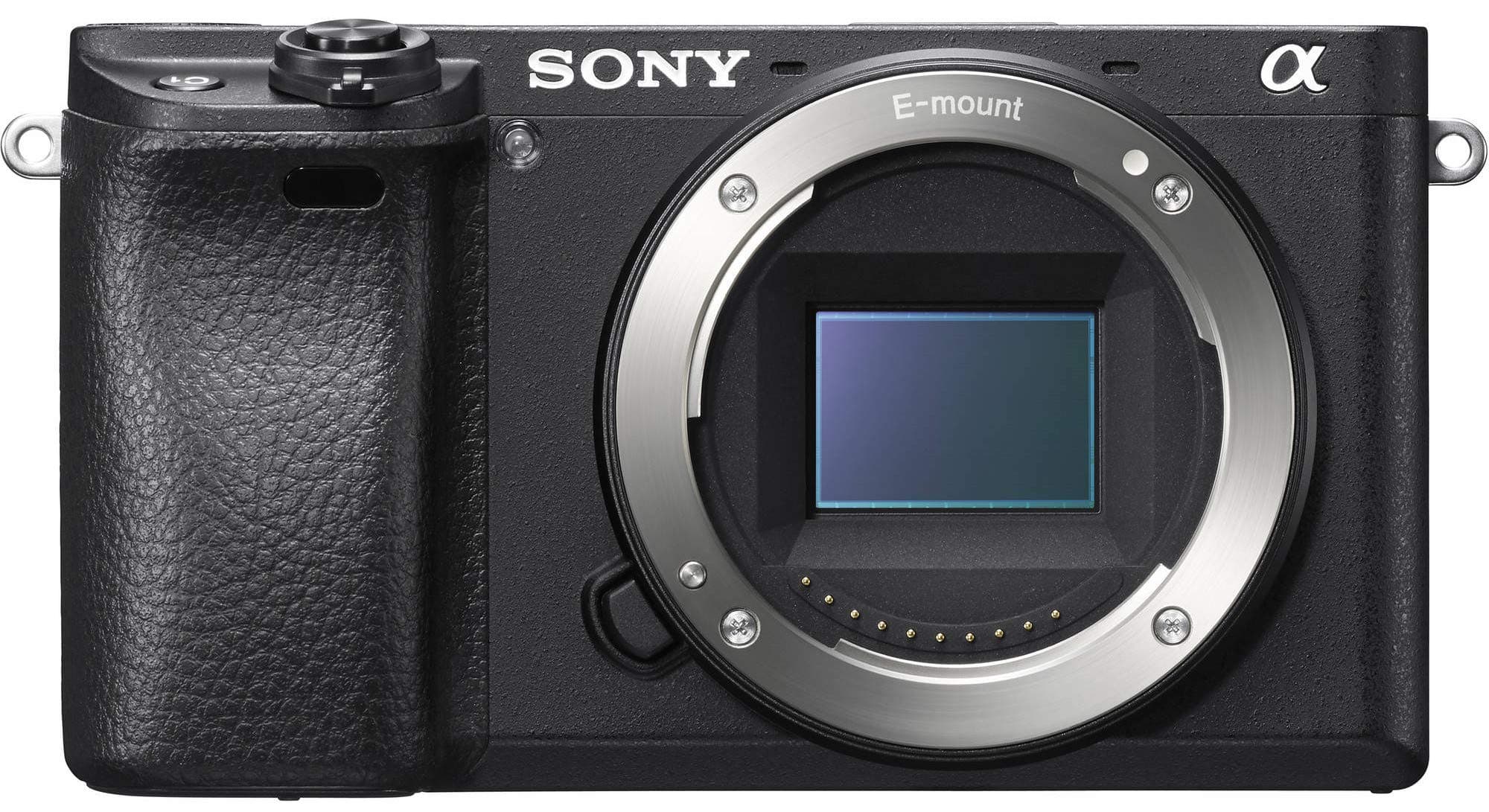
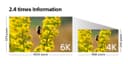
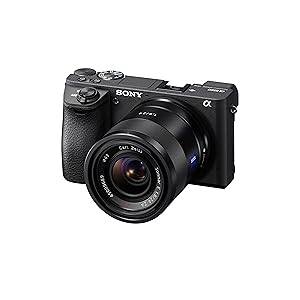
The Sony α6500 is a compact powerhouse mirrorless camera featuring a 24.2MP APS-C sensor with advanced copper wiring for superior light capture and noise reduction. It boasts the world’s fastest autofocus system with 425 phase-detection points, enabling razor-sharp focus in just 0.05 seconds. With continuous shooting speeds up to 11fps and a large buffer, it’s perfect for capturing fast action. The α6500 also excels in video, offering 4K recording with full pixel readout and Full HD at 120fps for slow-motion. Enhanced by 5-axis in-body image stabilization and a robust, ergonomic design, this camera is tailored for professionals and serious enthusiasts who demand speed, precision, and versatility in a compact form.




| ASIN | B01M586Y9R |
| Age Range Description | Adult |
| Aperture modes | Automatic |
| Are Batteries Included | Yes |
| Aspect Ratio | Unknown |
| Auto Focus Technology | Hybrid |
| Autofocus | Yes |
| Autofocus Points | 425 |
| Battery Cell Type | Lithium Ion |
| Brand | Sony |
| Built-In Media | Rechargeable Battery, Remote (optionally) |
| Camera Flash | Built-In |
| Color | red |
| Compatible Devices | Sony |
| Compatible Mountings | Sony E |
| Connectivity Technology | Bluetooth, NFC, Wi Fi |
| Continuous Shooting | 11 |
| Customer Reviews | 4.2 4.2 out of 5 stars (240) |
| Delay between shots | 0.09 Seconds |
| Digital Zoom | 4 x |
| Digital-Still | No |
| Display Fixture Type | [TI]Tilting |
| Display Type | LCD |
| Dots Per Screen | 2359296 |
| Effective Still Resolution | 24.2 MP |
| Expanded ISO Minimum | 100 |
| Exposure Control | Automatic |
| File Format | RAW |
| Flash Memory Bus Interface Type | SD UHS-I |
| Flash Memory Speed Class | UHS-I or higher |
| Flash Memory UHS Speed Class | U3 |
| Flash Modes | [Inferred] Common flash modes |
| Focal Length Description | Focal Length: 35.0 mm (35 mm equivalent) |
| Focus Features | Hybrid |
| Focus Mode | Single-Servo AF (AF-S) |
| Focus Type | Auto Focus |
| Form Factor | Compact |
| Global Trade Identification Number | 00027242895706 |
| Hardware Interface | AV Port |
| Has Color Screen | No |
| Image Capture Type | Video |
| Image stabilization | Digital |
| Item Weight | 0.91 Pounds |
| JPEG Quality Level | Basic |
| Lens Construction | Multiple |
| Lens Type | Sony E-mount |
| Manufacturer | Sony |
| Manufacturer Part Number | ILCE-6500/B |
| Maximum Aperture | 5.6 f |
| Maximum Image Size | 24.2 MP |
| Maximum Shutter Speed | 1/16000 seconds |
| Metering Methods | Evaluative |
| Minimum Shutter Speed | 1/16000 Seconds |
| Model Name | α6500 |
| Model Number | ILCE-6500/B |
| Model Series | α6500 |
| Movie Mode | Yes |
| Night vision | No |
| Number of Diaphragm Blades | 9 |
| Optical Zoom | 1 x |
| Photo Sensor Resolution | 24.2 MP |
| Photo Sensor Size | APS-C |
| Recording Capacity | 32 Minutes |
| Remote Included | No |
| Screen Size | 2.95 Inches |
| Self Timer | 10 Seconds |
| Sensor Type | CMOS |
| Series Number | 6500 |
| Shooting Modes | Movie |
| Skill Level | Professional |
| Special Feature | Video Recording |
| Supported Image Format | RAW |
| Total Still Resolution | 24.2 MP |
| Total USB 2.0 Ports | 1 |
| Total USB Ports | 1 |
| Total Video Out Ports | 1 |
| Touch Screen Type | Capacitive |
| UPC | 027242895706 |
| Video Capture Format | 4k |
| Video Output | HDMI |
| Video Resolution | 2160p |
| Viewfinder | LCD screen |
| White Balance Settings | Auto |
| Wireless Technology | NFC |
| Write Speed | 100 MB/s or higher |
| Zoom | Digital Zoom |
K**H
Cameras great! Bought it from Deal Factor who seems to be the only company selling the camera in Canada at the time. Went out this weekend to shoot, here area few of my results that i quickly processed. (Shot in Raw, processed in Lightroom CC) (If you wanna see more pics from the A6500 I'll be posting more pics at @karandosangh on instagram.) Things I like: the autofocus the video recording capabilities from 4k to 1080p at 120fps the picture profiles such as slog2 that will be useful at times for landscapes the touch screen for focusing the in body stabilization system the electronic viewfinder and much more Cons at the moment the only thing I dislike is the fact the screen isn't fully articulating
M**N
You can view my review on my blog for higher quality photos: journal.hellomikee.com/sony-a6500-review While the a6500 is very much similar in all aspects of the a6300, there are some subtle as well as not so subtle differences that make this camera worth a higher price point. Does it replace the a6300? For some photographers like myself, yes it does because I have specific needs for a camera like this, while for others, the a6300 is more than enough camera for them. For me, this is an almost perfect APS-C camera that I could rely on not only for work assignments, but also as an ultimate travel camera for picture perfect landscapes, portraits and stabilized video clips. Build and Camera Controls: The build quality on the a6500 has some subtle differences, the first being a slightly larger grip. With the addition of IBIS, it makes sense that the camera needed a little more surface area, which also resulted in a slightly heavier camera overall. The added size of the grip actually feels awesome and I prefer it over the previous series. While still small and compact, the a6500 feels more durable. The dials also feel more robust and secure. The on and off switch is much more stiff, which I like as the a6300 and a6000 would sometimes accidentally switch on when being placed in a bag. The top dials also have a little more firmness to them. My favorite update is to the back dial. I was constantly accidentally changing settings on my previous cameras because the dial was so flimsy. On the a6500, it’s much more firm and you actually have to apply a bit of pressure to start turning, which is nice. I also noticed that the mount feels much more secure and tight. The click between the mount and lens feels so much more solid now. It’s subtle updates that really lend itself to this camera feeling more premium and well-crafted. Image Quality: At the time of writing this, Adobe has yet to release a camera raw update so I’m unable to work on raw files, but I’m still amazed at how much detail I can pull out of a jpeg from this camera. Sony sensors are the best and this is no exception. It has the same sensor as the a6300 so files from either are probably indistinguishable. My favorite aspect about the quality of images this camera produces deals with the amount of dynamic range available in post process. You can push and pull so much out of the shadows and highlights of these raw files without loosing any quality or producing and sort of banding or weird artifacts. This and the a6300 are the first APC-S cameras that I feel can stand up to FF cameras. In fact, when editing alongside a7R II files, it’s hard to tell which file I’m working on. The only time I can really see a difference is when I’m shooting a prime wide open and really getting that FF shallow depth of field or when I’m pushing the ISOs really hard. Even then, I sometimes guess wrong. Video Quality: I can’t speak too much about video quality because all I really know how to do is hit the red record button, so this is coming from a super novice, but the video quality I’m getting during my travels look awesome. What I love most about taking video is the continuous focus works really good. It’s probably the best I’ve used on a ICL camera. I also like that you can shoot in .mp4 format now with this which I couldn’t with the a6000 (.mp4 was only for 720p). This makes it easier for me to grab videos off the SD card and edit via iMovie (see, total video amateur). As far as rolling shutter goes, it seems to exhibit the same characteristics as the a6300 so I don’t see any improvements there. User Interface: Another change, which I’m assuming will be passed down to previous models via firmware update, deals with the User Interface and the reordering and redesigning of the tabs in the camera menus. Like I’ve said before, I never really had issues with Sony menus. With all the customization they offer within their custom buttons and the function menu, I rarely have to dive into the menu structure itself. I’m much more concerned with the speed of these menus and the overall speed of navigating around the camera and that’s where the a6500 excels. It’s quick and does what it needs to do. IBIS: The main reason I upgraded to this camera is for IBIS. Personally, I feel it’s an absolute must for a travel camera. Aside from the photo benefits of having a stabilized camera, which means every lens you have will be stabilized allowing you to shoot at slower shutter speeds, all my video clips will also have some form of stabilization. This is so important for my travel videos. And the fact I have it in such a small compact body is quite amazing. Most lenses will have 5-axis image stabilization while manual lenses will only benefit from 3-axis. If your lens currently has IS, it will use a combination of both resulting in 5-axis. Touch Focus: IBIS was already enough for me to upgrade but then I didn’t realize how cool touch to focus is. This is a feature that really took me by surprise. I love that I could just tap anywhere on the screen to change my focal point. There’s also a little “x” icon on the screen that if you press it, it brings the focus back to center. This is super helpful as I found it annoying trying to get the focus point perfectly back to center on my own. Another annoyance, which many have already mentioned, is that there is a lag when you are dragging your finger across the screen. For me, I don’t see a need to do that while looking at the LCD screen. It’s all about tap and go. But it is annoying considering this is a premium product. How much more would it have cost to get a really good touch screen on this camera? With all the technology we have with smart screens, there’s just no excuse to put outdated tech into this camera. With that said, where I do see dragging useful (and the only option) is when looking through the EVF, you’re able to use your thumb to drag around the focus point (when looking through the EVF, tap to focus won’t work). I love this feature. While there is still a slight lag, it’s not nearly as annoying as seeing the focus point follow your finger. Instead, it feels more like a track pad for your thumb. You can also set this to work on the full screen or half the screen (it’s set to the right half by default). I’ve only been playing with this for a few hours so I’ll need to test it out in the field to really get a grasp of touch focus and if it’s better than a dedicated joystick or not, but so far, it’s already a much welcomed option/addition. But that’s as far as it goes with the touch screen. Tap and drag to focus is all we get. No zooming or swiping. Another cop out in my opinion. I’ve applied a screen protector and it does not seem to affect touch focus. New Metering Modes: There are two new metering modes available on the a6500. The first is Highlight, where exposure metering is focused on the brightest area of the frame. The second is Entire Screen Average. This maintains an average metering for the entire image. I’ll need to do more testing on these. I’m wondering if Highlight would work well when shooting a white wedding dress. As far as Entire Screen Average, I’m wondering really what the main difference is with that mode vs Evaluative Metering. Wish List: There has not been any updates to the LCD screen resolution. I think the EVF is one of the best out there but I was hoping that the LCD screen would get a higher resolution. It’s not bad but it’s not great. It doesn’t bother me so much because I use the EVF about 90% of the time, even when checking focus and playback. It’s so good, bright and clear that I’d much rather check my photos on there, but a higher resolution and sharper LCD screen would be beneficial for those times I’m tilting the screen to get lower and higher vantage point shots or sharing photo playback with others. Speaking of LCD screens, it would also be useful if the screen popped out towards the left side for filming. I know a lot of vloggers would appreciate that and because I’m getting more into video, it’s something I’d like in the future. We’re still missing a front control dial that would sit nicely under the shutter button, similar to the a7 cameras. This is a great dial for controlling your aperture. Conclusion: I’ve only had this camera for a few days so my review may be pre-mature. But at the same time, a lot of this camera shares very similar, if not exact, attributes as the a6300 so I feel I have a pretty good grasp of it. I loved the previous models so I know I’ll love this camera, especially since a lot of what I felt was lacking in the a6300 has been addressed in the a6500. It’s shaping out to be one of the best compact cameras I’ve ever owned and while it has ticked all the major specs I need in order to be the ultimate travel camera, its also the ultimate companion to the a7R II.
J**E
I purchased this camera as a replacement for my elderly A77. Having gone all in with the mirrorless when I purchased the A7II I wanted to still have an APSC camera for the crop and as a back up if the A7 failed. I also had a considerable collection of E mount lenses, which only helped to push the choice along. I did not want to be carrying two sets of lenses further burdening my back and bags. Most of the time I pair the A6500 with the E mount 90mm macro. I like this set up as it is a close as I can get with my old set up of the 100mm with the A77. It gives me an effective 135 mm macro which is nice, but not quite as nice as the old set up that gave me 150mm. But I do gain the silent shutter and IBIS which more than makes up for the slightly shorter lens. In shooting both macro mode and in more "normal" conditions I have found it to be a solid performer. I have shot with the Zeiss super-wide native lens and have found it to be not as wide as I liked. That 50% crop does get in the way when the shooting gets tight. It's here that one remembers that a 35mm is the "normal" focal length, not 50mm. I have yet to pair it with the 35mm 1.4 for street photography, but I can say paired with that lens it's a very good general purpose shooter. The fast 35 does diminish the stealth factor, the lens is a beast, but it's plenty fast, and plenty sharp. I have found this set up to be much faster than the 90mm, which has a propensity to hunt near its 1:1 limit. A word of two about the silent shutter, it works as advertised. The shutter is absolutely silent. I've tried it exactly once so can give no honest reports about rolling shutter. I can say even with the shutter in normal mode this camera is much quieter than the A7ii which sounds like a small explosion next to its more petite cousin. I do not fathom how a camera that does not suffer from mirror slap still manages to be so noisy when taking a shot, but the A7ii manages it. I will say that the A6500 does sound much like it's much older relative the A77, its a softer, higher pitch click that they both make. On the subject of ergonomics, it is Marmite, that much is true. You love it, or you hate it, no middle ground. For a guy i have rather smallish hands. My fingers go on forever though and that me a Large in glove, go figure. I have never had issues with how the a6500 fits in my hands. My long fingers wrap around it comfortably. With the a7ii I do use the battery grip, but this is more a function of the pathetic life span that the FP40s have on tap than anything else. Unfortunately, this camera does use those self-same FP40, which are good for maybe 240 shots on a really good day. I've manage to get much less on the a7ii mind you, so carry extras to be on the safe side. I've never managed to kill a battery on the a6500 but that is no indication as the a6500 is my specialty camera and the A7ii is my workhorse. I've often killed at least one FP40 and sometimes have succeeded in running the second into the yellow zone on the A7ii. One more time, bring extras. If the batteries have not been much to write home about, a really great improvement on the a6500 is the total overhaul of the menu system. In my review of the A7ii I ranted about the general awfulness of that camera's menu. Even after long acquaintance, it's still a bed of pain. I have read that Sony is about to unleash the A7iii on an unwary public, I hope that camera has the a6500 menu system. It's a quantum leap from the a7ii. It's still a bit confusing, but the color scheme and the organization is leaps and bounds above the A7ii. Sony has listened to the b*tching, moaning, groaning, and general whining and responded to it. The menu system no longer gets in your way the way it did in the past. Some small nits to pick. At nearly $1,300 I think Sony could have at least thrown in some more physical controls, like the Two-wheel adjustment scheme of A7 series. It does have IBIS which the a6300 lacks and the touch screen. But the touch screen is no never mind for me and I would gladly ditch it for the options the two wheel controls give me. I'm not very impressed by the onboard flash either, on a $1,300 machine it's actually a bit tacky. I'm willing to forgive such fripperies on a $600 A6000 but not on a camera costing twice as much. It's there, it's OK but I would rather it not be there as there is precious little real estate on the camera as it is and a tiny flash is a waste of that real estate. I would rather just carry a nice small speedlight and be done with it. That way I'm not draining that single FP40 any more than I have to. The other nit I have is the fit of the SD card into the slot offered by the camera. It's a bit tight in there, and not much fun to engage. Having both battery and SD under the same door can be frustrating as I have managed to drop the battery while fiddling with the SD card insertion. I understand this was the sacrifice needed to keep the camera small, and I am willing to live with it, but it does cause issues from time to time. Overall this is a wonderful camera. It punches way above its weight in image quality, ease of use, portability, and general fun factor. It's compact size makes carrying it about a joy, not a chore. The only camera that can really match it in the ease of use department are the Cybershots that use the 1in sensor. But those are point and shoots that have smaller sensors and fixed lenses. It's bigger brother is no match because it really does need a battery grip to achieve any kind of functionality, that kills the A7ii portability and fun factor. As far as the FP40 goes, the a6000 series are probably the best cameras for this underpowered battery. If you carry a second battery for the a6500 it should be all good, but best to get a third to be sure. With this body you get to use the full panoply of Sony and independent lenses. Often Independents will only make lenses for the APSC bodies and not the Full Frame. And no matte what lens you buy you do get the IBIS feature, which is worth about 3 stops of exposure. That opens up a whole world of hand-held images that is not available on a non-IBIS camera. Not a bad deal for the extra semolinas if you own a lot of non-native glass or older Minolta glass. As the most advanced of the 6000 series the 6500 is worth the investment.
Y**G
I'm a professional photographer and I’ve owned every Sony mirrorless camera since the NEX 5N except for the newest A9. In my experience, this to be an excellent little camera that's good for an advanced hobbyist, backup camera for a professional, or a travel camera. If we were in January of 2017, I would definitely say this camera is NOT worth the $1,400 price over the MUCH cheaper A6300 ($900). However in 2018, the price of the A6500 has dropped to a much more manageable $1,100 putting it into a range of possibility if you're willing to pay for the higher specs. But what are you getting for the $500 over the A6300? The answer is IBIS, and not much more, everything else is just small improvements that are nice to haves but not game changers. IBIS is a game changer. The specs between the two cameras are almost identical. Same 425 PDAF AF system, same 11fps shooting, same 24MP sensor. In fact the image quality of the two cameras are identical - the same noise at the same ISO levels. The big thing here is IBIS, in-body stabilization that compensates for camera shake and hand movement. IBIS is simply PHENOMENAL. It lets you takes photos slower than 1/30 handheld easily. Nightime shots that would normally result in smeared lights and ghosting double images are now significantly reduced. You can shoot confidently handheld almost anywhere and even shoot when not standing statue still. IBIS lets you get low light shots that are typically reserved only for full frame users. I'm always getting the side-eye from other Canon/Nikon photographers with their gear perched on tripods when doing long nighttime exposures in popular spots. They think I'm never going to get the shot, but the jokes on them because I did it hand-held with no heavy tripod! The other improvement is a new front-end LSI. It's a fancy name for a faster processor. The LSI gives you a bigger buffer so you can shoot at 11fps continuously longer. If you're an action photographer that shoots in fast bursts then you are less likely to miss a shot. The camera is also a bit snappier with menus and you can also review shots quickly with less lag. Overall, I'm not doing 100+ images at a time so this really doesn't help me much, but that's not to say it's not useful to someone else. If you're a sports photographer or trying to capture running children who won't stay still you can happily spray and pick the few good ones afterwards. They also moved the C1 and C2 buttons to a more reachable location on the top and the C2 is now a C3 button. These are small but welcome changes to offer more versatility in assigning them to useful options like eye-focus. Finally, there's the touchscreen, unfortunately it's not well implemented. So far all of Sony's touch-screen additions into their cameras have been kind of an afterthought. The idea of a rear screen touch-assist focusing is great idea - you can use your thumb to change AF points instead of using clunky buttons to change zones and locations. However in practice, the touchscreen is too hard to use. First, if you shooting via the viewfinder, most likely you are shooting with your left eye. Some people shoot with their right, but I find you are not properly centered with the camera's mass (especially with a heavy lens). As a typical left-eye shooter, your nose will be touching the rear LCD and will cause unnecessary focus touches. I had so many aggravating moments with the AF changing and going everywhere before I realized it was my own nose messing things up. You can have the option of limiting the right side of the screen for touch so you can use your thumb to recompose while shooting, however the placement is still awkward and your nose will still cause miss-touches. I ended up turning the touchscreen off altogether, which in the end made the touch screen feature essentially useless. Ultimately, the only thing you are paying for is the IBIS because image quality really hasn't changed. The A6500 isn't really much of a successor over the A6300, it should have been a replacement. Yet Sony sells this above the A6300 at an very inflated price. Really, most people buying this are professionals who own a full-frame A7ii/rii/sii camera and want a smaller more portable backup camera. Or you are an advanced professional that do not want to go up to the full frame size and expense. In the end it all comes down to the IBIS, it's the only big boost to image quality because it lets you get shots you normally wouldn't get. If you're just looking for a great pocketable mirrorless camera, get the A6300 and use the extra money for some nice lenses with OSS. That will generally make up the difference with the lack of IBIS. However if you absolutely must have the best or are going to adapt Canon or manual lenses, then in-body stabilization will make up for when there's no in-lens optical stabilization. Edit, one last thing: Another gripe I have with this camera is that for the price, I would really like 1/8000 shutter speed. The max for this camera is 1/4000 - which with a f1.4 lens on a sunny day, will blow out all highlights easily even at 100 ISO. I discovered this while doing portraits with my 85mm f1.4 GM and everything was blown out. Owning an f1.4 lens lets you create beautiful artistic photos with amazing bokeh and subject isolation. However you can't use a f1.4 lens unless you have an ND filter to reduce light. Additionally the lack of 1/8000 shutter speed keeps this camera from being a pocket action camera with huge burst speeds. This was never a problem with any of the Sony full frame lines. ****If this review was helpful, please give me a vote! Thanks! :)
M**N
Superbe appareil!