🌟 Elevate your baking game with the original wheat that’s as pure as your passion!
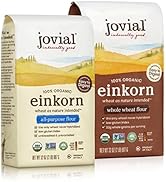
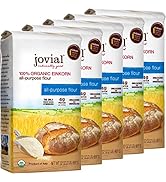
Jovial Organic Einkorn Flour is a 32 oz premium, unbleached all-purpose flour made from ancient einkorn wheat grown sustainably in Italy. It boasts high protein, organic certification, and non-GMO status, offering a nutty flavor and easier digestibility than modern wheat. Ideal for artisanal bread, pizza, and pasta, this flour supports gut health and culinary creativity while preserving biodiversity.






| ASIN | B01FUXX918 |
| Allergen Information | Gluten |
| Best Sellers Rank | #1,313 in Grocery & Gourmet Food ( See Top 100 in Grocery & Gourmet Food ) #3 in Wheat Flours & Meals |
| Brand Name | Jovial |
| Customer Reviews | 4.6 out of 5 stars 7,294 Reviews |
| Diet Type | Gluten Free |
| Item Form | Raw |
| Item Package Weight | 0.93 Kilograms |
| Item Weight | 32 Ounces |
| Manufacturer | jovial |
| Number of Items | 1 |
| Region of Origin | Italy |
| Specialty | Organic |
| Unit Count | 32.0 Ounce |
G**M
Worth The Money
It takes some time getting use to using this flour, but once you do, it's actually less time consuming. I highly recommend the "Einkorn Recipes For Nature's Original Wheat" cookbook. It is such a yummy flour and has a nutty flavor, besides all the healthy attributes. I made my own einkorn starter and have adjusted recipes to use einkorn. My husband's stomach has been doing so much better since I started making the sandwich loaf bread regularly and everyone that has tried it loves it.
M**E
Fabulous Soaked Flour Irish Soda Bread
This is my favorite flour! I make a soaked wheat Irish Soda Bread - mainly because my family loves it but also because it's so easy. I use this flour in an effort to avoid modern hybridized-to-death wheat and get back to basics. [Next step - grinding my own grain! Yup, Amazon has grain mills...] I agree with others here that it uses less liquid than modern wheat, that has been my experience as well. I mix my flour and the liquid and a bit of lemon juice for acid content and let it sit, covered with plastic wrap so it doesn't dry out, on the counter for 24 hours. After that soak, I mix in my salt and baking soda and any dried fruit I feel like adding. Then I pour it into buttered and floured loaf pans and bake. That's all there is to it. With this flour it is a cross between a batter and a dough, but the bread is the best I've ever made - all without yeast, too. Einkorn, unlike modern wheat, is a diploid grain meaning it has 2 genes that code for normal proteins. Modern wheat is hexaploid and some of it's 23,600 proteins are not normal or natural at all - possibly contributing to the issues people have today with wheat. Soaking flour in an acidic medium (10%) is a great way to eliminate those mineral-binding phytates. Soaking activates phytase which almost completely neutralizes phytic acid in wheats, rye, barley and buckwheat. It also makes the gluten proteins more digestible by activating other enzymes and nutrients. Use very warm liquid, the same temperature as hot tap water, and either lemon juice or apple cider vinegar for the acid. Soak your bread dough or batters for 12-24 hours and then finish and bake. It's easy to do and makes everything baked more nutritious. For me, it's easier to do this than not, because it splits the work over two days rather than all in the same day. Here's my recipe, mine is always a batter-dough cross, never a true dough so I always use loaf pans. Eat Well! Molly's Irish Soda Bread Makes 2 loaves 4 1/2 Cups organic einkorn flour 3 Tablespoons pasture butter 2 Cups raw milk with 3T removed and 3T organic raw apple cider vinegar added just before adding to flour --------------------- 2 teaspoons baking soda 1 teaspoon Celtic sea salt The day or the night before, put the flour into a large bowl. Rub the butter into the flour with fingers until the biggest pieces of butter are the size of a pea. Warm the milk slightly in a pan on the stove but do not simmer - that's too warm. About the temperature of hot tap water is fine. The vinegar (or lemon juice) will sour the milk, but it will also clabber the milk proteins, so dump it into the warmed milk and mix quick! Then pour all into the flour-butter mixture and fold in fast, and let sit to soak. This will be a cross between a dough and a batter, as long as all the flour is moistened, just cover the bowl with plastic wrap and let sit in a warm place for 12-24 hours. Depending on the flour used [emmer, kamut, modern wheat], it may form an actual dough; if so knead carefully with your hands in the bowl until it just comes together to form a moist, slightly sticky dough (if it is really wet, you can add a little more flour, but don’t make it too dry! Also, don’t over knead!) Leave out on the counter top or in a warm place overnight. Whenever you are ready to bake, preheat the oven to 350 degrees. Mix together the baking soda and salt in a small separate bowl. Butter and flour 2 glass or ceramic loaf pans. The doughy batter should be light and fluffy now. If it's still a cross between a dough and a batter, sprinkle 1/3 of the soda-salt mixture on top and fold in about 3-4 times. Repeat two more times. Divide between the loaf pans and bake at 350'F for 35 minutes, then reduce oven to 300'F and bake for 10-20 minutes more or until done. The tops will be dark golden brown and they will be solid but hollow sounding if tapped on top. ---------- If this is a dough, take it out of the bowl and press into a thick circle on a breadboard (use flour to prevent sticking). Pour about half of the soda-salt mixture on the dough And then fold in half, Flatten out a bit again, and then pour the rest on it and fold again. Now gently fold and knead the dough about 8 to 10 times. You will almost feel like it won’t come together and then all of a sudden it will. Cut the dough in half, and gently form into 6 inch domed circle loaves, place on a cookie sheet covered with parchment paper, and cut an X on the top of the loaf with a sharp knife. Use parchment, fresh soaked breads will oxidize an aluminum baking sheet, and who needs Al in their bread? If you prefer loaf pans, use them instead. Pop them in the middle of the oven for about 40-55 minutes, until golden brown on top and bottom, and they sound hollow when tapped on the bottom, middle of the loaf. Cool on cooling racks and enjoy with lots of pasture butter or clotted cream, and jam or curd! Note: You can add spices with the salt and soda, such as cinnamon and nutmeg and allspice. You can also add herbs, how about rosemary soda bread? It's wonderful! Some like to add 1 cup of raisins or dried cranberries or chopped figs or dates. Updates 5/12/16: 1 - You cannot over-beat a soaked flour recipe - it's the opposite of what works for the usual, non-soaked flour baked goods. Remember we were all told not to over mix our cakes and breads or it would develop too much gluten and become tough? Well, not so with soaked flours, and especially not so with ancient grains! Beat away! I stir/beat until my arm gives out, and my breads are nice and light. Please experiment for yourself and find what works for you. 2 - Some days my dough is wetter than usual, even though I use the exact same measurements each time. Humidity, maybe? When it is too wet, it won't cook through so please determine if you need to add a bit more flour to prevent this. 3 - You can cut the acid to 2T especially as it turns raw milk (which I use) into cheese curds almost immediately. 4 - I have not tried using all water, but I have used 1/2 C milk and the rest water - works fine. 5 - I suspect any milk will work fine, possibly even just all water. Try nut milks if you cannot use dairy, and goat milk if that works for you. I have not used nut milks nor goat milk, so I cannot speak from experience here, but start by adding a bit less liquid if using all water or nut milk as dairy has "thickness" to it in the form of proteins and fat (it's not 100% water). Then check your dough and determine if more liquid is needed. For the first time or two, mix up your liquid and acid in the measuring cup and just don't pour it all in until you stir and determine if it's all needed - that way you won't make the dough too wet. 6 - For added nutrition add in 1-2 eggs (they add protein and healthy fats and vitamins as well as working as a binder). I have used duck and chicken eggs, they work fine.
H**L
Delicious and smells of pumpkin spice. Great for muffins. Not for everyone.
I love the aroma during sourdough fermentation. Nothing else like it. Really important to use 10-15% less water than you're use to with regular bread flour. This has much less gluten and is very sticky and harder to work with. It doesn't mean it's poor quality flour, just different. Fermentation time is about half than regular flour. My sourdough tripled in size (way over fermented) over night at 69F room temp. Even though this does say all purpose, the texture and color after baking looks more like whole wheat. I'm experimenting with different Einkorn/Regular bread flour ratios now instead of using 100% Einkorn. But I recommend this flour more for pastries, cookies and cakes than for bread.
K**A
Great taste
The flour quality and taste is excellent and has a rich flavor, better than the regular we have all come to know and use. Einkorn flour is easy on your stomach especially if you have stomach or gluten issues. We bought this product for our daughter who had digestive problems with regular flour. This is the only product that has helped. The whole family now use this flour and it doesn’t make you feel bloated. We use it for all of our cooking and baking recipes. It just takes some time learning how to use it and adjusting the measurements. We love this brand and it has become a staple in our home.
K**.
ACTUALLY Glyphosate Free ✅
This is the only reasonably priced & easily accessible flour I managed to find that’s truly glyphosate free. Just saying something is glyphosate free doesn’t actually mean anything (just like Organic), however if it has a Glyphosate Residue Free certification it means the product has been third-party tested and confirmed to have no detectable levels (often down to 0.01 ppm or 10 ppb) of the herbicide glyphosate. Really cool stuff 😊 Aside from that the flour is great, used it to make bread, banana bread, cookies etc. and they all turned out great!
B**9
Great quality but SO expensive
This is some of the best flour you can buy but at a cost of over $4/cup I'll save a pile of money and buy the Ancient Grains brand from their website from now on
L**B
tasty and great for gluten sensitive people
Great product. So tasty and great for gluten sensitive people. Quick delivery!
P**3
Great for this gluten-intolerant reviewer!
For years I suffered with raging indigestion before I finally figured out that I'm gluten intolerant. I was on prescription strength prilosec, the doctor scoped me and couldn't find a cause... it was miserable. Then one day I thought "here's something I haven't tried yet," and stopped eating wheat products for a while. My heartburn immediately went away and stayed away! For the past decade or so, I've been avoiding wheat gluten, which is not very easy, nor cheap. But now I can cook with Einkorn wheat flour and I don't have any reaction at all. No heartburn, and I'm eating real wheat! My son is also gluten intolerant - it gives him headaches so bad that he vomits. But he too is fine with Einkorn wheat! Jovial Einkorn flour has a nice flavor - slightly more complex than cheapo flour, and a little bit yellow in color. My only slight word of caution is that it absorbs water a little differently than cheapo flour. I'm guessing the protein content is a little higher. So you may find that your bread dough is a little more sticky. But once you learn to work with it, you'll discover that you can use it normally in any recipe that calls for regular flour. Between my own experience, that of my son, and numerous others with whom I've spoken, who have all reported various different reactions to modern wheat, I am convinced that modern wheat is a slow poison, at least for some of us. It is well known that it has been hybridized to be a different organism than it was a hundred years or so ago. Perhaps people like me are the canaries in the coal mine. Modern wheat may be highly productive (and delicious), but I believe it is toxic. It's probably best to either avoid wheat altogether, or use Einkorn wheat, which has not been hybridized. ---UPDATE--- RECIPE ALERT! --- So since my initial review we have cooked with Einkorn flour many many times. And while it's always good and remains a healthy option for those of us who are gluten intolerant, I recently got frustrated because I wanted a nice lightweight, soft sandwich loaf and wasn't getting it. Every sandwich loaf recipe I followed, even those from the Einkorn cookbook, always turned out too dense. So after a few weeks of experimentation, I present to you my results: Pericombobulation's Ultimate Sandwich Loaf It really helps to have a truly non-stick loaf pan for this. I use the "Wilton Recipe Right Non-Stick Long Bread Loaf Pan, 2-Piece" available right here on Amazon and it works perfectly (they are sold as a 2-pack, but you'll only need one for this recipe). No greasing of the pan necessary - slides right out every time. You'll also need a starter. Either a sourdough starter or a starter made with instant yeast will work. Or combine the two, which is what I prefer. There are a million recipes for starter on the interwebs so I won't cover it here. You'll need about 2/3 cup of starter in total (yes, all my measurements are approximate!). So I'd recommend about 1/3 cup of sourdough starter and 1/3 cup regular yeast starter, but you can use 100% of either one or the other if you prefer. Just keep in mind that sourdough takes longer to rise, so plan accordingly. The key to a light and fluffy sandwich bread is this: 2 teaspoons of xanthan gum and 4 teaspoons of cornstarch. The first provides stretchiness, similar to the gluten in regular flour. The second absorbs water without adding a lot of bulk, thus keeping the bread light. The thing about both these ingredients is that they will clump horribly when added to liquid, so it is important to blend them after you add them. An immersion blender works great and is super convenient, but a regular blender will be fine too. You'll notice that, when blended, the mixture takes on a pudding-like consistency that you'll think doesn't look like any bread you've ever made and can't possibly be right... don't worry! It's right! On to the recipe: Melt a half stick of unsalted butter in a medium sized bowl (or a large Pyrex measuring cup if you have one!). When the butter is thoroughly melted, add 1.5 cups of water, bringing the total liquid volume to 1.75 cups. To this, add the following: 2 teaspoons Xanthan Gum 4 teaspoons corn starch 1 tablespoon sugar 2/3 cup of your starter (or starters, plural, as mentioned above) Blend for about 15 seconds until the mixture takes on a pudding-like consistency. Transfer to the mixing bowl of your stand mixer. Turn mixer on low and add: 3 cups Einkorn flour 1.75 teaspoons kosher salt Blend on high for 30 seconds. Scrape down the sides of the bowl until the dough forms a roundish lump in the center. Cover (I simply cover it with a dinner plate, but you could use plastic wrap or a towel) and let rise somewhere warm until it is not quite doubled in size. Remember, the higher the percentage of sourdough starter you used, the longer it will take to rise, so your rise time could vary from 1 hour to 6 hours or more. Coat a rubber spatula with olive oil (or use your hands if necessary) and transfer the dough to a nonstick baking pan. Be gentle with it - you'll want to carefully smooth out the big bubbles on the top (the ones that look like craters on the surface of the moon) without busting up the interior bubbles, which are the ones that make it so light and fluffy. Basically, just dump it into the pan and smooth out the top as best you can. It will be fine. Cover with oiled plastic wrap and let rise until about doubled in size. It should be lifting a little over the top of the pan by now. That's good! When it is done rising, it's time to bake. I do NOT pre-heat the oven. Let the oven come up to temperature with the bread in it. I believe this gentle heat-up will allow heat to penetrate the loaf more evenly and really let those interior bubbles expand and then harden. So simply turn the oven on with the bread in it and set the temperature for 375 degrees. Bake for 45 minutes. Remove bread from the oven and gently take it out of the pan. This is where a truly non-stick pan really comes in handy. If you're lucky, it will simply lift right out. Return the bread to the oven and let it bake for another 10 minutes without the pan. Don't skip this step, or you'll end up with a bread that looks perfect at first, but then collapses in on itself when it cools and looks like someone squeezed it. Allowing it to cook for a few minutes out of the pan firms up the sides, locking in the shape. At the end of the 10 minutes, simply turn the oven off, crack the oven door open and walk away! Just let it cool down gradually in the oven, with the door open just a smidge. I know the whole house will smell delicious and the temptation to tear into it immediately will be overwhelming, but your patience will be rewarded. Just walk away. Come back in a few hours and your perfect loaf will be waiting for you.