We remain fully operational. Our teams are working around the clock to ensure your deliveries continue safely.

下载应用程序



Full description not available
P**R
Good learning book. BY READ
I felt like it would be possible to make a living in FX. With the tools learned in book. SOME THINGS I DIDN'T UNDERSTAND BUT LATER THEY BECAME UNDERSTANDABLE
A**R
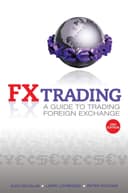
FX Trading
I am one of the authors of this book and have provided the following review for your information. I have rated it 5 stars because a rating had to be given.Obtained from the Australian Investors' Association website: [...]Reviewed by: Tim JoslingIt has been said that trading is the hardest way known to make an easy living.The possibilities for enormous life-changing returns are obvious. The mathematics is enticing: a 50% return per annum will take $100,000 to $5,000,000 in only 10 years. Ed Seykota turned $5,000 into $12,000,000 in sixteen years in his audited model account, after taking out money to pay taxes on those earnings.On the other hand, studies show that 90% of traders wipe out their entire account within 18 months. In my own early trading an initial 140% gain was followed by a 50% loss. At that point I knew it was time to start some serious work because I really did not know what I was doing. Books like "FX Trading" can help you to do the hard work that's needed to make an 'easy' living.What can you get from "FX Trading"?The book reflects the long experience of the authors, with close to a century of experience between them. They emphasise "money management" because most traders blow up taking excessive risks, typically risking 10-50% of their capital on a single trade. If you want to survive in trading, a more realistic figure is 1-2% risked on a single trade.After making this vital point, the book systematically goes through the history and nature of the FX market, the participants, the jargon, how to trade, and the various pieces of software that can help you to trade and to work out strategies.I found the chapter on "Factors Influencing FX Markets" to be full of useful insights, which otherwise would only come with years of experience. For example, leading up to major data releases liquidity in these markets "often evaporates considerably", making it hard to trade at a good price.This is then followed by concise but sound chapters on technical analysis and fundamental analysis - the two main classes of trading and investing strategies. These provide introductions to two very large topics.Chapter 12 is probably the most important chapter in the book, but the least likely to be read. This is "Money Management - the Fundamentals". While short, it covers many of the main issues with managing risk. FX is an area where it is easy to take extremely high levels of leverage and risk. You can get rich very fast, but you can also get very poor very fast. Money Management is about making sure you take enough risk to make trading worthwhile, but not so much that it ruins you.The final chapter provides an overview of where FX is heading, and why FX rates are so volatile. We also learn why everyone needs to think about FX even if they don't want to trade FX. For example, if the $AUD fell to $USD0.48 or below again, the price of petrol would soar. Everyone needs to think about how they manage that FX exposure.What else do you need?You will need to follow this excellent book up with more detailed books on your preferred trading methodology - technical or fundamental or both. Personally I use both because I find they can both have value. On the technical side, something like "New Trading Systems and Methods" by Perry J. Kaufman may be useful.One of the best books for understanding how successful fundamentals traders and investors think is "Poor Charlie's Almanack - The Wit and Wisdom of Charlie Munger". You will also need to learn some economics. This is hard because the field is so infected with ideology and vested interests.The biggest omission from the book is the issue of trading psychology. Trading and investing are unlike almost all other human activities. Our normal human tendencies lead us in the wrong direction, which is why the vast majority of investors and traders under-perform simple mechanical strategies such as indexing. In one study, individual investors under-performed the indexes by almost 6% per annum. A study of traders found that over 90% lost all their trading capital within 1-2 years. How many people sell out at the bottom of the crash and only muster the courage to get back in just before the next top? Anyone you know? I have done this at least once.This happens because of the cognitive biases and irrationality that are built into our brains - recency bias, overconfidence, myopic loss aversion, and many more. Books like "The Psychology of Investing" by Colin Nicholson may be the best investment you will ever make because they will help you recognise and overcome these biases.You might also want to consider Ed Seykota's Trading Tribe and his book "The Trading Tribe". Several tribes are active in Australia, helping members to deal effectively with the challenges involved in trading. The details are at [...].Trading and investing are pretty easy really: buy things that are going up as long as they are not too expensive, and manage your risk. Sell them when they get too expensive or start going down. The rest is 'just' psychology.
TrustPilot
5天前
1 个月前