

Desert Online General Trading LLC
Dubai, United Arab Emirates
Desert Online General Trading LLC
Dubai, United Arab Emirates
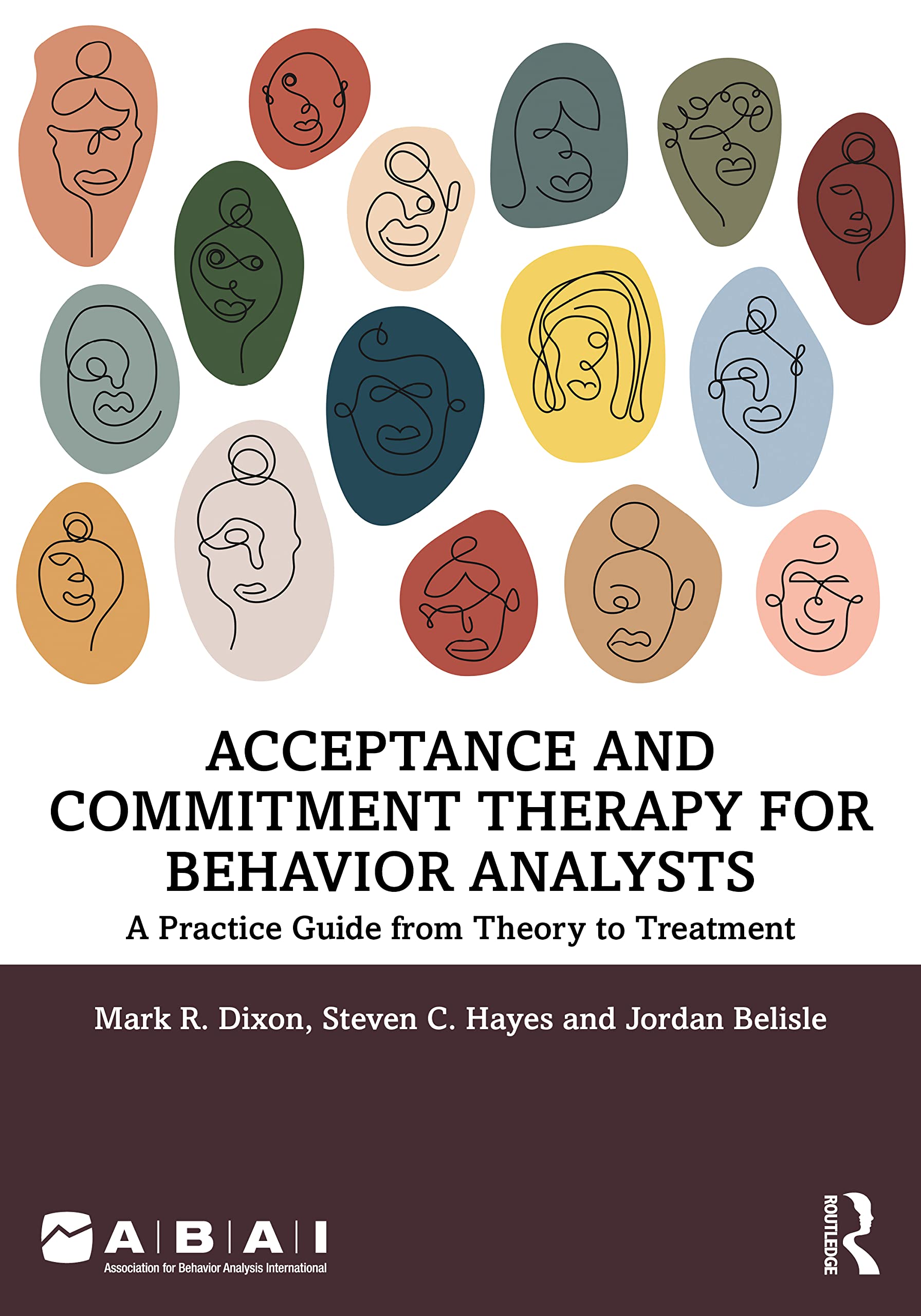
Acceptance and Commitment Therapy for Behavior Analysts (Behavior Science)


H**H
Relevant and necessary for ABA
I work at a facility with a growing number of verbally-abled adults with disabilities, many with complex histories and mood disorders. Direct contingency treatments just are not that effective, and our FA write ups are often lacking credibility and substance. The question has always been - how do we create an in-depth FA that's meaningful and leads to socially valid, relevant and effective treatments? How do we even begin to analyze and incorporate client language use into the FA and treatment plan?In two different places in the book it is emphasized that our traditional FAs for clients with more than a 3-yo language level are generally 3-1/2 times more likely to be incorrect. (!) It hurts, but that does ring true. This leads to ineffective, and maybe even harmful, treatments. What we've historically done at our practice is refer out these verbally-abled and problematic individuals to a psychotherapist, as if this is the only fix available to us. The problem has always been that the therapist and the BA remain in their own silos for treatments. The therapist does not know the first thing about conducting a proper FA, nor are their treatments necessarily behavior analytic in nature. The BA does not practice psychotherapy or understand how language and private events effect problem behaviors. This book represents a turning of that tide for us. It may take some time to achieve competency, but it's a damn good investment for any ABA practice.I really do think this is book will be a game changer in our field. Not that any of the material stated in this book isn't already stated elsewhere in countless ACT articles and books. But this book pulls it all together and speaks directly to the Behavior Analyst. There's a legitimacy and validation with that. This book is front and center for BAs, making it explicitly clear that we too can practice ACT work as a behavior analyst while remaining with our scope of practice. Our field is rapidly changing and this work allows us to grow and help a much wider range of individuals in different areas.I thought the book was well laid out and touched on all relevant areas. I will say though that if this is the first ACT book a BCBA picks up, it will then serve as a beginning of a journey that will require a lot of in-depth trainings, readings and supervised practice to achieve competency. This along with the module training offered on Praxis is a really good start down that path.
J**B
A Game Changer
While working on my Graduate degree in Applied Behavior Analysis, I, (like so many others), worked as a BCBA Intern accumulating the required supervision hours needed to take the BCBA test. During this time I encountered a client with High-Functioning Autism who was struggling at living their best life. When I was first assigned to the case, it was made clear that very little up until that point had been successful. They had tried several different therapies all of which had led to the client being wary of trying another "service". During my first few sessions the client spent most of their time either hiding in their room, or, verbally and physically attacking me. It became apparent very quickly that we needed to try a new evidence-based approach. That's when I discovered ACT.My Supervisor at the time recommended a book (Which I would also highly recommend!) by Mark Dixon titled "ACT for Children with Autism and Emotional Challenges". As soon as I began doing my initial research it became very clear how this could be the missing link for so many clients with ASD and its ability to take the field of Behavior Analysis to the next level. After completing only a few different ACT exercises with the client we began to see drastic improvements. Within months, the client was engaging in social environments they had refused to even consider just weeks before. The best part is, everything I was doing was based in ABA principles, it was just taking a new evidence-based approach.To say I have been waiting for a book like this would be an understatement. After receiving it, I immediately dove in and I can say it was worth the wait! It is my hope that this guide becomes a must have for all practicing BCBA's, as I believe it will, (as the description states), "maximize the scope and depth of behavioral treatments for all people." I, like so many reading this, was motivated to become a BCBA because I wanted to find the best method to help clients live their best lives. I believe this is it. It is paramount that the field of Applied Behavior Analysis continues to grow and improve, which is precisely why this book is so important. Whether you're working on becoming a BCBA, or have been practicing for years, please purchase this book. I promise you won't regret it!
G**O
I recommend reading it, very explanatory at the fundamental level.
Very good practical book and with Steven Hayes alive.
S**T
Brilliant authors. Sloppy work.
I was really looking forward to this book. The authors are all brilliant people who are doing work I really admire. It was a big disappointment. This book was sloppily written and poorly edited. I found many internal inconsistencies in which something put forth in one part of the book contradicted something in a later part. It seemed like every other page I found a sentence that required re-reading several times and, it wasn't unusual that I just gave up, certain it was the sentence and not me being dense (which is always a possibility). In the end, I waved the white flag. I got 2/3 of the way through and quit. A colleague who hosted a reading group at their organization found it to be similar. There are A LOT of books on Acceptance and Commitment Therapy out there right now. Go find one of them.
TrustPilot
2 周前
1 周前