We remain fully operational. Our teams are working around the clock to ensure your deliveries continue safely.

下载应用程序



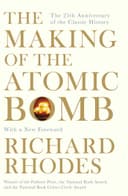
The definitive account of the atomic bomb's development, from initial discussions to the Trinity test, chronicling pioneering scientists' pivotal work. Review: Monumental Work - It would have been easy for RIchard Rhodes to write an easygoing, mass-market, 300-page history of the Atomic Bomb. Starting with the Manhattan Project, glossing over the science and skipping ahead to the tests and then dropping the two bombs on Japan, it would be a quick read and a popular book. Rhodes doesn't do that, and his readers are much better off for it. In The Making of the Atomic Bomb, instead, he provides a detailed account of the different threads that led to the creation of the bomb. He talks about the scientists who created the bomb and their journeys from (largely) central and eastern Europe to (eventually) Los Alamos in the United States. Anti-semitism, Nazism, and War drove them westwards, while their own curiosity and the global, cooperative Republic of knowledge gives them the tools to make the bomb. Rhodes is both detailed and accessible with the science. He trusts the reader to understand what's going on, and he does a good job of helping the reader to navigate the neutrons and the alpha particles and work their way to a place where the difference between U238 and U235 feels easy and natural. The politics is very much the third narrative, given less prominence than the science or the scientists, but nonetheless Rhodes gives it all due attention. The major players, Roosevelt and Churchill especially, and the various go betweens that connected their governments with the scientists, are all present in the narrative. The Second World War itself is obviously vital, and Rhodes returns to it periodically to aid understanding of the urgency and priorities driving the project. On the bomb's eventual use, he allows witness testimony to do most of the talking. The accounts from Hiroshima and Nagasaki are horrifying, and the statistics on the number of dead and injured are unfathomable. Rhodes covers the debate among the scientists about how the post-Atomic world of weaponry should be managed (international control, treaties etc) and suggests, perhaps optimistically, that the Cold War standoff might have been avoided if information had been shared more openly at an earlier stage. In any case, the reader cannot help but be fascinated and informed by this monumental work. Highly recommended. Review: From Science to Destruction: A Riveting Review of "The Making of the Atomic Bomb" - "The Making of the Atomic Bomb" is an incredible book that covers everything from the science behind the bombs creation to the political decisions that led to its use. Rhodes does an amazing job of making complex scientific concepts accessible to non-experts and his ability to weave together a gripping narrative that deludes into science, politics and personal stories behind one of the most significant events of the 20th century is truly impressive. Overall, this book is a must - read for anyone interested in the history of science and technology, and the impact of human decision-making on global events.
| ASIN | 1471111237 |
| Best Sellers Rank | 37,934 in Books ( See Top 100 in Books ) 19 in Engineering Physics 75 in Military & Naval Technology 203 in Popular Science Physics |
| Customer reviews | 4.7 4.7 out of 5 stars (3,890) |
| Dimensions | 15.1 x 5.6 x 23.2 cm |
| Edition | Reissue |
| ISBN-10 | 9781471111235 |
| ISBN-13 | 978-1471111235 |
| Item weight | 996 g |
| Language | English |
| Print length | 896 pages |
| Publication date | 5 July 2012 |
| Publisher | Simon & Schuster UK |
R**F
Monumental Work
It would have been easy for RIchard Rhodes to write an easygoing, mass-market, 300-page history of the Atomic Bomb. Starting with the Manhattan Project, glossing over the science and skipping ahead to the tests and then dropping the two bombs on Japan, it would be a quick read and a popular book. Rhodes doesn't do that, and his readers are much better off for it. In The Making of the Atomic Bomb, instead, he provides a detailed account of the different threads that led to the creation of the bomb. He talks about the scientists who created the bomb and their journeys from (largely) central and eastern Europe to (eventually) Los Alamos in the United States. Anti-semitism, Nazism, and War drove them westwards, while their own curiosity and the global, cooperative Republic of knowledge gives them the tools to make the bomb. Rhodes is both detailed and accessible with the science. He trusts the reader to understand what's going on, and he does a good job of helping the reader to navigate the neutrons and the alpha particles and work their way to a place where the difference between U238 and U235 feels easy and natural. The politics is very much the third narrative, given less prominence than the science or the scientists, but nonetheless Rhodes gives it all due attention. The major players, Roosevelt and Churchill especially, and the various go betweens that connected their governments with the scientists, are all present in the narrative. The Second World War itself is obviously vital, and Rhodes returns to it periodically to aid understanding of the urgency and priorities driving the project. On the bomb's eventual use, he allows witness testimony to do most of the talking. The accounts from Hiroshima and Nagasaki are horrifying, and the statistics on the number of dead and injured are unfathomable. Rhodes covers the debate among the scientists about how the post-Atomic world of weaponry should be managed (international control, treaties etc) and suggests, perhaps optimistically, that the Cold War standoff might have been avoided if information had been shared more openly at an earlier stage. In any case, the reader cannot help but be fascinated and informed by this monumental work. Highly recommended.
K**D
From Science to Destruction: A Riveting Review of "The Making of the Atomic Bomb"
"The Making of the Atomic Bomb" is an incredible book that covers everything from the science behind the bombs creation to the political decisions that led to its use. Rhodes does an amazing job of making complex scientific concepts accessible to non-experts and his ability to weave together a gripping narrative that deludes into science, politics and personal stories behind one of the most significant events of the 20th century is truly impressive. Overall, this book is a must - read for anyone interested in the history of science and technology, and the impact of human decision-making on global events.
M**S
More here than the title suggests
The title of Richard Rhodes' excellent book really does not do justice to the full scope of this work. Here we have a history of nuclear physics beginning back in the 19th Century. One may say that Mr. Rhodes is simply laying the foundations for the main story, but they are pretty extensive and robust foundations for all that. His construction will not crumble any time soon, nor is it likely to be demolished for something more solid. Not only do we get the nuclear physics background but also a very creditable and concise account of the social and political environment in the decades leading up to the Second World War - completely relevant of course because it was so important in the formation of the lead characters in this fascinating story as well as creating the impetus to develop the Bomb during the war years themselves. If I have any gripe at all with this book it is that the main narrative - the rapidly developing nuclear physics - was so enthralling that the frequent digression into biography as the key players came into view had me champing at the bit in frustration and, yes I am ashamed to admit, occasionally had me skipping ahead.
A**Y
A very thorough & long book
This is the definitive history not just of the Atom Bomb but of all the physic of fissionable elements over the previous 100 years that led to it. It is very thorough, perhaps even a bit too thorough in places. But it always remains readable and you get a very good sense of how lots of physicists were really feeling their way towards understanding fission in the 1930s & 1940s. It is also excellent at giving a balanced view of world events - both the Nazis and the Japanese were doing their own research. If Hitler had got there first and used the bomb maybe we'd all be part of the Greater Nazi German Empire now... It doesn't bear thinking about. My other complaint is that the paperback book is physically too big & heavy (at 838 pages) to be easily read when on public transport, in the bath etc. I actually cut mine in two with a sharp knife and now it's much better. It should have been sold in 2 volumes for ease of reading. Maybe the hardback was, I don't know...
J**S
Atom Smasher!
I have three hard copies of this book and have read it about six times, it's a great read! The history and technical aspect are pitched at an non-expert level although a little understanding of physics and chemistry would help the reader. It is broad in its scope and well constructed in its approach, the detail is outstanding. It in no way tries to preach, indeed the author sits very much on the fence with regard to the ethics of its use and puts the decisions made within the issues pertinent at the time. The key roles of Leo Szilard and Leslie Groves, so often overlooked by other writers, is explained in full. It's a good historical reference for an important event in world history. I was so pleased you can now get this on Kindle.
R**R
I literally could not put the book aside, I read it in every free minute I found. As someone very interested in engineering and physics, but a layman, it was very easy to follow and understand the atomic concepts and how (in theory) it worked. A lasting impression formed when the last part of the book explains in detail the reality of having used this bomb ...
P**R
Great book for science lovers..
Z**S
その昔 Brighter than a Thousand Suns を読んだ。(その部分訳が日本語で出ていたかと思うが、それでは物足らず分厚いペーパーバックを読んだ。) それから幾星霜。映画Oppenheimer の脚本家はこの本などを参考にしたような話(本当かどうかはしらない)を読んだ。私が読んだ Brightger than a Thousand Sunsが書かれたころに比べたら機密解除でいろいろ明らかになってることもあるだろうと思い読み始めたが、最初の方を読んだだけでも丁寧にいろいろ書かれていることが分かる。 原爆を通常の市民の頭の上に2回も落とされた国の人間としては、原爆を作った側の人間にも葛藤を抱いていた人がいたということを知るのも無駄ではないと思う。 もちろん、原爆では物足りない、水爆が絶対い必要だと言っていた「水爆の父」ともいわれる Teller 氏みたいな科学者もいたが、彼も亡くなる前の1995年あたりには、「政治家に原子力兵器の管理を任せたのは誤りだった。」なんていうことを言い出していたらしいことを 映画 Oppenheimer の公開に合わせて最近の情報をあさって知った。 そこまでの歴史はカバーされてないと思うし、そもそも書かれたのは丁度Teller 氏がそういうことを言い始めたころだから書かれてないだろう。 しかし、書かれたころの知識を丁寧に描いていると読んでいてわかるので、おすすめできる作品だ。日本語訳もでているようだが、上に書いたような事情で先に英語版を読んでいる。映画Oppenheimerの影響で1960年代に日本の軍人のインタビューも含めた原爆の使用に関するNBCの番組、オッペンハイマーのインタビューなどのビデオが多数 youtube で公開されている。本を読みながらそれらも見ると考えさせられる。 大部なのでまだ終わりまで読めてないが、いい本だと思うのでお勧めの5星をつけた。
L**A
Excelente! Leitura fácil e cativante.
P**R
Richard Rhodes Buch gilt nicht umsonst als Standardwerk, wenn es um die Geschichte der Atombombe geht und wurde auch mit zahlreichen Preisen überhäuft. Wer das Buch bekommt, ist daher nur so mittelüberrascht, dass es ein Türstopper ist: Fast 800 eng beschriebene Paperbackseiten. Ich - kein langsamer Leser - habe fast drei Wochen gebraucht, was aber auch daran liegt, dass es keine ganz einfache Lektüre ist. Rhodes beginnt tatsächlich ganz grundlegend mit den Wissenschaftlerinnen und Wissenschaftlern, die die theoretischen Grundlagen gelegt haben. Und mit den theoretischen Grundlagen. Wie ausführlich das ist, mekrt man daran, dass der zweite Weltkrieg erst nach etwa einem Drittel des Buches ausbricht. Wer viel Wissenschaftsgeschichtliches liest, wird hier auch vieles kennen, aber dennoch: Die Detailverliebtheit ist schon beeindruckend und die Verflechtungen sind hier entsprechend klar. Ähnliches gilt für die Anfänge und den Verlauf des zweuten Weltkrieges. Viel habe ich über die Annektion von Tschechien nicht gelesen (Vielleicht sollte man den Teil der Geschichte mal denjenigen zu lesen geben, die meinen, man solle die Ukraine des Friedens willen aufgeben). Ähnliches gilt für die Eroberung Dänemarks und dass Norwegen vor allem deswegen besetzt wurde, um dort schweres Wasser herzustellen, war mir auch unbekannt. Erst überraschend spät beginnt der Teil, der durch den Film Oppenheimer bekannt ist: Das Manhattan-Projekt. Auch hier werden viele Details ausgebreitet, manche Diskussion, manches Meeting ist vielleicht doch etwas zu viel des Guten, aber man merkt Rhodes, dass er wirklich alle Aspekte der Entstehung abbilden wollte, inklusive der Politischen (und moralischen) Diskussionen hinter den Kulissen. Die Zündungen der drei Bomben (Trinitiy, Hiroshima, Nagasaki) wird minitiös begleitet und ist (trotz bekannten Ausgangs) spannend zu lesen. Insgesamt ist es eben tatsächlich das ultimative Werk für diesen Teil der Geschichte. Die Folgen der Abwürfe werden in den Buch nur angedeutet. Daher macht es auch nichts, dass es bereits über 20 Jahre alt ist.
TrustPilot
2 个月前
2 周前