Desert Online General Trading LLC
Dubai, United Arab Emirates
Desert Online General Trading LLC
Dubai, United Arab Emirates

Full description not available


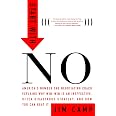
B**N
Excellent Negotiation Approach
I liked Jim Camp‘s straightforward, no nonsense approach to negotiating. As someone who teaches people about influence and persuasion for a living, I found his approach full of practical wisdom. While he does not site research from the social sciences, Camp intuitively learned research based approaches to interacting with humans. I will say I was a little uncomfortable with his dismissal of a win-win approach but the more I read, the more I understood where he was coming from. The book is definitely worth picking up because the approach to negotiations is quite different than many other traditional books on the subject.
P**L
Behavior-based tools with proven results
The counterintuitive approach hits you like an avalanche. Once you step back and think about it, though, it makes lots of sense in the real worldFor purposes of negotiating, Emotions = Evil. Bad negotiators allow the opponent to prey upon emotions. Good negotiators rely upon sound decision making. Business negotiations are based on respect, not friendship (pp. 62-64). The Camp system is a disciplined, planned approach that focuses on goals and behaviors, not the ultimate outcomes. (Those positive results flow naturally correctly applying the tools.)Jim drives home the value of being a "good negotiator" with his real-life example of an international technology licensing deal involving a small Silicon Valley firm (pp. 9-10). Being a "good negotiator" meant the difference between a $400,000 deal and an $8,000,000 deal.Watch out for the dangers of neediness, which is a surefire way to sink your negotiations. Jim gives this topic excellent coverage (pp. 21-34), followed by an illuminating discussion of the "Columbo effect" (pp. 35-42), the idea by which you covertly assume negotiating control by allowing your opponent to feel somewhat superior and thus in control.Also like a good detective, a good negotiator uses the powerful process of asking questions and listening. Jim gives this subject great coverage (pp. 101-135) that involves knowing which types of questions to ask, and how and when you should ask them.I highly recommend this book. It's a must-read for any business professional. While the book does not present a systematic method for applying the tools, your own persuasion toolkit needs room for a lot of these tools.
R**N
Good insights into negotiating
Good read with some quality insight into negotiating. This book offers some practical advice to implement in your negotiating strategies. Like all negotiations, the majority of it starts with solid mental preparation.My only issue with the book is the author's relentless attack of "win-win". From his perspective I can see why he is opposed to the "win-win" mentality. Ultimately I believe it is because he doesn't correctly define it. Steven Covey would tell him that what he is really against is lose-win or win-lose, as true win-win is sustainable and beneficial for both parties involved not just in the short term, but primarily over the long haul.Overall, I'd recommend reading this book.
D**N
Advice that will help you become more than just a good negotiator
I discovered Jim Camp’s book while reading Chris Voss’ “Never Split the Difference.” Voss cited “Start with No,” so I decided to read it, too. Although I walked away with more actionable steps from Voss’ work, I enjoyed Camp’s book a lot, since it gave a good summary of many important negotiation techniques. Jim Camp, too, is a good story teller, so his book is a quick read.The overall take-away from the book is that a negotiator must not try to force his ideas on his adversary. Rather, he should make his adversary feel okay about himself by asking a lot of open-ended questions and then listening closely to the answers. On the one hand, a cynic might argue that you’re simply manipulating the feeling of the opponent to get him to open up. On the other hand, though, a close reading of the book shows that the skills of asking good questions and then listening to the answers are sorely missing in the world today. Friends, spouses, co-workers, everyone, in fact, should learn these ideas… not to win negotiations, but rather to become closer to those around them. A good negotiator gets emotionally close to his adversary by allowing him to feel comfortable in the conversation, not belittled, insulted, or stupid.
K**R
Essential reading for anyone who has to negotiate (That includes everyone).
The media could not be loaded. I just want to give a quick shout out for this book "Start with No"I found it after listening to a bunch of interviews that the author gave before he passed on.I'll have to say the world is poorer because Jim Camp is no longer with us, but much richer because of the legacy he left.Key takeaways:* Don't be needy.* Don't be afraid of No. It is actually the best thing you can hear, because it marks the beginning (not the end) of the real negotiation.* Have an agenda before you show up.* It's not about you. It's about the vision you create in the mind of your counterpart. Forget yourself. Serve.* Focus on your behavior. You cannot control the outcome.* No expectations. No assumptions. No talking.Get this book. Read it. Live it.
A**N
A lot of engaging material
Goes beyond starting with no. Solid, practice advice that can be applied in real world situations. If you liked “Never Split the Difference” by Chris Voss, you will like what Jim Camp has to say.