Buy anything from 5,000+ international stores. One checkout price. No surprise fees. Join 2M+ shoppers on Desertcart.
Desertcart purchases this item on your behalf and handles shipping, customs, and support to Taiwan.
🔋 Power your Pi like a pro — never miss a beat, indoors or out!
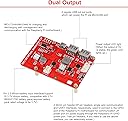
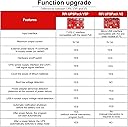
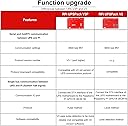
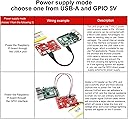
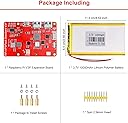
The MakerFocus Raspberry Pi 4 Battery Pack UPS V3Plus is a versatile expansion board featuring a high-capacity 10000mAh lithium battery and Type-C charging interface. It supports dual power modes—portable battery and indoor UPS—with a maximum 5V 3A output, smart LED status indicators, and comprehensive safety protections. Designed for Raspberry Pi models 2B through 5, it ensures uninterrupted, clean power delivery for professional-grade projects and mobile setups.


| ASIN | B07Y213F8S |
| Amperage | 2.5 Amps |
| Antenna Location | Raspberry Pi UPS |
| Battery Capacity | 10000 Milliampere Hour (mAh) |
| Battery Cell Composition | Lithium |
| Battery Cell Type | Lithium |
| Best Sellers Rank | #88 in Computer Uninterruptible Power Supply Units |
| Brand | MakerFocus |
| Built-In Media | 1 * 3.7V 10000mAh Lithium Battery, 1 * 5pin 2.54mm head, 1 * Package to install screws, 1 * Raspberry Pi UPS V3P Extension Board |
| Customer Reviews | 4.2 out of 5 stars 407 Reviews |
| Item Dimensions | 3.66 x 2.44 x 1.18 inches |
| Item Weight | 69 Grams |
| Manufacturer | MakerFocus |
| Model Name | V3 Plus |
| Model Number | S103318L6T |
| Number of Batteries | 1 Nonstandard Battery batteries required. |
| Recommended Uses For Product | Raspberry Pi UPS |
| UPC | 673400192837 |
| Unit Count | 1 Count |
| Voltage | 3 Volts, 3.7 Volts |
| Warranty Description | No Warranty |
C**S
Easy USB set up. Powers monitor, too.
Just got it a few hours ago and it's running a Pi4B and a small 1920x720 monitor no problem. The charge indicator dropped from 4 lights to 3 rather quickly but I'm assuming this is due to the manufacturer not charging the battery to 100% which is perfect. It was very easy to set up via USB A to C to both the Raspberry Pi and Monitor. At the time of writing the indicator dropped to 2 lights. If this can run the set up for around 4 hours I will be a happy camper - fingers crossed. The baseus 10k mah 22.5 watt ran about that long with this same set up. This all connected without issues and didn't take anything special aside from hooking up the USB ports, though I can't speak to the pogo pin method. Cost wise this aligns with a battery bank of about the same size though its a littler pricier than the Baseus previously mentioned, which is a fantastic bank. I hope the manufacturer sticks around with this product since I will likely be buying more. Highly recommend for now!
I**C
Does not work for a raspberry pi 5
I’m giving it five stars cause it does what it’s supposed to do. I’m the idiot who has a pi 5 and wanted it to supply enough power with amps and it doesn’t barely supply enough power to power the five alone, the five and a screen and any peripherals or run any programs the five just shuts down because it’s not supplying enough amps but on my 4 b model, it works great power, the screen and everything
A**C
Does the job but status LEDs are annoying
This worked great as a UPS. I thought it was defective when I first used it as my Pi rebooted but it turned out my USB cable to the Pi was bad. I tested the battery capacity using a USB tester between the output power and the Pi and I measured close to the rated battery capacity. I could feel no heat from the board so it is very efficient. A star taken off for a bright and noisy charging LED. The noise could be a problem for some who are sensitive to high pitched sound if it was in a bedroom.
M**D
5 star
Excellent little ups. Capable enough while not being super tailored to a single flavor of board. Not having pogo pins is a major bonus for install flexibility
D**N
It works, but not for very long.
I bought this to power a Raspberry PI which in turn powers an Arduino. It certainly powers everything. It doesn't take more than a couple hours to reach full charge when plugged into an outlet. That said, it doesn't last very long, I get about an hour of power depending on what I am doing. It's also rather large and bulky so if your form factor is small, note that you will need much more space to facilitate the battery. The board is about the size of a Raspberry PI, slightly smaller, and only as thick as a circuit board. However the battery is much larger and awkward. It won't easily stack with the PI unit and the board, so it needs an additional larger space to facilitate its storage. There is a port at the end of the board to incorporate a power switch and that even reserves two pins for an LED, both of which I utilized well. There's also built in USB ports for ease of use. Basically It's a solid unit that does what it's made to do, but it's bulky and doesn't provide power for as long as you would expect for such a large battery. Regardless, I used it successfully for a project.
A**.
This UPS IS ready for RPi 4B
I replaced their original version 1 UPS with this new V3P version. It cleared all of the low voltage warnings I have always gotten with the V1 circuit. My Raspberry Pi 4B is loaded with a 4-Port USB to RS-232 Serial Adapter Hub, two RF wireless USB mice, and its Pimoroni Fan Shim cooling fan. Running OpenCPN navigation program, no problem. During my boat's diesel engine 600A start, pulling battery voltage supply to the board to very low, the UPS powers the RPi and its loads with no interruption or reset or Pi low voltage warnings. This upgrade to deliver a max output current of 3A, just like the official RPi AC wall plug power supply, has made all the difference. FYI, I supplied both the old and this new board from a 12VDC to 5VDC Dual-Port USB Car Charger Adapter, 4.8 Amp, 24W, using a Dual USB Male Jack Y Splitter Data Charger Cord to supply the two 2.4A channels in parallel as 4.8A to this UPS circuit. That is, supplying 5 x 4.8 = 24W to the board enables it to deliver 5.1V x 3A = 15.3W output power to the RPi. With the old V1 board output under load was 4.8-4.9VDC. With the new board it is 5.2V+. Perfect!
J**E
No low-voltage protection for the battery -- EDIT: new version fixed this!
I was really excited about this power module, but it has two flaws, one major, one not as big of a deal but still an oversight. First the big one: It does not have any low voltage protection for the Lithium battery. If you leave your Pi running, it will eventually brown out, however the circuit does not shut down to protect the battery. You can see the LEDs pulsing as it is trying to stay alive, far below a voltage it can operate at. The major problem with this is, it will absolutely kill the Lithium battery if you allow it to do this more than a couple times, as they cannot handle a deep discharge. I measured the cell after it had been left on overnight, and it was at 2.78v. The second problem is when you have it powering your Pi and also plugged in to USB to charge (which it will if you supply it 2.5A source), when you unplug the charging source, it briefly interrupts power to the Pi causing a reset. I feel like this could be easily solved by the circuit designer. If you're just looking for a battery backpack for your Pi to run for several hours, this will totally do the job, but dont plan on leaving it sitting around on battery, as it will eventually kill its' own battery from deep discharge. EDIT: The manufacturer contacted me and let me know they revised the board to fix these two issues, and they sent me a new one. It now doesn't drop out when unplugging or plugging in. Also it does properly shut down the circuit when the li-po gets down to 3.2v.
S**S
Garbage. I Guess.
As far as I can tell, this device is absolutely useless. However, to be fair, it could just be that I'm not using it right. I can't really tell, since there aren't any clear, working, easily-accessible instructions on how to set it up. This is my second attempt at trying to find a device that will allow my Raspberry Pi to have battery power that resembles that of a laptop. Adafruit's PowerBoost 1000 Charger circuit, would have worked well. However, it simply doesn't offer enough current to provide a practical solution for powering a Raspberry Pi and 7" display. We all know the simple concept of how a battery works for a laptop. If you plug your laptop into an electrical outlet, the battery is automatically charging. Meanwhile, you're able to use the laptop, without any worry that the laptop will shut off, due to a dying battery. After all, it's plugged in. If you unplug the laptop, it will continue to function; as long as your battery has a charge. If the charge gets low, all you have to do is plug your laptop back into an electrical outlet, and it starts charging again. What I've just described is familiar to all of us, and it's all I'm looking for. I just want it to apply to my Raspberry Pi, instead of a laptop. My hope was that this circuit would perform this basic function. Unfortunately, it doesn't -- or at least I couldn't get it to work, due to faulty products, or a lack of proper instructions. Let me first state that this device is not plug-n-play -- not unless I received two defective products. It's not as simple as hooking it up according to the pictures that are shown on Amazon. If you hook up this board, according to the pictures on Amazon, and then flip the switch, on the little board, the Raspberry Pi and screen will turn on. You'll also be able to plug power into the board, and unplug that power, without your Pi shutting off. But, don't rejoice just yet. This is because it appears that the Pi is simply running off of the battery. If you plug in power to this device, the battery won't start charging. I've had this happen for two separate devices. Luckily, the seller was kind enough to send me a second one, once I explained what was happening with the first. However, the new one does the exact same thing. Once I realized that the second one behaved the same way, I figured that I must be doing something wrong. It must be operator error. After all, this product has quite a few good reviews. If you read through some of the reviews, you'll learn that there's software that can be downloaded for this board. My thought was that, maybe this software is required. Maybe that's why it's not working. Of course, you'll only know about this software from reading the reviews. What's shown on Amazon, makes no mention of software. So I went to the MakerFocus website, and performed a quick google search. Sure enough, there's software that can be downloaded from GitHub. That's when my software installation nightmare began. The bad reviews that talk about bad instructions, are absolutely correct. If I took the time to explain all of the problems and pitfalls that I've run into, pertaining to trying to get this thing to work, my review would be so long and confusing that no one would bother to read it. Just know that the problems range from multiple GitHub pages with conflicting installation procedures, to python scripts that fail, due to syntax errors -- depending on which version of Python you're using. The whole thing's a big mess. There's no reason this device should require any sort of software installation. Why not make it plug-n-play? If the developer had done that, that would crack down on 90% of the bad reviews. Ultimately, I think I'm done. Between the time that it took to receive two boards, solder them, perform multiple Raspberry OS installations, and hunt down instructions, I've run out of patience. I received my first board, two weeks ago. So, it's been a two-week ordeal. Because this product has quite a few good reviews, it may be that I just got two bad boards, or that I'm doing something wrong. However, based on what I've personally experienced, I have to conclude that this board, along with its lack of instructional documentation, is all just garbage. Part of me feels bad about giving this product a one-star review. This is because the seller, at least, tried to make things right by sending out a second board. But, ultimately, I've just wasted time, money, and patience. I'll try to get my money back, but they've already given me two boards, which are now just paper weights. Why can't someone build a simple board that will allow my Raspberry Pi to have power like a laptop?
M**F
長時間の電源供給に満足してます
基板、バッテリー共に、大きいですが、供給時間が長いので大変満足しています。
Trustpilot
2 months ago
1 month ago