
Buy anything from 5,000+ international stores. One checkout price. No surprise fees. Join 2M+ shoppers on Desertcart.
Desertcart purchases this item on your behalf and handles shipping, customs, and support to Taiwan.
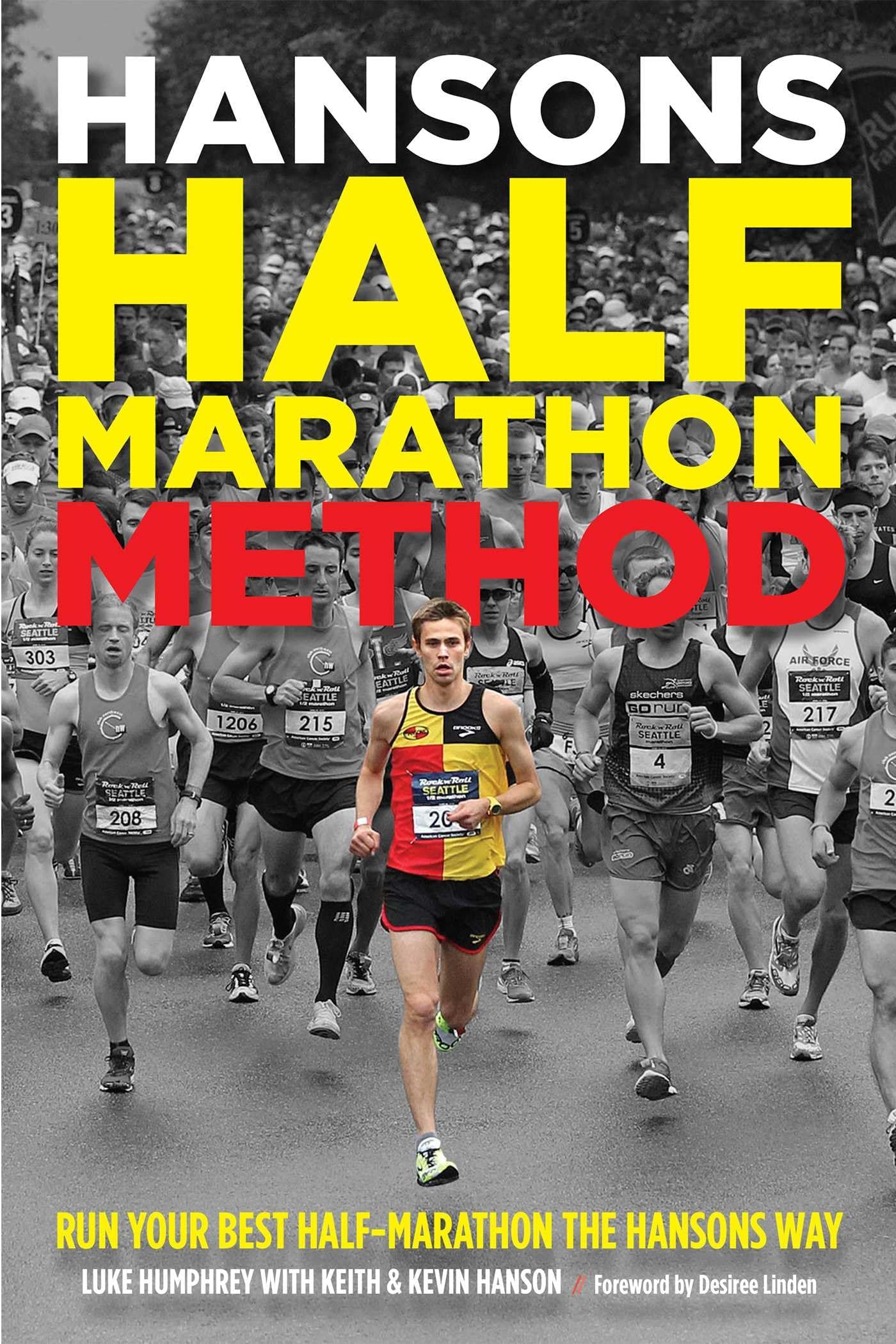
Committed runners from all over the world have set new PRs with the Hansons training program. Now in Hansons Half-Marathon Method, the Hansons-Brooks team shares its unique, winning approach which the New York Times says, "throw[s] out just about every standard of the marathon training program." With half-marathon training programs for intermediate and advanced runners, as well as a welcoming Just Finish Program for newer runners, Hansons Half-Marathon Method prepares all athletes for their best performance. Hansons athlete and coach Luke Humphrey explores the differences between the Hansons method and other training programs and then shows runners how to make the Hansons half-marathon training program their own. He guides runners through choosing the right training plan and offers a practical guide to setting race finish time goals. Humphrey reveals the Hansons approach to precise half-marathon pacing, showing runners how to find their most effective paces for the Hansons SOS ("something of substance") workouts--speed, strength, tempo, long, and easy runs. He coaches runners on how to modify the plans to work around busy schedules and missed workouts. He answers frequently asked questions on switching workout days, managing fatigue, incorporating races into training, and adding mileage. Runners will benefit from the Hansons' advice on finding the best shoes for distance running and their veteran tips on avoiding common stumbling blocks during race week, at the expo, at the start line, and after the race. The Hansons science-based approach to half-marathon pacing, nutrition, and hydration will ensure that runners cross the finish line feeling strong. Hansons Half-Marathon Method lays out the most effective way to train for a half-marathon, developed by one of the most accomplished running groups in the nation. Using the Hansons way, runners can forge a breakthrough half-marathon performance. Review: A Good, Demanding Challenge. - I'm a 41-year-old 1:38 half marathoner, and I'm using the Advanced Program in this book to prepare for a couple fall 1/2s with the goal of breaking 1:30... This is an excellent book for those planning out a serious program for distance training. But be warned: it is not for the faint-of-heart or the half-committed. In fact, it is probably not the best if you are either newish to running or new to the half-marathon distance, or have a super-busy schedule that forces you to frequently miss or shorten runs, as the program's cornerstone is making, and keeping, you tired. It is not a program where you can maybe skip a day once a week if you're not feeling up for it or the weather is gnarly...you really do need to go whole-hog with it for the plan to work. Otherwise, you'll just be running any standard training program. Discipline is also key: the point is made repeatedly that slow runs not run slow enough, or hard runs run too hard, are damaging to your overall effort. If you are supposed to do an easy run at 9:00, you aren't allowed to go 8:20 because you feel great that day. If you are supposed to run an 800 interval at a 7:00 pace, you'd better make a special effort to see that your pace is right there. No just going out to see what you can do. (The Hansons say they make their pro athletes do push-ups if they run an interval faster than the plan dictates) That being said, there are very specific training plans for anyone from the "Just Finish" crowd to the serious competitor, and there is a great variety of workouts throughout the program to keep all the runs, even the long slow distance, interesting and challenging. Ultimately, there is nothing new in running: alternate training hard with adequate recovery, and weave in strength and flexibility. But if you are at a point where you are thinking about how to structure an increase in your mileage or your effort, or you are looking for a new way to train seriously, this book could be a central part of your running life. Review: Excellent guide - If you want one book to guide you all the way through to half marathon, this is the one you'd want to pursue. I really like Hanson's method of training 6 days a week. Its very precise about the methodology, and expectations from the race. Other guides I've tried to follow online have always left questions hanging. But this one builds the base with educational background about how your body reacts to various paces, and what paces should you pursue based upon your current performance. The book lays down an entire plan to follow, while tackling varied range of questions and doubts. And its never vague like, "Run only as fast so you can still talk in sentences." I like actual numbers, and that's what this book is all about. The book also covers nutrition very well, before, during and after the race. Keeping up with the overall theme, the precise amounts of food and drinks that you need are laid out (i.e. tools provided for you to make those calculations). The authors really want to ensure no-injury and no-overtraining; while maintaing a level of cumulative fatigue. I'm 4 weeks into training through this book; and have my half-marathon coming up in August; so I might have a word or 2 to add later; but so far, this book has been the best guide I had. I really love the specificity of this book; and knowing exactly what I'm aiming for and how to get there. -------- Update (May 18, 2014): I followed this plan intensely for like 6 weeks so far, but started having persistent pain in my lower legs. Showed a doctor, did X-ray and a bone scan, but no fractures etc. So, I switched to biking for a week; and just ran Half Marathon today. I did it within the time that I had planned for my half Marathon in August (so 2 months early on my goal, yay!); which I'll attribute to the plan in this book. But, I also realized that this method only works if your legs can take the beating, which mine can't. And it makes sense, considering this plan was made for elite runners training for Olympics hopes, and their bodies and legs have already been accustomed to the constant pounding. I'm going back to the 3 day running 3 day cross training (biking) methodology because it lets my legs recover, while still improving my Vo2max. But, I'll keep this book close to heart, and still think its a great book to follow. My 5 star rating for this book stays.


| Best Sellers Rank | #470,056 in Books ( See Top 100 in Books ) #16 in Triathlons (Books) #78 in Running & Jogging (Books) #100 in Sports Training (Books) |
| Customer Reviews | 4.6 out of 5 stars 374 Reviews |
M**L
A Good, Demanding Challenge.
I'm a 41-year-old 1:38 half marathoner, and I'm using the Advanced Program in this book to prepare for a couple fall 1/2s with the goal of breaking 1:30... This is an excellent book for those planning out a serious program for distance training. But be warned: it is not for the faint-of-heart or the half-committed. In fact, it is probably not the best if you are either newish to running or new to the half-marathon distance, or have a super-busy schedule that forces you to frequently miss or shorten runs, as the program's cornerstone is making, and keeping, you tired. It is not a program where you can maybe skip a day once a week if you're not feeling up for it or the weather is gnarly...you really do need to go whole-hog with it for the plan to work. Otherwise, you'll just be running any standard training program. Discipline is also key: the point is made repeatedly that slow runs not run slow enough, or hard runs run too hard, are damaging to your overall effort. If you are supposed to do an easy run at 9:00, you aren't allowed to go 8:20 because you feel great that day. If you are supposed to run an 800 interval at a 7:00 pace, you'd better make a special effort to see that your pace is right there. No just going out to see what you can do. (The Hansons say they make their pro athletes do push-ups if they run an interval faster than the plan dictates) That being said, there are very specific training plans for anyone from the "Just Finish" crowd to the serious competitor, and there is a great variety of workouts throughout the program to keep all the runs, even the long slow distance, interesting and challenging. Ultimately, there is nothing new in running: alternate training hard with adequate recovery, and weave in strength and flexibility. But if you are at a point where you are thinking about how to structure an increase in your mileage or your effort, or you are looking for a new way to train seriously, this book could be a central part of your running life.
M**N
Excellent guide
If you want one book to guide you all the way through to half marathon, this is the one you'd want to pursue. I really like Hanson's method of training 6 days a week. Its very precise about the methodology, and expectations from the race. Other guides I've tried to follow online have always left questions hanging. But this one builds the base with educational background about how your body reacts to various paces, and what paces should you pursue based upon your current performance. The book lays down an entire plan to follow, while tackling varied range of questions and doubts. And its never vague like, "Run only as fast so you can still talk in sentences." I like actual numbers, and that's what this book is all about. The book also covers nutrition very well, before, during and after the race. Keeping up with the overall theme, the precise amounts of food and drinks that you need are laid out (i.e. tools provided for you to make those calculations). The authors really want to ensure no-injury and no-overtraining; while maintaing a level of cumulative fatigue. I'm 4 weeks into training through this book; and have my half-marathon coming up in August; so I might have a word or 2 to add later; but so far, this book has been the best guide I had. I really love the specificity of this book; and knowing exactly what I'm aiming for and how to get there. -------- Update (May 18, 2014): I followed this plan intensely for like 6 weeks so far, but started having persistent pain in my lower legs. Showed a doctor, did X-ray and a bone scan, but no fractures etc. So, I switched to biking for a week; and just ran Half Marathon today. I did it within the time that I had planned for my half Marathon in August (so 2 months early on my goal, yay!); which I'll attribute to the plan in this book. But, I also realized that this method only works if your legs can take the beating, which mine can't. And it makes sense, considering this plan was made for elite runners training for Olympics hopes, and their bodies and legs have already been accustomed to the constant pounding. I'm going back to the 3 day running 3 day cross training (biking) methodology because it lets my legs recover, while still improving my Vo2max. But, I'll keep this book close to heart, and still think its a great book to follow. My 5 star rating for this book stays.
R**E
Good book
This helps a lot for the half-marathon
E**C
Good plan but book errors are frustrating
I like the plan and 3 weeks in I feel like I am seeing progress. It's simple and easy to understand and paces are provided for the various workouts. However, there is a good amount of conflicting information that complicates finding those paces. The most frustrating is the pace table for all of the different workouts. It is for marathon paces not half (they're different) so you have to find half marathon paces in the text or other tables. Yet these also have conflicting data. One page says to limit interval duration to 8 minutes, 2 pages later it is 6 minutes. For slower strength intervals the text says 400m rest and the next says 800m. Despite these issues I would buy again. Just know that it can be a little frustrating to find what you need.
A**R
5 stars with some reservations
This is a beginner friendly easy to read and understand book. It teaches you key concepts of race training and gives you very useful guidelines. The structured 6 day/ week running plan is great and I think even if you modify it in content or duration you need to stick to the structure which suggests 3 SOS work outs separated by one to two days of easy run or rest. I gave it a 5 stars because this happened to be the first book in years I read from cover to cover... (Yeah, I am not a book worm) Now,.for the reservations: 1- the cumulative fatigue concept is exaggerated. Most modern training plans have equal, if not more workload. This is only cumulative compared to basic walk/run or higdon plans which generally have multiple off days. 2- long runs are unjustifiably short and ran at a boring grey area pace. No innovation such as progressive or half marathon pace segments. 3- tempo runs are kind of waste of time. Those hm segments could be implemented into long runs and tempo can turn into LT pace as a block or as intervals. Current structure does not have a dedicated LT training except may be strength session of the speed day but I am not sure about that either 4- strides, hill repeats, sprints and all other modern strategies are completely ommitted. 5- strength training and mobility training is not emphasized enough and no structured plan is offered except for some basic moves Overall, book gives you solid foundation but you need to accept that it is outdated in some ways. Think of this as a pizza base. You need to add some toppings...
P**H
Finally found the perfect running program
I've been running for about 15 years and tried all sorts of training plans, online coaching, web based coaching, books and never quite found the one I could really commit to. I ended up just doing 10km races as this was something I could manage without any external help. However the New Year brought some new commitments and this made me want to go for another half marathon. I can't recall how I ended up finding the Hansons Method and I read the full book and then planned my adjusted 16 week program to my half marathon (which I just completed today). The philosophy is simple... to run fast you have to run. I actually followed every piece of advice and recommendation as I actually believed in their philosophy and I was running 6 times a week and cumulated over 700km in the 4 month program. A lot of their content is pretty straightforward - again simplicity was something I like. Overall the book guides you really well along the way. I tried connecting to the Hansons website but found this didn't really add much to the content of the book. The results I have achieved was what I was hoping for... faster pace for the longer distance. I got my PB by taking off 3 minutes from my half marathon best which I achieved 8 years ago so I am pretty committed to this program going forward and I have enough knowledge now to adapt the program to the shorter distances that I also enjoy. I am hoping that this will bring some further PB's later in the year when I start those races... Overall this program really worked for me and I actually followed 99% of the program and the recommendations. Not sure if that applies to everyone as I have explained I have probably been through a dozen different programs with mixed results. Worth giving it a go if you were in the same place I was....
A**G
Good read. Worth it.
Let me start by saying that I have read the book but have not started the training. I start training next week. The book is easy to read and understand. A lot of good information. I think I will like this program because I have run many marathons and half marathons. I have tried different programs to see if my times improved. Some did and some didn't work. I have tried the run less method when I was crunched for time. I will say that method did not work for me. I was very fatigued and sore for about a week afterward. I have never hit the wall during a race before using that method. I think that method would be ok for a 5K or 10K. But nothing longer than that. I have tried the run/walk method while nursing an injury and to my surprise actually improved my times and was not as fatigued. Hanson's method sounds to me like a good solid training program. The only way I have had success without fatigue and struggling to the finish line is to put in the time to train. If you don't train your body to fatigue when it gets there all of a sudden you will struggle to the finish line. I know two people that have used this method and have set new PR's. They did say that it was hard work but the two weeks of recovery before the race they felt better than in previous training. You can run as slow as you want as most of the runs are easy runs. They show you how to modify their plans to fit your lifestyle without losing any of the benefits of the program. But they don't want you running fast on easy run days. There are three different training programs: beginner, advanced, and just to finish. All require running 6 days a week for 18 weeks. I will update after my December half.
J**F
Great book if you know what you're buying
I pre-ordered this book and received it within a day of the release date. This is NOT a how-to-run book, but it is a very well-written and very methodical approach to training for a goal time in a half-marathon event. A couple of things to consider: 1) This method is based on an 18-week training window before your race date, and there are multiple admonitions to deviate only minimally from the plan. So, don't buy this book hoping you will get its full benefit if your race is only a few weeks away. 2) There isn't a page or two you can just flip to and find "your" plan. Goal time, fitness level and past running experience, body weight and expected running conditions all factor into the plan. I quickly realized that my first read through wouldn't suffice. I've since gone back through with my notebook and calculator to figure my own needs using the formulas and tables provided for training times and intensity as well as nutritional and hydration needs. The reader should also know from the outset that this method of training doesn't look much like what you'll find if you search online for half-marathon training plans; there are six running days each week (except for the first weeks of the Beginner & Just Finish Programs), and no prescribed cross-training. The creators and author are serious about mileage and the benefits of specificity of training: if you want to be a better runner, you need to run a lot. Obviously, I don't know yet if I'll be successful with this method, and I have real concerns about making time for the almost daily training required to follow the plans here. I do feel confident that anyone following this plan would make great improvements toward a well-chosen half-marathon time goal.
T**M
Recommended for everyone who wants to start running half-marathons of all levels
This book has been recommended to me and it has a comprehensive and easy-to-digest organised structure in keeping everything about starting to run and the actual training plans clear for the readers. If you can't afford a personal running coach right now, then this book is a great investment to give you a good foundation as a runner no matter your level of experience is.
F**O
Buon libro ma speriamo lo migliorino
Ricalca quanto scritto nel libro della Maratona, ma che rispetto a quest’ultimo sia stato scritto più per motivi di completamento delle 2 distanze più frequentate dai runners. Arrivato nella data prevista. Amazon puntuale
J**S
Livro bacana
Além do programa de meia maratona, tem várias explicações interessantes sobre os treinos e demais fatores importantes em uma meia maratona. O programa em si não come muitas páginas, então vale a pena comprar mesmo se você não pretende seguir o programa deles.
B**T
Great training manual
This is fantastically written. It explains physiological adaptions in simple terms. In doesn't just say do A it explains A compared to B etc. It allows you to write your own program, as you now understand what each run is trying to accomplish. It also covers how to adjust plan correctly when the unforeseeable or injury occurs. It covers everyones goals from just finish to top competitor.
J**A
Simple et efficace, je suis totalement satisfait
Méthode simple et logique, basée sur notre capacité physiologique. Excellent guide pour un entrainement bien dosé. Suggère entrainement sur 6 jours/7. Ne s'occuppe pas de la frequence cardiaque. Lecture agreable. Un livre champion!
Trustpilot
3 days ago
2 weeks ago