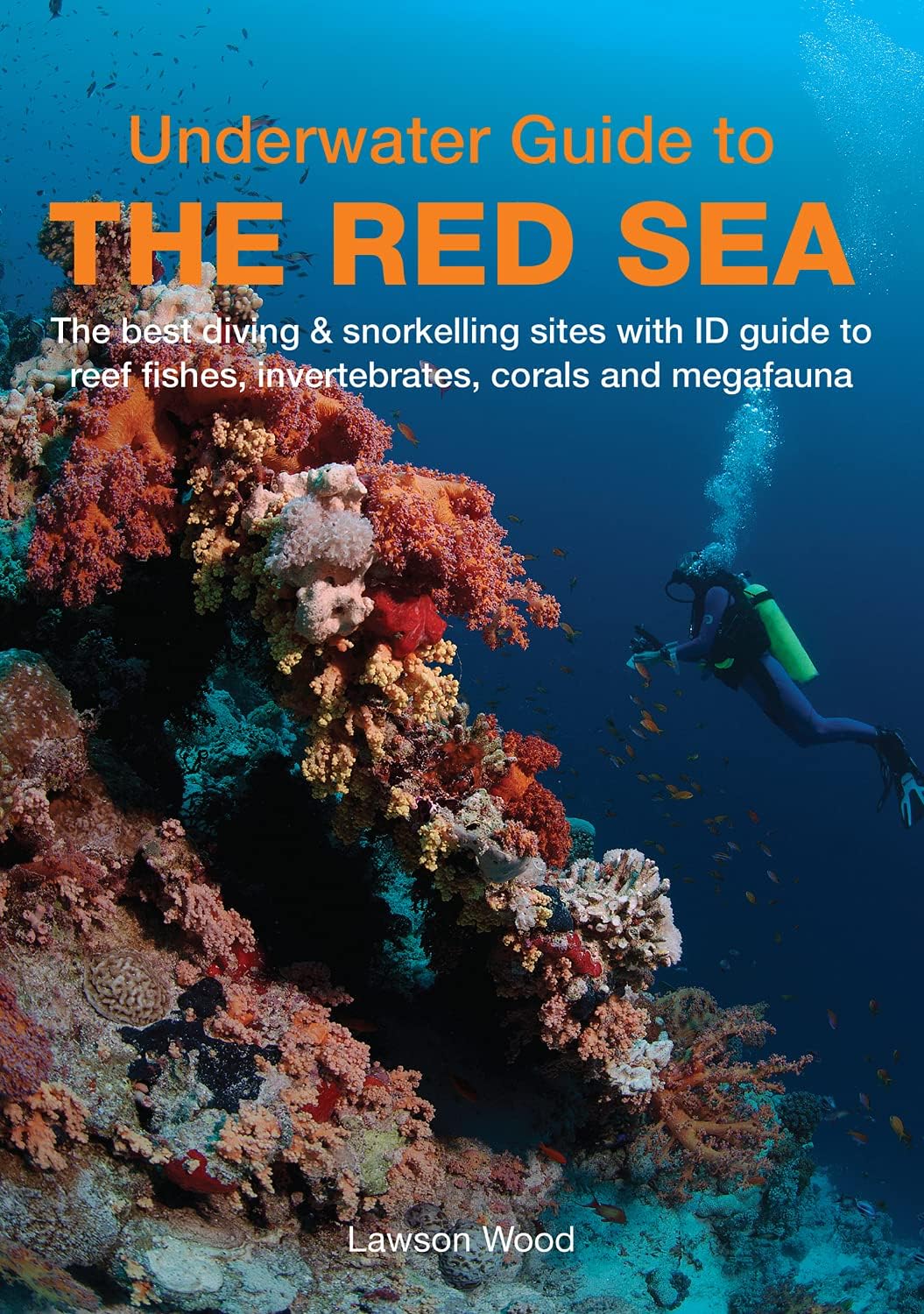
Underwater Guide to the Red Sea
Product ID: 42210277
The Red Sea has over 1,000 species of invertebrate and over 200 species of soft and hard coral, forming the basis of a marine eco-system which includes 1,100 species of fish, of which just under 20% are endemic. The high level of endemism is one of the main factors that makes scuba diving in Egypt so attractive. The dive sites offer unobstructed opportunities to spot tropical marine life in crystal-clear waters, ranging from sharks and dolphins to gorgonian fans and feather-stars. Diving types include shallow patch reefs, drift dives and walls, and a collection of some of the most interesting wrecks you are likely to find anywhere, including the world-famous Carnatic and Thistlegorm wrecks. Many of the reefs stretch out far into the sea and form intricate labyrinths of plateaus, lagoons, caves and gardens. Divided into three parts, the book provides a general introduction to diving and snorkelling in the Red Sea including what to expect and where to base yourself; a guide to the best sites for diving and snorkelling; and a photographic identification of 280 of the most common species of marine life covering fish, invertebrates, corals and megafauna. For all those who plan to spend time in or on the waters of the Red Sea, this is the perfect, pocket-sized guide. Review: Excellent for those who would like to know what diving in the Red Sea is all about! - Many books have been written about the Red Sea but there are very good reasons why this particular work should be at the top of any divers list. To begin with, Lawson Wood has been writing about diving for many years. More importantly, he has many significant credits to his name including the discovery of some of the shipwrecks in the Red Sea and the correct identification of even more. He comes to this particular work, therefore, with considerable experience and a detailed knowledge of the subject. Commencing with an Introduction which includes; Geography, Geology, History, Climate and Practicalities the first words we find are; “brilliant soft coral gardens” and “vertical walls, fabulous shipwrecks and coral canyons” as the author begins to explain the relevant background information to what the reader is about to discover. The next chapter is; the Marine Environment where we find sections on; Open Ocean, Reef Structures, Life on the Coral Reef, Reef Relationships, Threats and Marine Conservation. We have now covered the first 31 pages from a book containing 160 and, speaking as someone who has been a regular visitor to the Egyptian Red Sea for many years, I had already learned a great deal. 12 pages are then devoted to; Diving and Snorkelling in the Red Sea. These provide all the information the visitor will need to know under the subheadings; Health & Safety, Equipment, Underwater Photography, Certification & Experience and Diving Facilities. In short, the answers to all those questions we ask ourselves before setting off. What follows are the details of what we want to see. Between Taba in the north of the Gulf of Aqaba and St. John’s Reef in the southern Egyptian Red Sea, 25 dive sites and 10 snorkelling sites have been carefully selected to provide an excellent portrayal of the best locations and variety available. This is a ‘Guide’ to the Red Sea and not a definitive description of every possible underwater setting. Each site is well described and has easy-to-recognise highlights so that visitors can see at a glance what they might encounter. These include; shark, turtle, corals, dolphin, dugong, shipwreck and so forth. All are well explained. The final major section is entitled; Marine Creature Identification. With six photographs to a page, all types of fish, shellfish, nudibranchs, crabs, prawns and even the Dugong (and more!) are correctly identified. I say “correctly” because I thought two were wrong - but the errors were mine! The book concludes with; Glossary, Contacts, Further Reading, Acknowledgements and Index. The photography is of the highest standard with most pages having between 2 and 6 images. This book is perfect for those divers who know the Red Sea as well as those who do not because it explains much that we didn’t know and much that we thought we did. It is also exactly the right size for the kit bag. NM Review: Great book - A very good and comprehensive book about the red sea.
| Best Sellers Rank | #10,502,450 in Books ( See Top 100 in Books ) #1,125 in General Egypt Travel Guides #2,258 in Swimming (Books) #4,874 in Ecosystems |
| Customer Reviews | 4.7 out of 5 stars 25 Reviews |
N**N
Excellent for those who would like to know what diving in the Red Sea is all about!
Many books have been written about the Red Sea but there are very good reasons why this particular work should be at the top of any divers list. To begin with, Lawson Wood has been writing about diving for many years. More importantly, he has many significant credits to his name including the discovery of some of the shipwrecks in the Red Sea and the correct identification of even more. He comes to this particular work, therefore, with considerable experience and a detailed knowledge of the subject. Commencing with an Introduction which includes; Geography, Geology, History, Climate and Practicalities the first words we find are; “brilliant soft coral gardens” and “vertical walls, fabulous shipwrecks and coral canyons” as the author begins to explain the relevant background information to what the reader is about to discover. The next chapter is; the Marine Environment where we find sections on; Open Ocean, Reef Structures, Life on the Coral Reef, Reef Relationships, Threats and Marine Conservation. We have now covered the first 31 pages from a book containing 160 and, speaking as someone who has been a regular visitor to the Egyptian Red Sea for many years, I had already learned a great deal. 12 pages are then devoted to; Diving and Snorkelling in the Red Sea. These provide all the information the visitor will need to know under the subheadings; Health & Safety, Equipment, Underwater Photography, Certification & Experience and Diving Facilities. In short, the answers to all those questions we ask ourselves before setting off. What follows are the details of what we want to see. Between Taba in the north of the Gulf of Aqaba and St. John’s Reef in the southern Egyptian Red Sea, 25 dive sites and 10 snorkelling sites have been carefully selected to provide an excellent portrayal of the best locations and variety available. This is a ‘Guide’ to the Red Sea and not a definitive description of every possible underwater setting. Each site is well described and has easy-to-recognise highlights so that visitors can see at a glance what they might encounter. These include; shark, turtle, corals, dolphin, dugong, shipwreck and so forth. All are well explained. The final major section is entitled; Marine Creature Identification. With six photographs to a page, all types of fish, shellfish, nudibranchs, crabs, prawns and even the Dugong (and more!) are correctly identified. I say “correctly” because I thought two were wrong - but the errors were mine! The book concludes with; Glossary, Contacts, Further Reading, Acknowledgements and Index. The photography is of the highest standard with most pages having between 2 and 6 images. This book is perfect for those divers who know the Red Sea as well as those who do not because it explains much that we didn’t know and much that we thought we did. It is also exactly the right size for the kit bag. NM
S**I
Great book
A very good and comprehensive book about the red sea.
A**R
Good dives
Not my kind of book but my daughter scuba dives and she thinks it is great. Very informative!
Trustpilot
1 day ago
2 months ago