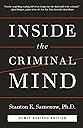
Inside the Criminal Mind (Newly Revised Edition)
Product ID: 8189920
📖Revised Edition
🔍In-depth Analysis
🧠Psychological Insights
Desertcart purchases this item on your behalf and handles shipping, customs, and support to Taiwan.
🕵️♂️ Discover the Mind Behind the Crime!
Inside the Criminal Mind (Newly Revised Edition) offers an updated exploration of criminal psychology, featuring expert insights, engaging case studies, and the latest research to help readers understand the complexities of criminal behavior.
| Best Sellers Rank | #22,744 in Books ( See Top 100 in Books ) #2 in Mental Health Law (Books) #3 in Popular Forensic Psychology #3 in Medical Forensic Psychology |
| Customer Reviews | 4.6 out of 5 stars 1,701 Reviews |
M**N
Blunt and Illuminating
Samenow takes us on a blunt tour through the criminal mind. He first begins by bringing up things that society tends to use to explain why some people are criminals: poverty, racism, religious fervor, etc. Then Samenow deconstructs these reasonings to demonstrate that, for the most part, being a criminal is due to errors of thinking. (He also points out a couple times that not *everybody* in these situations terrorizes their community. In fact, most don't.) Criminals are typically selfish (although not in every arena of life), hypocritical, narcissistic, able to shut off their conscience, desire control, want immediate payoff for efforts, etc. Even "crimes of passion" are just the endpoint of a fantasy the person has been entertaining for a long time. Crime becomes a way to achieve excitement, power, control, influence, money--whatever they have their eyes on. It's not that poverty and what not don't play a role, it's that these are only factors. What makes a criminal a criminal really comes down to faulty thinking, although of course some will be incorrigible due to severe mental illness. But when we present reasons for a murder, theft, etc., the criminal latches onto these in order to dodge responsibility. Nothing is ever their fault. It's always parents, a boss or coworker, or society, or they were justified in what they did. They'll try to, for example, blame dope for their ways. Samenow points out that, if you look in these people's histories, the vast majority of them were already committing some kind of crime. Or, if not committing crimes, terrorizing people, which is just one step down. Shoplifting and bullying seemed the most popular to me. What happened was the dope got the criminal to the point of arrest. Samenow presents quite a few of his past "clients" (if you will). Some of them I felt a little bad for, and some of them I would happily pay to put on a deserted island in the middle of the Pacific somewhere. Like Terry. If your blood doesn't boil reading about Terry, you need to go to the nearest priest to see if you still have a soul. There is hope for those who genuinely want to reform! Like anybody with messed up thought patterns, a criminal dedicated to change can learn to be a "civilized", responsible human being. It's a lifelong process, sort of like an alcoholic in recovery. If you're an alcoholic in recovery, it never stops. It's a choice you make every day. Same thing when rehabilitating from a criminal mindset. You learn to take responsibility, to tame anger and entitlement, etc every. Single. Day. This book was an eye-opener. At times I thought Samenow was too hard on people who were given a bad lot in life, but too many stories were of people from stable or even affluent backgrounds, people who put themselves in their bad lot, etc. I still have some sympathy for some criminals, but definitely a lot less after reading this book. One of my trashy hobbies is to watch bodycam videos. After reading this book, I see those videos in a *very* different light. Once you're aware of the errors of thinking, you can see them falling out of people's mouths like a rubber ball down a set of spiral stairs.
J**Z
Realistic insights into criminal behavior instead of deterministic hypotheses
REALISTIC INSIGHTS… This is one of the most insightful books that I’ve read for a long time. It presents extensive evidence-by-experience that… —> … criminal behavior results from ‘stinking thinking.’ —> … some criminals can change and have positively changed ‘stinking thinking' by slow and arduous — but rewarding — efforts, when assisted patiently by individuals trained and qualified to help. Having had years of extensive discussions with criminals of all sorts, this author is qualified to quite-logically link a panoply of criminal behaviors with criminals’ revealed problematic thinking behind them — most of which is extremely self-centered . Again, the author cites examples of success in modifying this ‘stinking thinking’ in criminals willing to change, resulting in LASTING change. …VS. DETERMINISTIC HYPOTHESES The author provides many examples of why so many untested (or unsuccessfully tested) and clearly-deterministic-minded theories common in criminology wrongly focus on and blame factors *exterior* to criminals — while neglecting the root causes embedded in the *mindsets* of these individuals. —> Do exterior factors influence criminal thinking? Doubtless they do to some extent. We are ALL — law-abiding and criminal — influenced by genetics and by attitudes, teachings, and difficulties around us. Perhaps many who’ve chosen the criminal life have been especially so influenced. —> However, the author provides many examples of ineffectiveness and harm stemming from misdirected-blame theories and hypotheses. He cites cases in which two individuals in the same environment differently choose their thinking and resultant behaviors. The author also discusses examples of people from excellent environments who developed criminal mindsets early in life — despite loving parents and affluence. Teaching criminals all sorts of skills to legitimately succeed in life, WITHOUT changing the person inside, is often unsuccessful in in ending criminal behavior. SOME BOOK-INSPIRED THOUGHTS Might the criminal mind have in some ways ceded to evil influences — even beyond-the-brain* evil influences? Per the book, one criminal “…acted as though his emotions arose from outside himself and he had nothing to do with them.” Moreover, I’ve seen in myself — a morally-concerned, law-abiding citizen with a keen interest in ‘The Problem of Evil’ — some occasional negative thinking patterns analogous to what the author discusses. Other honest people will undoubtedly admit to such thoughts as well. What makes the difference then between… —>…my handling — and other responsible peoples’ handling — of such thoughts? —> …a criminal’s handling of such thoughts? Can it be that… —> ….the criminal mind has substantially yielded to beyond-the-brain* evil influences to think — and ultimately act — in evil ways? —> …the majority of minds — especially minds that have been instructed in positive moral principles — are less likely to yield to such influences? ______________________________ *I refuse to limit my perspectives to reductionist, scienTISMic assumptions that our minds are exclusively physical. Why? Because of my knowledge of clearly-external-to-brain events, including a plethora of amazingly-on-target premonitions [which, as an analytical person (a scientist), I don’t accept carelessly].
S**S
A lump of Immalleable Clay
Was the despicable criminal and murder spree on April 16, 2007 at Virginia Tech University by Seung-Hui-Cho because of his gender, race, parental upbringing, psychotic inclinations, or simply by the acts against him by those around him? None of the above, inclusive and or exclusive of either one of the purported reasons, if you read the theories and analytical presentations author Stanton E. Samenow, Ph.D., enumerates in his book titled "Inside the Criminal Mind." According to the author, it is a misconception the person inclined to be a criminal is because of his or her parental upbringing, poverty, influential friends, mother, father, family and neighborhood. In his book, "Inside the Criminal Mind," the author states, "Criminals cause crime - not bad neighborhoods, inadequate parents, television, schools, or unemployment. Crime resides in the minds of human beings and is not caused by social conditions." The author also discounts the theory of a psychotic mind, "...psychological theory, in its current state, is more misleading than illuminating in explaining why people become criminals. Far from being a formless lump of clay, the criminal shapes others more than they do him." "...criminals come from a wide variety of backgrounds - from the inner city, suburbia, rural areas and small towns and from many religious, racial or ethnic groups. They may grow up in closely knit families, broken homes, or orphanages. They may be grade school dropouts or college graduates, unemployed drifters or corporate executives. In most cases, they have brothers, sisters, and next-door neighbors who grew up under similar circumstances but did not become criminals." Thus the gestalt of "Inside the Criminal Mind," sets out to show criminals know right from wrong and the criminal is not the product of external sources. Criminal behavior is the product of the individuals' way of thinking. The author Samenow says, "I shall expose the myths about why criminals commit crimes. I shall draw a picture for you of the personality of the criminal just as the police artist draws a picture of his face from a description. I shall describe how criminals think, how they defend their crimes to others, and how they exploit programs that are developed to help them. I shall discuss what these people are like as children for, with systematic study; it is possible to identify at least some children who are predisposed to criminality." Looking back and thinking of the video Seung-Hui Cho made which was televised to the world, he did exactly what author Samenow illustrates in his book which was publish way before Seung-Hui Cho came into being. The criminal never takes responsibility for his acts and blames everyone and everything for his shortcomings and worse yet, for his criminal mind. Those of us who saw the video and were not aware how the criminal and his mind thinks, felt a sense of guilt and culpability for the despicable crimes he committed. However, we did not mold him to be or do what he did, but he molded us to think we were the ones responsible for his morally reprehensible and wretched act. I strongly recommend "Inside the Criminal Mind." Everyone, parents, teachers, administrators, people at large should read it to better understand the mind of a criminal. Reference the coming of age in the following novel: The Kids on the Block
T**L
Why do people turn to crime? Answers no one wants to hear.
Readers interested in criminology will find this a very difficult read because it strips away ALL the comforting palliatives society has thrown at the penal system, and reveals, for the first time, the harsh realities of why criminals do it. They do it, Samenow says, because criminals have grown up thinking differently than you and me. Criminals live in the instant now; they have almost no sense of saving for a rainy day; they lie and steal as much to prove they are smarter than everyone else as to enrich themselves. Everyone is judged by how they may be used to further the criminal's selfish wants. The human wreckage thqat they leave behind is of no concern to them, but they are skilled at feigning sorrow if they see that as shortening their incarceration. Rehabilitation as currently practiced--say by teaching criminals new skills--only produces criminals with new skills. It does absolutely nothing to change the underlying pathology. What is necessary is a strict form of psychotherapy in which the felons feet are held to the fire. They must be forced to recognize the crippling psychological shortcomings of everything they do. Daily meetings are held in which every act is recorded and analyzed, and no excuse whatever is tolerated. Criminals are masters at blaming everything and everybody for their predicament--except themselves. When all their excused are stripped away, and held up to them as obvious misdirection, then, slowly, can many prisoners begin to see how they must act if they wish to become clean. This approach is refreshing, yet depressing for its complexity. But Samenow has made it work in over 30 years of practice with any enviable record of genuine, permanent rehabilitation. Bleeding hearts will hate the emotionless protocol, and reject that any approach other than the completely ineffective emotional empathy. Critics believe, the "Christian" approach of blaming harsh society, rotten environment, abusive parents, uncaring teachers is the answer, and if we could only solve all of these problems, crime would disappear. Odd then how many people suffering under they very same disadvantages still manage to stay out of prison. The only pulled punch is Samenow's refusal to discuss how people become criminals when typical criminal traits are visible in children as young 4 years old. Are they born evil? One senses that Samenow knows the answer but refuses to say.
T**R
Good stuff
Good stuff
S**N
A 'must read' for anyone who works within the criminal justice system.
Dr. Samenow makes it crystal clear how the criminal justice system population is unique. Typical methods of treatment and therapy may not be appropriate. They need to be tempered and adapted to meet the needs of these patients, clients or consumers. A drug court judge addressed the need for alternative non-traditional interventions. "One key to the Drug Court's success, Raffetto said, is its use of neurolinguistic programming using practical techniques to address criminal thinking and addictive thinking, as part of the treatment..."(The Maui News, May 3, 2012). Inside The Criminal Mind creates the awareness that the skilled therapist should come to realize that alternative non-traditional methods of treatment would be called for. Judges, public defenders, prosecutors, drug court treatment teams, social workers, psychologists and other treatment providers need to read Inside the Criminal Mind. Dr. Samenow has written an excellent book that should be required reading for human services students as well. This is the second time I have read this book. It was even more helpful this time. Hopefully you will buy, read and enjoy Stanton Samenow as much as I have. Stan Dokmanus, CCJP, CSAC, Certified Practitioner NLP, B.A. Psychology
H**K
Fascinating Read
I was recommended this book by a counselor that my wife and I are seeing to help us address issues related to our son's behavior and subsequent incarceration. This book has given me insights into the minds' of those who choose to think that they are above the law and can do as they please. I learned much about myself after reading this book, and my wife is currently reading it as I write this review. If you have a loved one who is behind bars, or one that you believe is headed there, I think that this book will give you much insight as to what makes them tick, what drives them, and what they see when they view the world. I believe this should somehow be required reading for every parent who has a child behind bars, as well as anyone who's significant other is behind bars. Stop blaming yourself.
B**8
Read the last two chapters and save yourself the rest of the book.
The criminal mind is intriguing, and the growing world of criminology and forensic psychiatry show that more and more people are interested in these topics. I was no different when I purchased this book, expecting a "deep dive" into the minds of notorious criminals. However, this book did not do a good job of.keeping me intrigued, and the revised edition still leaves much to be desired. I became quickly bored with the drawn-out chapters and repetitive paragraphs (without any connecting.points), and almost dreaded going further in the book. The book's good parts: -The author has clearly interviewed thousands.of inmates and convicts, and is intimately familiar with their backgrounds. -The book's last two chapters are the "so what?" of this book, and could be skipped to for the moral of the story. -I did find numerous sentences to highlight for possible research/white papers for my academic studies in criminal justice. The book's bad parts: -The author often uses anonymous sources for much of his subject matter. Hard to really believe the author's thesis when using incomplete sources. -There is only minimal discussion on major criminals' psychology. Would've enjoyed the book much more if it emphasized psychology studies on well-known criminals and their backgrounds. -The book lags, was tedious to read, and used outdated scenarios and source names clearly not updated since its original publishing. The author is extremely pessimistic and eludes to the fact that criminals can and never will be changed. Every chapter had the same tired, cliche points. I probably would not read any other books by this PhD author, and give this book 2.5-3 stars.
S**P
Best Book on Criminal Psychology
This book gave me good knowledge on Criminal minds and my father Subhash Ranjan Biswas defence that he can do anything to threat me with Psychiatric drugs is proved wrong in this book. His right to do anything with me is a symptom of Criminality. When I showed this book to my father, he as advised by Parthasarathy Biswas psychiatrist and Mantu Chandra Mandal ignored this book and said that reading this books will not help. Later I was kidnapped to Spirit Foundation Sodhpur Khardaha when I stressed on the particular chapter. Spirit Foundation called me a maniac is was coined by a French lunatic scientist long time back. The book is very good to understand the criminal psychology of more or less the whole of the criminals as partners to crimes.
C**R
Good
Good
C**U
Great book
Item arrived fast in good condition. The book itself is great, I just started reading it, and it was worth buying it.
N**Ì
comprato solo una volta
l'ho acquistato per fare un regalo, è arrivato in ottime condizioni
A**A
Nice
Love the book
Trustpilot
2 weeks ago
1 week ago