Desert Online General Trading LLC
Dubai, United Arab Emirates
Desert Online General Trading LLC
Dubai, United Arab Emirates


Full description not available


M**H
Kindle edtion excellent
I was quite happy to find this compilation. For quite a while now, I have been working with a private student who is not interested in tournaments, but it turns out he is fascinated with two-move problems. In other words, the beauty of chess instead of the competitiveness. I had found many problems at random in Facebook groups and had searched all through the internet. This book takes the task up a notch. So far the positions have been quite difficult, but, after I have tried to solve them, I can confirm the variations of the answers (on the next page as they should be) and guide the student through the logic of solving each position. Fun and challenging! For example, on one page, if you imagine each of the three places where the black king might move after White's first move, then you can find the queen move that simultaneously will be ready for any of them! Geometry.
D**6
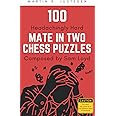
Nice book...All puzzles by one of the greatest chess puzzle creators. New edition corrects an error!
Edit: 4-6-22. This 2021 edition corrects an error in solution 2, pointed out in J. Pinson's review.Original review:One puzzle per page, so the board is fairly large. The chess pieces are nice and dark against both white and dark squares. A nice feature is that on the back of each puzzle page is the solution to that puzzle. The text is in a light color, presumably so you don't inadvertently read the answer(s). Not having to search through the back of the book for a solution is great! The fact that he includes all the variations as a result of the checkmate move is nice also. The notation used was a little surprising for me, but works fine. Each move consists of an image of the piece to move, and then the square to which it moves, in algebraic notation. (See photo of a sample solution page)
C**K
Excellent, but some duplicates
If you like mate in 2 problems, this is a great collection. Its exactly what it looks like, and the problems really are "headachingly hard". There are a couple of duplicates, however. Problem # 91 is the same as Problem # 9, just flipped between the kingside and queenside (that is - they are mirror images). Also, problem # 66 is the same as problem # 92. Again, kingside and queenside are flipped. Since the editor of this book gives the date and source of publication for each puzzle, its apparent that old Sam Loyd himself is the one responsible for this. No doubt he was paid for an original puzzle, and he made a new puzzle simply by taking the mirror image of one he had already created. Crafty old guy! :)
J**N
Problem 2 solution wrong
Problem 2, third solution includes a bishop. There’s no bishop on the this board, or a pawn that could have become a bishop.
P**L
Great layout, great puzzles!
Just like this author's previous book which has a clean and effective layout for blindfold puzzles, this book excels in being easy to use for training.As mentioned in the introduction, solving mate in 2s is a recommended training method by Artur Yusupov. It's challenging yet ultimately doable. Even though you need to find just 3 moves (white's first, black's first, and white's second), good mate in 2 puzzles really test one's calculation skills. Specifically, finding candidate moves and pushing through to solve something that seems very difficult.It's great to have a convenient collection of well selected problems in a clean format such as this.Highly recommended!
J**C
A Lovely Book, but....
The title of the book should be Mate in Two Chess PROBLEMS rather than PUZZLES. There is a difference between the two, some of it rigidly defined and some followed by long standing convention.In problems, for example, the starting positions often are not in any way like those arising in normal games. Also in problems, there is a set task which has to be carried out in a specific number of moves, no more and no less. In problems, there is always the unstated convention that White moves first and the board is oriented with White at bottom.In problems, there is one and only one solution which follows a unique "key" move. The "key" move is often startling or wildly unexpected. If there is another "key" or another way to achieve the task, for example mate in a certain number of moves, then the problem is flawed or in problem parlance, "cooked".In problems, a convention dictates that every piece on the board is necessary, i.e., every single piece or pawn in the board position has a role to play to make the solution unique. Pieces whose only role is to decorate the board or make it look more like a real game are never seen.The mechanisms at work in a problem solution are sometimes repeated, like plots or scenarios found in multiple movies. These are recognizable and many have even been given unique names, like "Novotny Interference"Chess problems, even short ones, such as these, are often quite hard to solve and it can be inferred that composing one is even more difficult. Sam Loyd is often considered the "dean" of American chess problem composers and it's great to have 100 of his positions in one place and in a such a clean format. But to reiterate, this book contains what would be called "chess problems". Don't hesitate to buy it.
A**A
Excellent book for the puzzle solvers
Highly recommended collection of mate in two puzzles. Really fun way to expand your puzzle knowhow if all you have done so far are chesscom and lichess puzzles. The compositions are amazing and since they are mate in 2, they are solvable (eventually :) ). The quality of the book is impressive.
F**Y
full of mistakes
This book is full of errors. I've just fnished the first 3 problems, and guess what? All 3 have mistakes! In the first there's a variation missing (1... Kc4 2. Be2#). In the second there's also a variation missing( 1....Rxe32. Qxe3#) and one variation presented (1....Kc4 2.Bc2#) is ridiculous because there's no bishop in the problem and the king on e1 moving to c4?? Unless this is a fairy chess King!. In problem 3 the first variation given can't be forced( the pawn moving to g4) It's really discouraging. I'm using the software "The problemist" as a solution solver. You can't trust this book
Trustpilot
2 days ago
2 months ago