

Desert Online General Trading LLC
Dubai, United Arab Emirates
Desert Online General Trading LLC
Dubai, United Arab Emirates




🌙 Sleep Tight, Breathe Right!
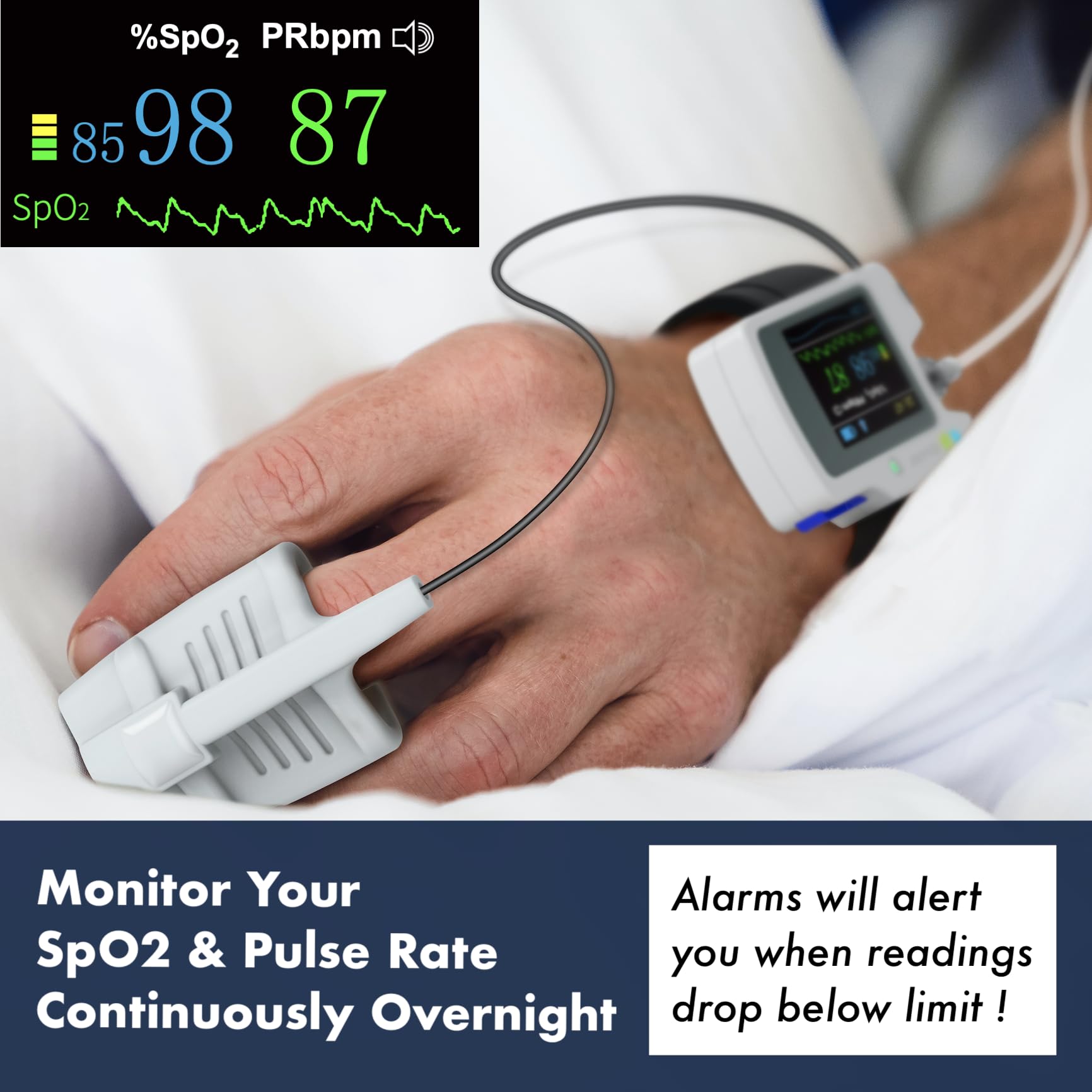
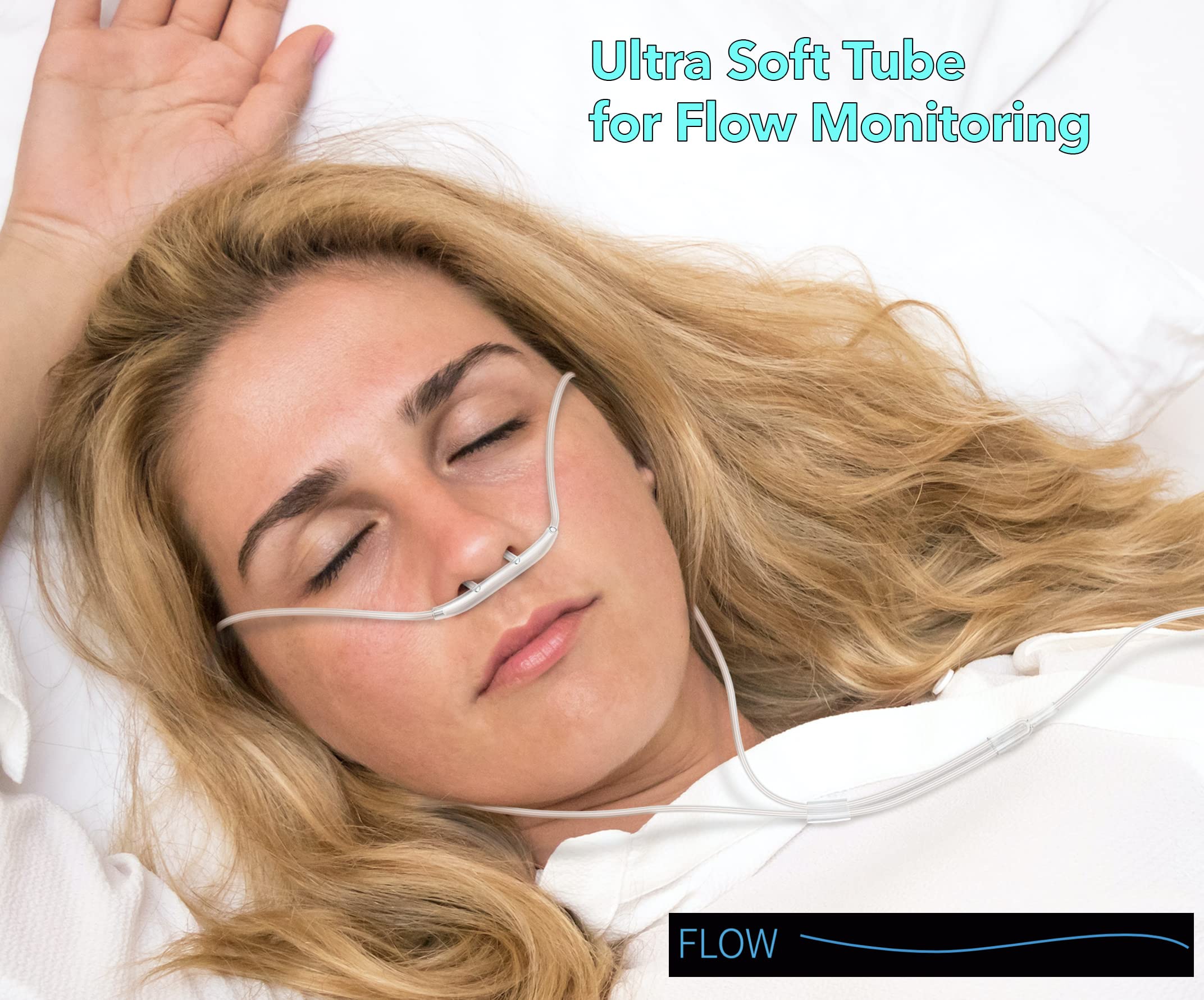
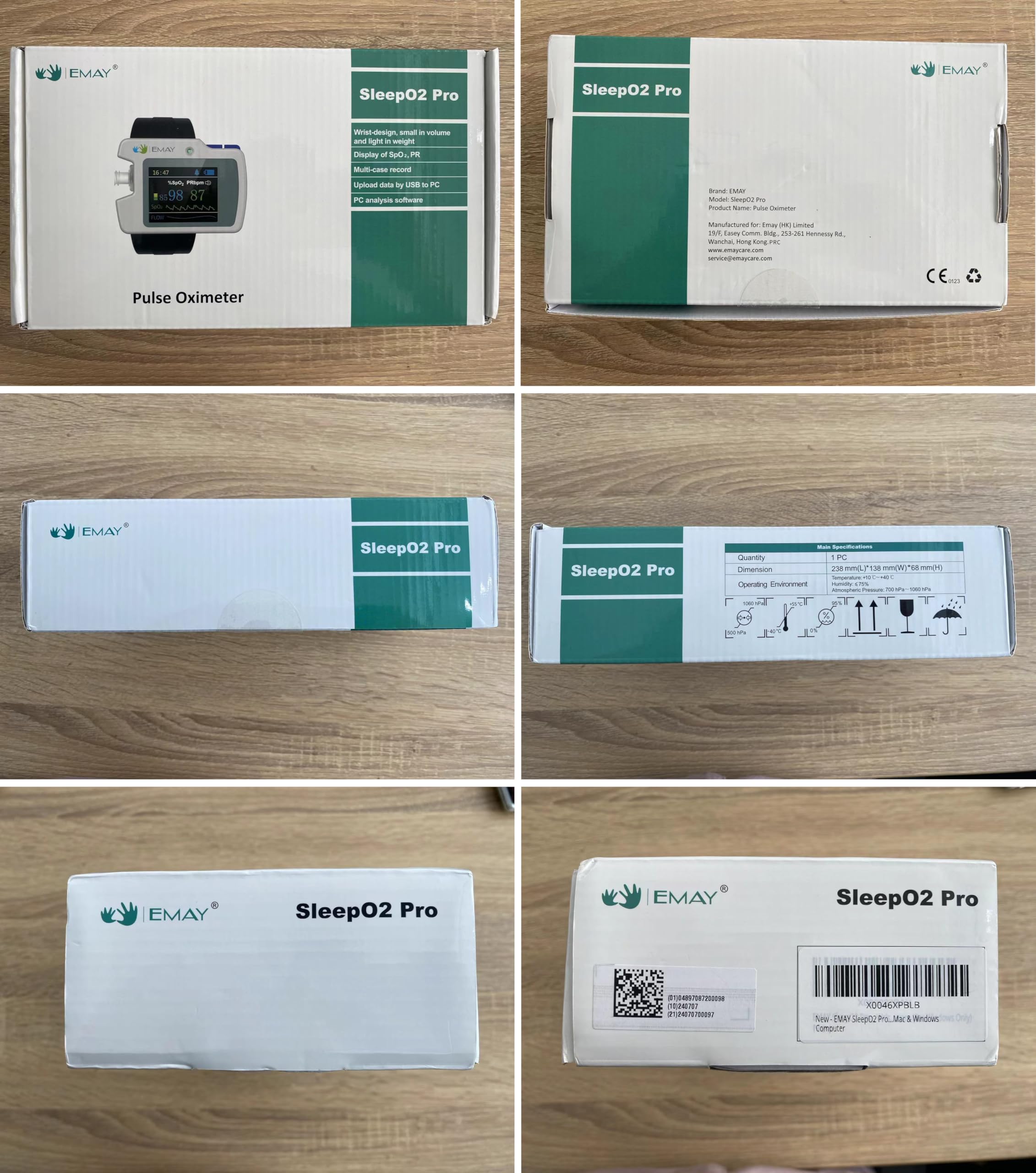
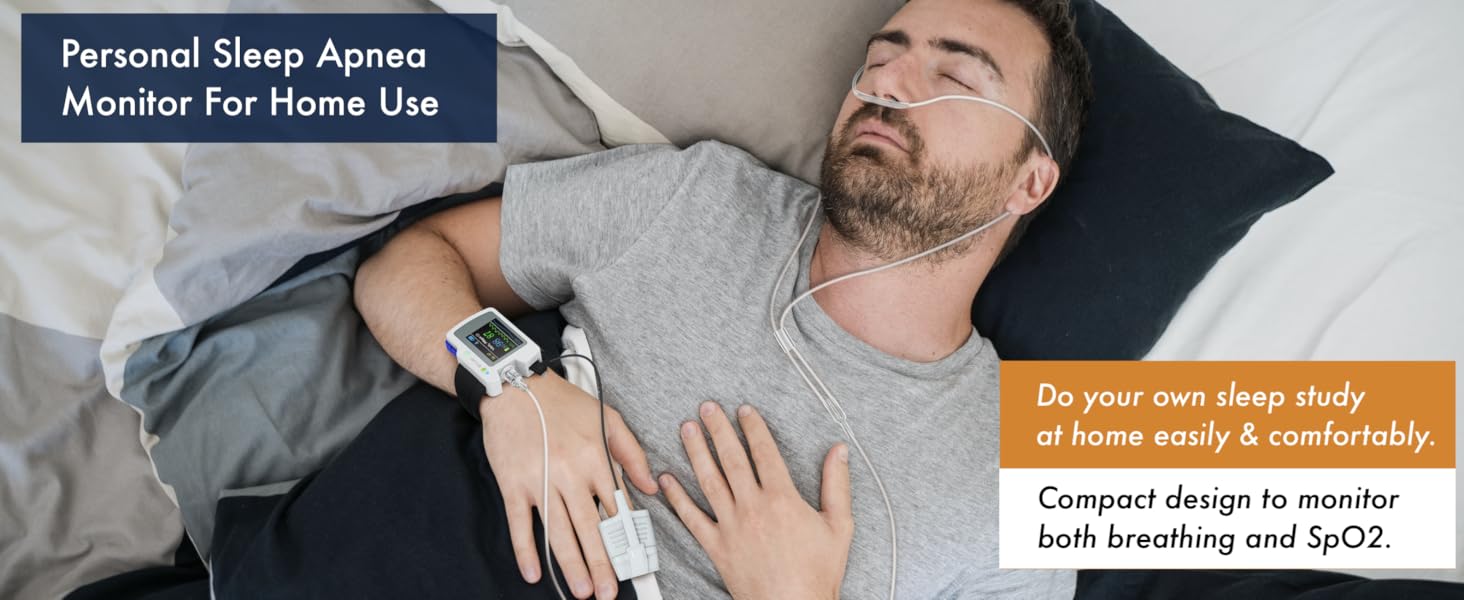
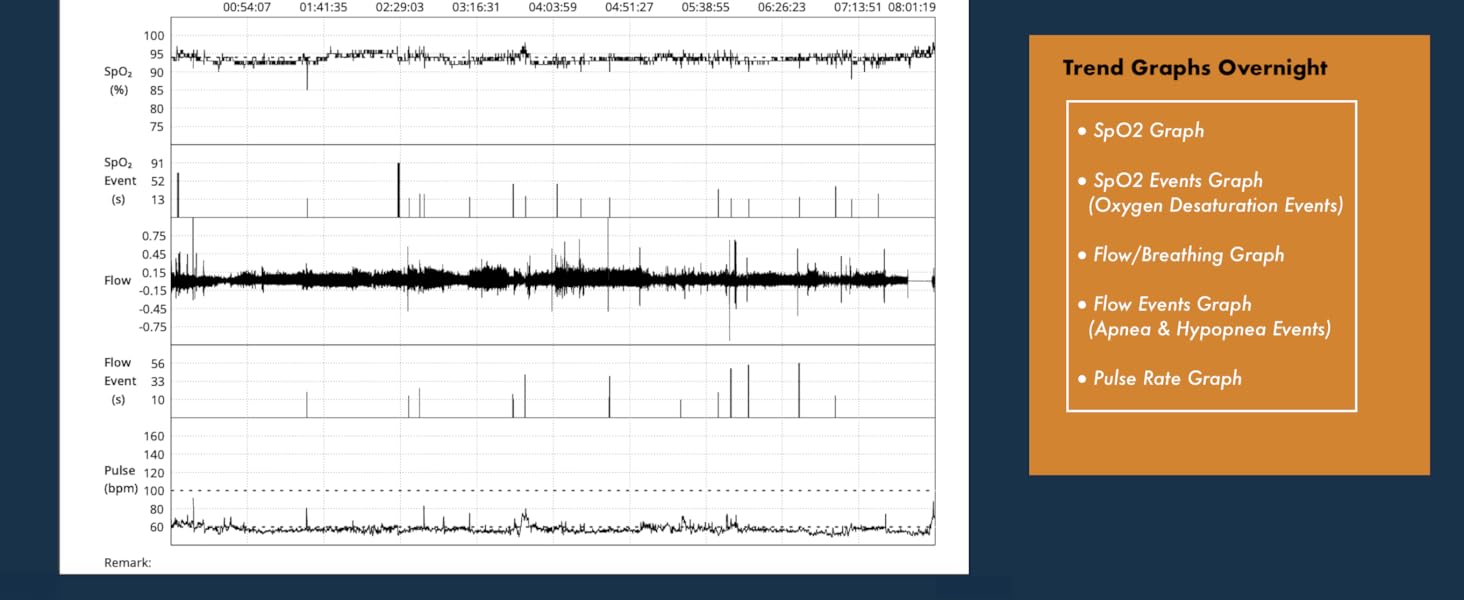
The EMAYSleepO2 Pro is a cutting-edge wrist pulse oximeter designed for continuous monitoring of blood oxygen levels and flow during sleep. Featuring a soft silicone O2 sensor for comfort, this rechargeable device offers extensive data storage and powerful PC software for easy analysis and sharing of overnight reports, including AHI and ODI data.




J**A
Buy it if you have questions about your sleep quality
Excellent value for money! My Garmin watch that I purchased a few months ago kept telling me I wasn't having restorative sleep (high physiological stress) and that's what prompted me to see how my breathing was during sleep. Medical costs are high in the United States even if you have health insurance. Purchase of this device allows you to run unlimited sleep studies at home and find out if interventions (sleep position, Breathe Right nose strips, daytime breathwork, etc.) are working for you. Software download was simple and it's very user-friendly. Device is a bit bulky and my finger sometimes gets sweaty in the pulse oximeter but it's worth it for the data obtained. Wear an eyemask if you are sensitive to light - the green recording LED stays on all night and it is very bright. That would be my only suggestion to EMAY - do something about the bright light.
A**R
Well made, interesting results
So far, in general, this device is quite impressive!The build quality is excellent. The SpO2 readings correlate pretty well with a second meter I have on hand. The software is very helpful.A huge upside is that unlike medical sleep studies, you can run as many of these as you like, for minimum cost.So, downsides: The disposable SpO2 sensors included looked nice, but in my hands, they are noticeably less reliable than the reusable sensor. For me, this isn't much of a problem, because that sensor works fine for me. ("less reliable" here means that the signal tends to drop out, and also, I'm not sure it's as accurate)I did have to "practice" some at sleeping without dislodging the sensors. For me, a modest amount of medical tape mostly solved the problem.The software produces a pretty good looking analysis of the data (which would take a long time to manually pick through). It's generally trying to flag apnea and hypopnea events as well as oxygen desaturation events. To my eyes, not everything flagged is a true event. But, having run about ten nights, the scores I'm getting are pretty consistent. I'm planning to do a real sleep study soon, so will update this after that.I was a little surprised that replacement nasal canulas aren't available on Amazon, but they are on the EMAY site, so that's fine. They're something like $25 for 5, each of which can be used several times. For most accurate results, I'd use only theirs.There is one unfortunate aspect to the device software. That is, when recording, there is an overlay counting the recording time, and this obscures the more useful screen graphs that are present when not recording. I wish there was some way to make this overlay go away, but I haven't found it. Anyway, I recommended to EMAY making that an option, or just getting rid of the overlay altogether.Anyway, to summarize, it's really a great device, especially for the US$200 I paid for it.
M**B
First Impressions of the SleepO2 Pro
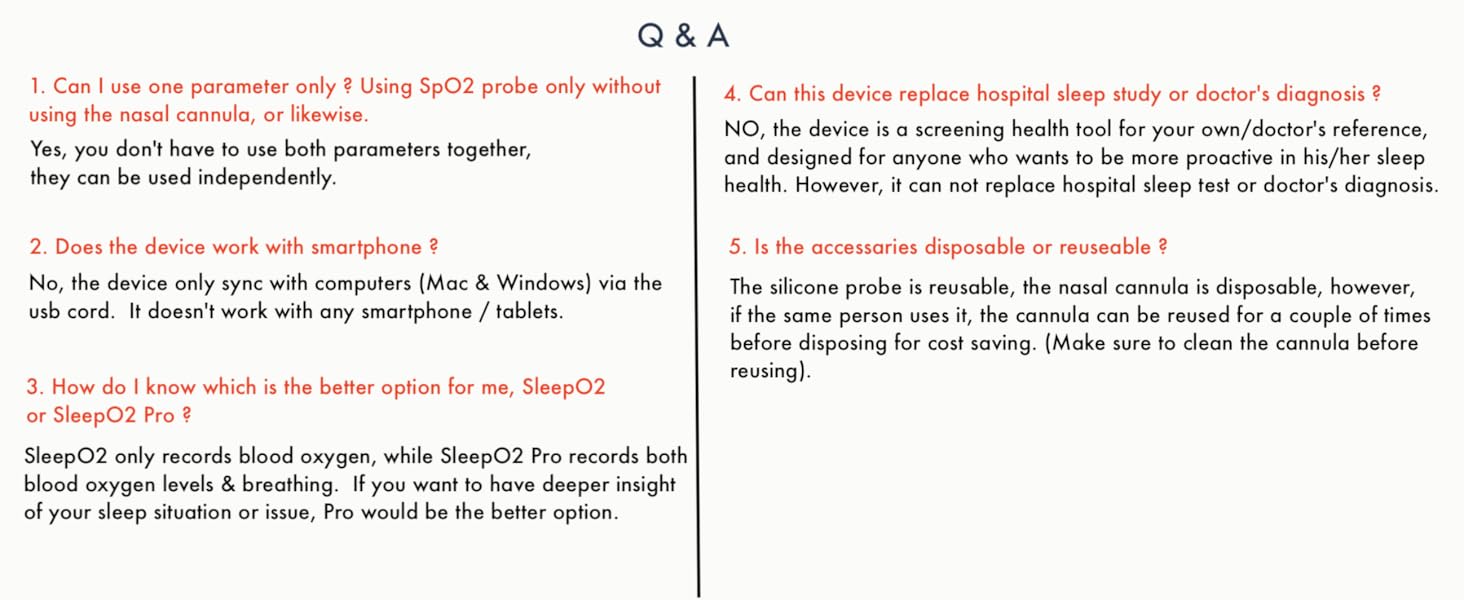
I purchased the SleepO2 Pro to gain a better insight into my sleep apnea. I wanted to capture and validate the types of events that are happening while I sleep as I was skeptical that a single home monitoring test ordered by my doctor was accurate. I first tried the simpler Emay Sleep Wrist O2 Sleep Oxygen Monitor. While nice, it did not give me all of the data I was looking for. The SleepO2 Pro offers the addition of breath monitoring via a nasal cannula, extended software, and has a small on wrist screen viewing vitals. I decide to use this device along with some video monitoring to get a better picture of my sleep. The video is used to help validate my breathing and also provides audio to help detect snoring.The unit comes well packaged with some starter supplies. They supply a re-useable O2 finger sensor along with 2 one use finger sensors. Also provided were 2 nasal cannulas for the breath function. The one use finger sensors are more positive in operation as they are attached like a Band-Aid and are less prone to disruption. However, they are only meant to be used one time (possibly more if some care is taken). I could not find them on Amazon to check price, but I suspect they are not inexpensive. The nasal cannula are also one use disposable and are available in packages of 5 from Emay via Amazon. There is a special offer found on a folder contained on the device for 50% off (see below for more info on this).The device has a very simple two button user interface that is a bit clunky to navigate, but once you get used to it, it works fine. Some of the functions are really only setup once or infrequently and you can live with the extra effort to configure them. In general, this being a China centric product, you will find some of the info sparse and in need of better translation. However, once you get your head around the device and the included software app, you will find it useful.This unit requires a USB and PC to upload data (no Wi-Fi or Bluetooth) and basically appears as an external thumb drive. No driver is needed. Just plug into a USB port and you will find the data. The PC only app is included in a folder on the device along with the manual and the special offer mentioned above. You can also download the latest version of the app from the Emay web site. The device has a plenty of on board memory to hold several nights of data. The logged data is in a proprietary binary format (bin extension). The file name is encoded with the date and time of the log. The PC app lets you read the file by pointing to the bin file. This can be right from the device, but I typically have been moving the files to a folder on my PC and then deleting them from the device to open up room.The app is very technical and is assuming you know what you are looking at. It is geared to a medical professional and is setup to allow you to enter patient info. There is a very nice report generator that has lots of statistical info and produces results such as AHI, ODI 3 and ODI 4, for example. You have the ability to dive deep into the data via a scrollable timeline with resolution down to one second. You can zoom in or out to get a big picture or very detailed views. The app marks events such as apneas and hypopnea's on the time line and allows you to add new or edit/delete existing events if you find they they have been missed or marked in error. I find this very useful as this will affect the generated report. I use the app along my video feed to validate that an apnea really occurred by checking to see if I really have stopped breathing during the period detected. This is important because the nasal cannula will register a lack of breathing if you are breathing via your mouth (as I sometimes do).You will have to dive into the app largely on your own here as the there is not much help available and there are some user interface kinks that will frustrate some times. For example, when you place the cursor on the timeline, there is no readout of the exact time that you are pointing to. This would be useful for me to allow me to easily jump to the same time as my video feed to see what I was doing at the time. Instead, you have to zoom in via drop box menu. The problem here is that the zoom does not center to the cursor location and if it is not at the center of the timeline, it will move off screen. This makes zooming awkward.It remains to be seen if Emay improves the app via updates down the road. However, even as it is, I find it quite a useful device. This is not a device for someone that requires a simple easy to navigate interface. However, if you know what the data means and how to interpret it, you will be quite happy. The reports have enough detail that I'm sure a doctor would appreciate if you were to bring them to an office visit. Keep in mind that because this is not an FDA certified medical device, the accuracy is not guaranteed. It is also missing some data (e.g. an extra respiration strap to better validate breathing) But I suspect that it is very much in the ballpark for home users that are looking for more detail than a simple pulse oximeter can proved.
Trustpilot
3 weeks ago
1 month ago